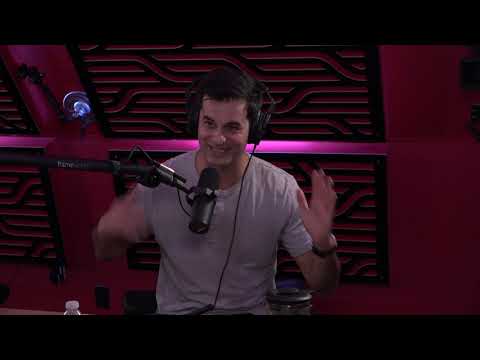
Joe Rogan Experience #1585 - Michael Kosta
Michael Kosta (guest), Joe Rogan (host), Narrator, Narrator, Narrator
In this episode of The Joe Rogan Experience, featuring Michael Kosta and Joe Rogan, Joe Rogan Experience #1585 - Michael Kosta explores joe Rogan and Michael Kosta Deconstruct Comedy, Hustle, and Survival Joe Rogan and comedian Michael Kosta trace Rogan’s podcast journey, the craft and business of stand‑up, and how persistence, discipline, and ignoring gatekeepers shaped their careers.
Joe Rogan and Michael Kosta Deconstruct Comedy, Hustle, and Survival
Joe Rogan and comedian Michael Kosta trace Rogan’s podcast journey, the craft and business of stand‑up, and how persistence, discipline, and ignoring gatekeepers shaped their careers.
They compare old media (networks, radio, TV) with the freedom of podcasting and digital platforms, explaining why executives’ meddling often ruins good ideas while independent creation can thrive.
The conversation widens into COVID policy, public health, capitalism, and small‑business resilience, then veers into deep dives on sports, pool hustling, addiction, technology, the environment, and human vulnerability.
Throughout, they keep returning to a few throughlines: follow your genuine enthusiasm, embrace failure and repetition, stay physically and mentally healthy, and build a career outside traditional structures when possible.
Key Takeaways
Follow enthusiasm, not formulas or executive notes.
Rogan built his podcast by doing exactly what he wanted—long, unedited, stoned conversations—explicitly ignoring advice to cut episodes short or “make it more marketable,” and that authenticity pulled an audience to him.
Get the full analysis with uListen AI
Treat stand‑up like a disciplined sport, not a hobby.
Kosta’s tennis background made him see comedy as reps, failure, and refinement: bombing is like losing 6‑0, 6‑0—it hurts, but you learn, adjust tiny technical details, and come back rather than clinging to safe old material.
Get the full analysis with uListen AI
Executive meddling often ruins what’s funny.
They recount Comedy Central and Man Show stories where non‑comedians forced absurd changes (e. ...
Get the full analysis with uListen AI
Digital platforms let comics bypass old promotion systems.
Podcasting and social media let Rogan and others sell tickets without brutal morning radio and club politics, and creators like Andrew Schulz used quarantine to build online formats that led directly to Netflix deals.
Get the full analysis with uListen AI
COVID policy must weigh health against economic and social damage.
They argue many restrictions (like banning outdoor dining) lacked clear data yet devastated small businesses, increased divorce, suicide, and abuse, and were imposed by officials whose pay and jobs weren’t at similar risk.
Get the full analysis with uListen AI
Physical health and daily training protect more than your body.
Sauna, hot‑cold exposure, yoga, and regular workouts aren’t just vanity; they stabilize mood, resilience, immune function, and creativity—critical during long, stressful periods like lockdowns or post‑injury rehab.
Get the full analysis with uListen AI
Human progress coexists with exploitation and waste—and both are real.
They admire feats like rapid mRNA vaccines, ocean plastic cleanup, and joint replacements, while also highlighting sugar and plastic pollution, recycling theater, and profit‑driven shortcuts as systemic problems we still haven’t solved.
Get the full analysis with uListen AI
Notable Quotes
“Dumb luck and persistence, and just working at it… there’s a skill to conversation that doesn’t look like a skill.”
— Joe Rogan
“I have to constantly learn the hard way: Michael, follow your passion and trust your instincts.”
— Michael Kosta
“I would have never been able to do this podcast if I had to talk to executives… they would’ve never allowed 60% of it stoned out of my mind.”
— Joe Rogan
“You can be one of the greatest tennis players in the world and you lose all the time. So you better get used to that shit.”
— Michael Kosta
“You look at the surface of the Moon—it looks like one of those steel plates at a gun range. That’s because it gets hit all the time. That’s going to happen to us again. It’s not if, it’s when.”
— Joe Rogan
Questions Answered in This Episode
How much of a creator’s success is really “dumb luck and persistence” versus strategy and timing?
Joe Rogan and comedian Michael Kosta trace Rogan’s podcast journey, the craft and business of stand‑up, and how persistence, discipline, and ignoring gatekeepers shaped their careers.
Get the full analysis with uListen AI
In a world of algorithms and short clips, will long‑form, unedited conversations remain as powerful, or is this moment an exception?
They compare old media (networks, radio, TV) with the freedom of podcasting and digital platforms, explaining why executives’ meddling often ruins good ideas while independent creation can thrive.
Get the full analysis with uListen AI
Where should the line be between public‑health protection and economic or psychological harm when governments respond to crises like COVID?
The conversation widens into COVID policy, public health, capitalism, and small‑business resilience, then veers into deep dives on sports, pool hustling, addiction, technology, the environment, and human vulnerability.
Get the full analysis with uListen AI
If you’re starting stand‑up or any craft late, how can you realistically apply the disciplined, sport‑like mindset Rogan and Kosta describe?
Throughout, they keep returning to a few throughlines: follow your genuine enthusiasm, embrace failure and repetition, stay physically and mentally healthy, and build a career outside traditional structures when possible.
Get the full analysis with uListen AI
As more comedians and creators bypass old media, what responsibilities do they take on in terms of quality control, accuracy, and influence?
Get the full analysis with uListen AI
Transcript Preview
(drumming) Joe Rogan podcast, check it out. The Joe Rogan Experience. Train by day, Joe Rogan podcast by night. All day. (instrumental music plays)
Um, yeah, his, um, his unwillingness to make money off of it, too-
Unbelievable.
... is interesting. Yeah.
Yeah.
Signal is, uh, uh, I, I ... You know, when- whenever someone new signs up at Signal, you get like, this notification.
I've noticed that.
Yeah. And so it's like flooding with all these people that I know that are now on Signal. I'm like, "Wow."
It's, it's gotten us, me to re-evaluate privacy and everything.
Yeah?
You know, like what is on my phone? What, what are these ... When you go to that thing on iPhone that says, "You can use my location always or while using," it's crazy how many apps are just using your location.
Oh, yeah. Well, what's gonna change ... Uh, by the way, this is Michael Kosta, ladies and gentlemen. We're already rolling.
Great.
Uh, Michael Kosta.
Hi.
You might know him from The Daily Show. He's also a fabulous standup comedian. I know him from The Comedy Store. Please welcome Michael Kosta.
Yay. Thank you for having me, man. This is-
My pleasure, brother.
This has been a-
My pleasure.
... uh, exciting highlight for me to be sitting here with you, and be on your podcast. I can't believe what this thing has become, man.
Bizarre.
It must be craziest for you.
Well, what this is-
(laughs)
... what's bizarre about it, it seems like it's just you and me talking.
Yeah. Well, it is just me and you talking.
Yeah.
But, but I mean how many years have you been doing it? The 15-
11.
11 years, okay.
Yeah, 11. Started in 2009.
It's, uh ... As a younger-than-you comic, you know, you look to the comics older than you and you say, "Who is doing what I want or creating something special that's unique to them?" And that's what I always, I always tried to just try to do. And then this, to see what you've made, this is nuts.
Oh, thank you.
It's nuts, so it's good.
Just dumb luck. Dumb luck and persistence.
Dumb luck, that's it. Persistence.
That's a lot of it.
(laughs)
Legitimately.
Yeah, yeah.
I tell everybody. Dumb luck and persistence, and just working at it, you know. It's just, conversations, it, there's a skill to it.
Mm-hmm.
It just doesn't, it doesn't seem like there's a skill to it-
Mm-hmm.
... but there's a skill to it.
Mm-hmm.
You realize after you do a lot of podcasts too how bad a lot of people are, just regular folks are at having conversations, so you see people just talking over each other. You're like, "Jesus, will you let him finish? And then you let her finish." Like, fucking, you guys just talk. You just, just clog.
Install uListen to search the full transcript and get AI-powered insights
Get Full TranscriptGet more from every podcast
AI summaries, searchable transcripts, and fact-checking. Free forever.
Add to Chrome