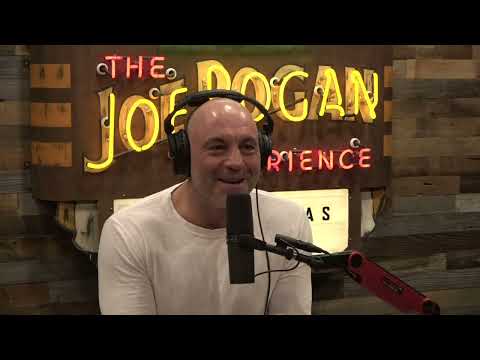
Joe Rogan Experience #1798 - Michael Shellenberger
Joe Rogan (host), Michael Shellenberger (guest)
In this episode of The Joe Rogan Experience, featuring Joe Rogan and Michael Shellenberger, Joe Rogan Experience #1798 - Michael Shellenberger explores michael Shellenberger’s Crusade To Save California From Compassion Gone Mad Joe Rogan and Michael Shellenberger discuss how permissive ‘pathological altruism’ and activist-driven policy have fueled California’s intertwined crises of homelessness, open-air drug scenes, crime, and failing institutions.
Michael Shellenberger’s Crusade To Save California From Compassion Gone Mad
Joe Rogan and Michael Shellenberger discuss how permissive ‘pathological altruism’ and activist-driven policy have fueled California’s intertwined crises of homelessness, open-air drug scenes, crime, and failing institutions.
Shellenberger argues most visible homelessness is driven by addiction and untreated mental illness, not merely high rents, and outlines his “Cal Psych” plan to centralize psychiatric and addiction care, enforce camping bans, and prioritize shelter and treatment over free permanent housing.
They broaden the conversation to media bias, the rise of activist journalism, the appeal of Substack and long-form podcasts, and the social fear that drives groupthink in institutions like universities, corporations, and government.
The episode also covers energy policy—especially nuclear and fracking—education reform, exercise and mental health, and Shellenberger’s independent run for California governor as a bid to restore what he calls liberal civilization through ‘tough love’ and personal responsibility.
Key Takeaways
Visible homelessness is primarily driven by addiction and severe mental illness, not just housing costs.
Shellenberger says his street interviews and research show most people in encampments are there because of fentanyl, meth, and psychiatric issues, often coming from out of state to cities like LA and San Francisco where enforcement is lax and benefits are generous.
Get the full analysis with uListen AI
‘Housing First’ without accountability has become a magnet and maintenance system for street addiction.
He argues California’s policy of promising permanent apartments while tolerating street camping and drug use spends billions but worsens conditions, attracting more addicts and overwhelming cities instead of moving people into recovery.
Get the full analysis with uListen AI
A centralized psychiatric and addiction care system with ‘tough love’ is his proposed fix.
His Cal Psych plan would create statewide shelter capacity, mandatory triage, rehab, and long-term psychiatric beds, paired with a strict ban on street camping and ‘contingency management’—earning better housing by staying clean, rather than unconditional entitlements.
Get the full analysis with uListen AI
Fear of social punishment and career loss drives much of today’s ideological conformity.
They describe deans adding pronouns out of fear, journalists and academics self-censoring, and institutions caving to online mobs, arguing this is less about cognitive bias and more about social terror that produces groupthink on issues from crime to climate.
Get the full analysis with uListen AI
Nuclear energy and regulated fracking are presented as essential, misunderstood climate tools.
Shellenberger contends that replacing coal with fracked natural gas cut U. ...
Get the full analysis with uListen AI
Exercise and disciplined routines are framed as foundational mental health tools society neglects.
Rogan and Shellenberger link anxiety, depression, and emotional dysregulation to sedentary lifestyles, arguing schools should emphasize strenuous morning exercise and life skills, and adults need to embrace doing hard, unpleasant things like workouts as non-negotiable ‘medicine.’
Get the full analysis with uListen AI
Shellenberger positions himself as an independent reformer aiming to restore liberal civilization, not flip right-wing.
He emphasizes his progressive past, support for social safety nets, decriminalization, and immigration, while rejecting defund-the-police, open drug scenes, and anti-nuclear dogma, arguing California needs more police, more psychiatry, and more probation—not ideological purity.
Get the full analysis with uListen AI
Notable Quotes
“I’m taking a hard pro‑civilization position.”
— Michael Shellenberger
“You don’t have to choose between mass homelessness and mass incarceration.”
— Michael Shellenberger
“The money we have been spending created the problem.”
— Michael Shellenberger
“California is like an ex‑girlfriend that I used to really love hanging out with, but now she joined the cartel and she does meth.”
— Joe Rogan
“You can’t have true freedom, you can’t care for people, without first taking responsibility.”
— Michael Shellenberger
Questions Answered in This Episode
How would Cal Psych specifically balance civil liberties with compulsory treatment and camping bans in practice?
Joe Rogan and Michael Shellenberger discuss how permissive ‘pathological altruism’ and activist-driven policy have fueled California’s intertwined crises of homelessness, open-air drug scenes, crime, and failing institutions.
Get the full analysis with uListen AI
What metrics and timelines would fairly determine whether Shellenberger’s approach to homelessness and addiction is succeeding or failing?
Shellenberger argues most visible homelessness is driven by addiction and untreated mental illness, not merely high rents, and outlines his “Cal Psych” plan to centralize psychiatric and addiction care, enforce camping bans, and prioritize shelter and treatment over free permanent housing.
Get the full analysis with uListen AI
How can nuclear power and fracking be politically rehabilitated in a state where environmental narratives are deeply anti‑nuclear?
They broaden the conversation to media bias, the rise of activist journalism, the appeal of Substack and long-form podcasts, and the social fear that drives groupthink in institutions like universities, corporations, and government.
Get the full analysis with uListen AI
To what extent is ‘woke’ ideology a symptom of broader spiritual and meaning crises, and what non-political institutions could address that?
The episode also covers energy policy—especially nuclear and fracking—education reform, exercise and mental health, and Shellenberger’s independent run for California governor as a bid to restore what he calls liberal civilization through ‘tough love’ and personal responsibility.
Get the full analysis with uListen AI
What realistic reforms could rebuild public trust in legacy media while preserving press freedom and encouraging honest self‑correction?
Get the full analysis with uListen AI
Transcript Preview
(drumbeats) Joe Rogan podcast. Check it out. The Joe Rogan Experience. Train by day, Joe Rogan podcast by night, all day. (instrumental music) And we're up with the future governor of California, Michael Shelman. Hello, Michael.
(sighs) Thanks for having me back, Joe.
Nice to see you. Hey, um, I said that I wasn't going to do any more political podcasts-
(laughs)
... but I had already booked this one.
(laughs) Yeah.
So, for people like, "What the fuck, man?"
(laughs)
But, you're, you're not just a political person. You know, your book, San Fransicko, what would you call that? That's a sociopolitical book, right?
Yeah. Uh, it's a work of journalism.
Yeah.
Commercial nonfiction, for sure.
And a way for people to understand what can happen when bad policies get in the way of a city and turn it sideways, which is what has happened to San Francisco.
Yeah, pathological altruism. I, I, I've held-
Ooh, I like that word.
Yeah.
I like that expression.
It's not mine. I mean, I just, I just, you know-
Good.
... it's synthesized, a bunch of other people's stuff. But, yeah, I mean, I considered whether it was Munchausen syndrome by proxy.
Mm, why so?
Well, so Munchausen syndrome by proxy, of course, is when, like, a parent deliberately poisons her child in order to be able to treat the child for illness.
Yeah.
So, we have... One of the things I-
Is it just chil- children? It's, like, caretaker, right?
I guess it could be. Yeah, it could be. I guess it could be, like, a nurse and a patient. But we... One of the things, since I've seen you last, uh, a few things have happened. Uh, I discovered, I was the first one to report that we have a supervised drug use site now, illegal, in San Francisco's United Nations Plaza, where people are using fentanyl and meth under city supervision. So, I guess, the difference is that, you know, Munchausen syndrome by proxy, the, the adult or the, the caregiver is poisoning the person directly. In this case, people are poisoning themselves in front of the supposed caregivers, and the caregivers are there to monitor it, but-
When they do something like that, did they have any proposal or any sort of protocol these people can follow to get off the drugs?
They call it radical compassion. This is, you know, there's a chapter on my book called Love Bombing, but it's basically, this is the big blind spot for progressives, is that they just can't conceive that being radically compassionate could cause harm.
And radical compassion, the idea is you're gonna accept these people for who they are, the, the fact they're drug users, and you're gonna give them a comfortable, safe place in order to do their drugs?
Install uListen to search the full transcript and get AI-powered insights
Get Full TranscriptGet more from every podcast
AI summaries, searchable transcripts, and fact-checking. Free forever.
Add to Chrome