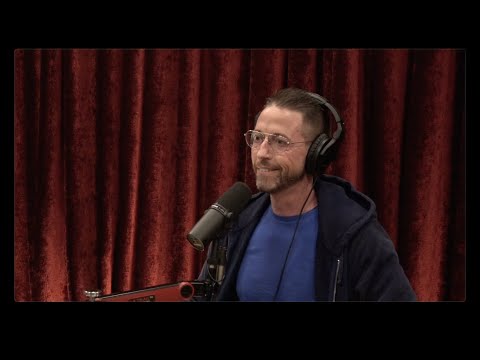
Joe Rogan Experience #2135 - Neal Brennan
Neal Brennan (guest), Narrator, Narrator, Joe Rogan (host), Narrator
In this episode of The Joe Rogan Experience, featuring Neal Brennan and Narrator, Joe Rogan Experience #2135 - Neal Brennan explores neal Brennan, Joe Rogan Deconstruct Comedy, Media, Drugs, and Sanity Joe Rogan and Neal Brennan spend nearly three hours unpacking the evolution of comedy, the failures of legacy media and television, and how the internet and streaming have transformed what’s possible creatively. They discuss network meddling on shows like Chappelle’s Show, the rise of uncensored online sketch (e.g., Shane Gillis’ Gillian Keeves), and how data-driven platforms like Netflix shape format and pacing. The conversation moves into broader distrust of institutions—pharma, government, social media, and foreign information warfare—alongside speculation about AI making political corruption harder to hide. Brennan then goes deep on his history of depression, transformative psychedelic experiences, and how gratitude, intentional thinking, and hard work have fundamentally changed his mental state and life perspective.
Neal Brennan, Joe Rogan Deconstruct Comedy, Media, Drugs, and Sanity
Joe Rogan and Neal Brennan spend nearly three hours unpacking the evolution of comedy, the failures of legacy media and television, and how the internet and streaming have transformed what’s possible creatively. They discuss network meddling on shows like Chappelle’s Show, the rise of uncensored online sketch (e.g., Shane Gillis’ Gillian Keeves), and how data-driven platforms like Netflix shape format and pacing. The conversation moves into broader distrust of institutions—pharma, government, social media, and foreign information warfare—alongside speculation about AI making political corruption harder to hide. Brennan then goes deep on his history of depression, transformative psychedelic experiences, and how gratitude, intentional thinking, and hard work have fundamentally changed his mental state and life perspective.
Key Takeaways
Creative freedom thrives outside legacy TV gatekeepers.
Rogan and Brennan argue that network TV and cable are structurally handicapped by ad breaks, executive fears, and ideological guardrails, while internet and Patreon-funded shows like Gillian Keeves can go “buck wild” and only answer to whether something is actually funny.
Get the full analysis with uListen AI
Executives often hurt shows more than they help.
Brennan recounts Comedy Central calling the iconic Mad Real World sketch “a collection of unfunny scenes,” only relenting when a live audience crushed—illustrating how exec instincts are frequently wrong, yet they still insist on ‘jizzing in the soup’ to leave fingerprints on the product.
Get the full analysis with uListen AI
Legacy media is losing credibility by pushing coordinated narratives.
They cite examples like ivermectin being branded solely as ‘horse medicine’ and highlight how synchronized, misleading coverage across outlets erodes public trust, making it harder for institutions to recover authority on serious issues later.
Get the full analysis with uListen AI
Information chaos is amplified by bots and foreign influence operations.
Rogan points to research suggesting a huge share of Twitter accounts are bots/trolls and describes Russian campaigns that created memes and even real-world opposing rallies—arguing that engineered outrage and fake accounts heavily distort online discourse.
Get the full analysis with uListen AI
AI may expose political corruption but won’t fix power structures alone.
Rogan speculates that advanced AI will be able to instantly analyze bills, donor ties, and policy impacts, making hidden pork and insider trading more visible, while Brennan counters that awareness alone doesn’t change a system structurally rigged around money and access.
Get the full analysis with uListen AI
Gratitude and reframing thoughts can meaningfully shift mental health.
After intense depression and a destabilizing DMT experience, Brennan says daily gratitude checklists, recalling the objective “facts” of his fortunate life, and questioning his own stress-chemistry (cortisol/adrenaline) narratives have made him less bitter, more generous, and more at peace.
Get the full analysis with uListen AI
Psychedelics can be transformative but are not trivial or risk-free.
Brennan describes ayahuasca, 5-MeO-DMT, mushrooms, MDMA, and ketamine as having reoriented him spiritually and emotionally, yet he also details a year-plus of feeling nearly pre-psychotic after DMT reactivations—warning that mainstreaming these drugs ignores how destabilizing they can be.
Get the full analysis with uListen AI
Notable Quotes
“TV now feels like a 78-year-old woman who still thinks she's fine.”
— Neal Brennan
“Let them pack their own chute. They’re the ones jumping out of the plane.”
— Neal Brennan (on letting creators, not executives, control their shows)
“If you pretend you have a monopoly on the truth, you actually have to only say the truth.”
— Joe Rogan (on legacy media)
“I was aiming for God and I missed my stop.”
— Neal Brennan (describing his destabilizing DMT experience)
“Easy’s not on the menu. But valuable, worthwhile, and significant are.”
— Joe Rogan
Questions Answered in This Episode
How much executive input, if any, actually improves a comedy show, and how can creators protect their vision without total independence?
Joe Rogan and Neal Brennan spend nearly three hours unpacking the evolution of comedy, the failures of legacy media and television, and how the internet and streaming have transformed what’s possible creatively. ...
Get the full analysis with uListen AI
Can AI realistically become an impartial arbiter of political truth, or will it just encode a new set of biases controlled by whoever trains it?
Get the full analysis with uListen AI
Where is the line between healthy skepticism of institutions and a corrosive cynicism that makes collective action and trust impossible?
Get the full analysis with uListen AI
Given Neal Brennan’s experience, how should people evaluate whether they’re good candidates for psychedelics versus being at risk of serious destabilization?
Get the full analysis with uListen AI
What practical daily practices—beyond gratitude lists and hard workouts—can help average people interrupt negative thought patterns and cultivate a more grounded, resilient mindset?
Get the full analysis with uListen AI
Transcript Preview
(drum roll) Joe Rogan podcast, check it out.
The Joe Rogan Experience. Train by day, Joe Rogan podcast by night, all day.
(instrumental music)
Dude.
On, in sketches. I could say for the air, but-
We're on the air.
Oh, we are on the air.
Yeah, we're rolling.
I just turned my monitor around 'cause I could see myself and I didn't wanna be. But what in sketches, I'll just open up with a Chappelle story 'cause that's what everybody thinks they're doing here. Dave would be watching himself-
On the monitors?
... on the monitor.
Hmm.
And then, and I'd be like, (laughs) I don't know, man, just be in it. And then I'd turn and I'd tell the cameraman to turn around. He'd be like, "Did Neil tell you to turn around?"
(laughs)
(laughs)
So he, so he couldn't watch himself. (laughs) It just felt like, you're just, if you're doing Rick James, maybe just be Rick James, not see yourself as Rick James.
Maybe it, like, affirmed-
(laughs)
... that he's Rick James.
No, I- (laughs) Well, yeah-
When he saw the video.
... Rick James would look at a monitor of him.
Yes.
Absolutely.
In that character-
As a-
... I would imagine.
Yeah.
That's actually a good move.
(laughs)
By the way, rest in peace, OJ Simpson.
Rest in... Oh, my God.
Rest in peace.
Rest in peace, OJ. Juice.
We lost, we lost the Juice today.
We love you, Juice. (laughs) Juice, we love you.
Sam Tripoli, uh, posted something on Twitter today. It was OJ Simpson, it just said, "I did it." He, he posted it on Instagram.
Oh.
But I guarantee you that that's fake.
Yeah, it's like, it looks like a fake tweet.
Yeah.
I watched-
How did not look like he did that before he passed away.
There's a lot of fake tweets.
There's a video of, uh, a compilation of Norm doing OJ jokes.
(laughs)
And it's 11 minutes. (laughs)
(laughs)
And I watched it, I watched it and then went back-
(sighs)
... and started, it was, it's so glory, it was so relentless.
He was so good.
He was so fucking funny.
He was so good.
We're talking about OJ. No, he was-
Ugh.
Norm was so fucking funny-
He was so good.
... and the glint in his eyes.
Yes.
And half the time he was bombing on SNL 'cause it wasn't really his crowd.
Right.
And he didn't care.
No.
He did not care. And he kinda got fired for it.
Well, he had a, he had a view, you know? He had a, he had a, a, a, a frequency that he was on. And comics loved it and the audience loved it, but yeah, it wasn't, wasn't necessarily SNL.
Install uListen to search the full transcript and get AI-powered insights
Get Full TranscriptGet more from every podcast
AI summaries, searchable transcripts, and fact-checking. Free forever.
Add to Chrome