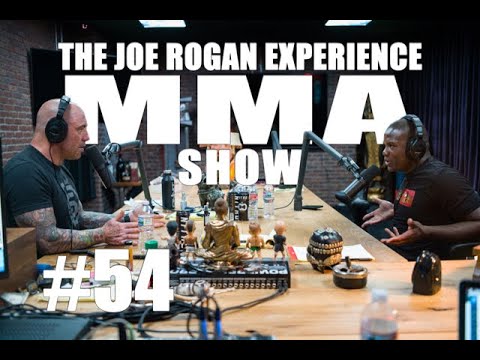
JRE MMA Show #54 with Din Thomas
Joe Rogan (host), Din Thomas (guest), Jamie Vernon (guest), Robin Black (guest), Producer/Researcher (likely Jamie Vernon) (guest), Narrator, Din Thomas (guest)
In this episode of The Joe Rogan Experience, featuring Joe Rogan and Din Thomas, JRE MMA Show #54 with Din Thomas explores din Thomas Breaks Down MMA Mindset, Coaching, and Fighting Realities Joe Rogan and Din Thomas go deep on the realities of MMA: brain damage, bad judging, weight cutting, money, and how fighters actually think and train.
Din Thomas Breaks Down MMA Mindset, Coaching, and Fighting Realities
Joe Rogan and Din Thomas go deep on the realities of MMA: brain damage, bad judging, weight cutting, money, and how fighters actually think and train.
Din explains his coaching philosophy, how he categorizes fighters (fighter, athlete, competitor, artist), and how he tailors training to people like Amanda Nunes, Tyron Woodley, Mike Perry, and others.
They analyze the evolution of skills like wrestling, leg locks, karate-style striking, and jiu-jitsu for MMA, and contrast the UFC with ONE Championship, PFL, and other promotions.
Along the way they discuss fighter careers, second acts (coaching, comedy), mental health, ego, and the importance of self-awareness and meditation to survive such a brutal sport and lifestyle.
Key Takeaways
Tailor training to the fighter’s core type, not a generic template.
Din divides fighters into four types—fighter, athlete, competitor, artist—and argues each needs different coaching. ...
Get the full analysis with uListen AI
Wrestling’s real superpower is mindset, not just technique.
Rogan and Din agree elite wrestlers bring toughness, competitiveness, grip strength, and years of cutting weight and competing—advantages that often trump pure jiu-jitsu or striking in MMA, especially under pressure.
Get the full analysis with uListen AI
Over-falling in love with new skills can ruin elite specialists.
They cite wrestlers who abandoned wrestling for knockouts (Hendricks, Koscheck) and jiu-jitsu aces who insisted on brawling (Jorge Gurgel). ...
Get the full analysis with uListen AI
Structural reforms could make MMA safer and fairer overnight.
They advocate abolishing win bonuses, adding finish bonuses for all finishes, implementing open scoring, expanding judging panels, and, ideally, adopting ONE Championship–style hydration and anti–weight-cut systems.
Get the full analysis with uListen AI
Brain trauma and late-career fights are bigger problems than fans realize.
Stories about Chuck Liddell, Arlovski, Robbie Lawler, and others show how careers of repeated damage change balance, timing, and personality. ...
Get the full analysis with uListen AI
Skill evolution is constant: karate sliding kicks, leg locks, and ground-and-pound jiu-jitsu.
They highlight the impact of karate-style movement (Wonderboy, Conor), the Danaher leg-lock revolution (Ryan Hall, Garry Tonon), and Din’s own focus on using jiu-jitsu positions primarily to strike and then submit in MMA.
Get the full analysis with uListen AI
Self-awareness and mental hygiene are as critical as physical training.
Both talk about heartbreak, ego, and momentum in bad habits; Din uses daily affirmations and meditation, and Rogan uses float tanks and “coaching himself” to stay objective about his own flaws and priorities.
Get the full analysis with uListen AI
Notable Quotes
““In wrestling, it’s not about respect; it’s about dominating. You take that guy and teach him basic jiu-jitsu, you got a champ.””
— Din Thomas
““If you’re gonna allow seven pounds to dictate whether you can beat somebody or not, you’re not that good.””
— Din Thomas
““Amanda Nunes isn’t a fighter, believe it or not. She’s an athlete and a competitor. If you try to control her too much, she won’t respond well.””
— Din Thomas
““You should never allow three people who might not even know what a kimura is to control 50 percent of your purse.””
— Joe Rogan
““I no longer wanted to express myself by punching people. I’m gonna show people how to do it.””
— Din Thomas
Questions Answered in This Episode
How could the UFC realistically transition toward a ONE Championship–style no–weight-cut system without blowing up current divisions?
Joe Rogan and Din Thomas go deep on the realities of MMA: brain damage, bad judging, weight cutting, money, and how fighters actually think and train.
Get the full analysis with uListen AI
If you’re a young fighter or coach, how would you determine whether someone is a fighter, athlete, competitor, or artist—and then program their training accordingly?
Din explains his coaching philosophy, how he categorizes fighters (fighter, athlete, competitor, artist), and how he tailors training to people like Amanda Nunes, Tyron Woodley, Mike Perry, and others.
Get the full analysis with uListen AI
What concrete steps could commissions and promotions take to improve judging quality and accountability beyond just adding more judges?
They analyze the evolution of skills like wrestling, leg locks, karate-style striking, and jiu-jitsu for MMA, and contrast the UFC with ONE Championship, PFL, and other promotions.
Get the full analysis with uListen AI
How do you balance fan demand for wild brawls with the ethical responsibility to protect fighters from long-term brain damage and late-career mismatches?
Along the way they discuss fighter careers, second acts (coaching, comedy), mental health, ego, and the importance of self-awareness and meditation to survive such a brutal sport and lifestyle.
Get the full analysis with uListen AI
Given the rise of PFL, ONE, and YouTube-level stardom, what should a modern fighter’s career strategy look like beyond simply “get into the UFC”?
Get the full analysis with uListen AI
Transcript Preview
... four, three, two, one. Dude, I didn't even get a picture of you. I ought to get a picture. Would you go with a, the blowtorch or the samurai sword in front of the flag? What do you think?
Um, I don't know. What does everybody else do?
(clicks tongue) They mix it up. Some, some folks go blowtorch. It's that Elon Musk blowtorch.
I'm going Elon Musk.
That's a good move.
Yeah, I, yeah-
I like that.
You know, why wouldn't ... I want to be like E- Elon Musk.
(laughs)
You know what I'm saying? That's, it's-
I don't want to be that smart.
Why not?
I think that's bad for you.
Nah.
When I was talking to him, and, you know, like one of the ... There was a moment where I said, like, "What's it like being you?" And he's like, (clicks tongue) "It's not easy." (laughs) Like, he was l- it was like talking about, like, the thoughts that are bouncing around in his head. I think his head is like a, like a runaway train. Like, his, his brain's just constantly going.
Well, yeah, I mean, but, but to be that smart, man, you can come up with anything. You could make anything-
Yeah.
... to make things work for you in life.
Well, that is true, I guess. I guess. I don't know, man. I want a little peace and quiet.
What, like-
I like being kinda dumb.
Do you really?
And just relax.
'Cause ignorance is bliss. You can just say that.
Just, oh, you can just kick back and relax sometimes, you know? I don't ... Sometimes I just like to come home, put the headphones on, just lay back on the couch and listen to music. Just, just listen to some music. I don't wanna think about having to fix the environment.
Yeah. I mean, I, I see that too. I mean, I'm the same way. Don't get ... I'm an introvert, so, like, don't get me twisted.
Are you really?
Yeah.
Really?
Yeah.
I would've never thought that.
Really?
Yeah.
Yeah, nah, I just ... I can play the role though. You know? I can play the role. I mean, that's all a part of, like, life.
Well, I think you're both. 'Cause, like, you're really good at being friendly, and, like, you're a fun guy. Like, like, you're extra ... You have extrovert qualities.
Well, you need those to survive in life.
But is that what it is? Like, you prefer to be introverted?
Yeah, I prefer to be introverted. Like, I l-
Really?
Like, I love my alone, quiet time, where I just sit back and chill.
But you seem to love being out and being around people too.
Install uListen to search the full transcript and get AI-powered insights
Get Full TranscriptGet more from every podcast
AI summaries, searchable transcripts, and fact-checking. Free forever.
Add to Chrome