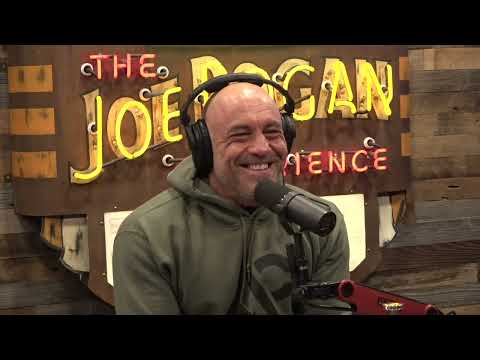
Joe Rogan Experience #2085 - Charles Wesley Godwin
Narrator, Narrator, Joe Rogan (host), Charles Wesley Godwin (guest), Narrator, Narrator, Charles Wesley Godwin (guest)
In this episode of The Joe Rogan Experience, featuring Narrator and Narrator, Joe Rogan Experience #2085 - Charles Wesley Godwin explores charles Wesley Godwin on risk, resilience, creativity, and small-town roots Joe Rogan talks with country artist Charles Wesley Godwin about his unconventional path into music, from late-blooming singer-songwriter to near financial collapse and eventual breakout success. They explore the decline of small industrial and mining towns, the opioid crisis, and how economic collapse reshapes communities and families. A large portion of the conversation centers on the creative process—treating songwriting and stand-up like a job, battling self-doubt, and rejecting jealousy in favor of inspiration from others’ success. They also veer into broader cultural issues: media distrust after COVID, U.S. border and drug policy, global coal use and climate narratives, and how faith, family, and hometown roots keep Godwin grounded despite life on the road.
Charles Wesley Godwin on risk, resilience, creativity, and small-town roots
Joe Rogan talks with country artist Charles Wesley Godwin about his unconventional path into music, from late-blooming singer-songwriter to near financial collapse and eventual breakout success. They explore the decline of small industrial and mining towns, the opioid crisis, and how economic collapse reshapes communities and families. A large portion of the conversation centers on the creative process—treating songwriting and stand-up like a job, battling self-doubt, and rejecting jealousy in favor of inspiration from others’ success. They also veer into broader cultural issues: media distrust after COVID, U.S. border and drug policy, global coal use and climate narratives, and how faith, family, and hometown roots keep Godwin grounded despite life on the road.
Key Takeaways
Treat creativity like a daily job, not a waiting game for inspiration.
Godwin writes with a notebook and voice memos every day, even when uninspired, echoing Jason Isbell and Steven Pressfield’s idea that consistently ‘showing up’ invites the muse and produces more good lines and melodies over time.
Get the full analysis with uListen AI
Other people’s success doesn’t diminish yours—use it as fuel instead of envy.
Both Rogan and Godwin emphasize rejecting a ‘famine mentality’; when peers break through (like Jelly Roll, Zach Bryan, Oliver Anthony), it should inspire harder work, not bitterness or hope for their failure.
Get the full analysis with uListen AI
Pursuing your dream requires risking failure, embarrassment, and financial hardship.
Godwin recounts going broke on tour, explaining to his band that he couldn’t pay them, and them accepting half pay to keep going—illustrating that the alternative, quitting and living with lifelong regret, is far worse.
Get the full analysis with uListen AI
Healthy habits and restraint are essential to survive a heavy touring schedule.
Running, vitamins, better food choices, and cutting back on drinking are framed as non-negotiables if you want to sustain performance, voice, and energy while traveling hundreds of days a year.
Get the full analysis with uListen AI
Economic collapse in single-industry towns ripples through every part of community life.
Stories from Morgantown, Flint, Detroit, and coal country show how plant closures or mine shutdowns erase thousands of jobs, hollow out main streets, spike crime or addiction, and leave entire regions struggling to reinvent themselves.
Get the full analysis with uListen AI
Question official narratives—especially when money and power are at stake.
Rogan points to media behavior during COVID, pharmaceutical incentives (like with OxyContin), climate and energy debates, and border policy as areas where information is filtered through corporate or political interests rather than pure public health or truth.
Get the full analysis with uListen AI
Faith and a sense of calling can stabilize artists through uncertainty.
Godwin describes viewing songwriting as what he was “put on this earth to do,” and Rogan connects Oliver Anthony’s rapid rise to his turning his life toward God, suggesting that framing your work as a calling helps you weather ruts, pressure, and fear.
Get the full analysis with uListen AI
Notable Quotes
“You don’t pursue that dream if you’ve got a law degree and a 401(k)… you gotta be a wild person. You gotta have a screw loose.”
— Joe Rogan
“It was that close to just… even if I wanted to, I wouldn’t have had money to even put in the gas tank.”
— Charles Wesley Godwin
“Other people’s success is not your failure. The exact same experience can be fuel for you instead of poison.”
— Joe Rogan
“If you’ve never just fallen on your face before, you might be scared to do it. But once you’ve done that, you gain an advantage… you’re not scared to go for it.”
— Charles Wesley Godwin
“Life is short, but it’s also pretty long. The learning process is long.”
— Joe Rogan
Questions Answered in This Episode
How should artists balance taking big career risks with protecting their families’ financial stability and well-being?
Joe Rogan talks with country artist Charles Wesley Godwin about his unconventional path into music, from late-blooming singer-songwriter to near financial collapse and eventual breakout success. ...
Get the full analysis with uListen AI
What practical steps can someone in a declining small town take if they want to reinvent themselves the way Godwin did?
Get the full analysis with uListen AI
Where is the line between healthy skepticism of media and institutions and falling into unproductive conspiracy thinking?
Get the full analysis with uListen AI
How can established artists consciously avoid the ‘famine mentality’ and build a culture of mentorship like the support Godwin received from Zach Bryan and others?
Get the full analysis with uListen AI
In a world of legal and illegal drugs, what would a realistic, humane, and effective U.S. drug policy look like?
Get the full analysis with uListen AI
Transcript Preview
(drumming music) Joe Rogan podcast, check it out.
The Joe Rogan Experience.
Train by day, Joe Rogan podcast by night, all day. (rock music) What's up, man? Pleasure to meet you. What's happening?
Yeah, pleasure to be here, Joe. Thanks for having me.
Oh. Listen, my honor. I love your music. I got, uh, introduced to you by Duncan. We were in the green room of the mothership and Duncan goes, "You gotta hear this." And he puts on Family Ties. And I went, "Damn, that's a good fucking song." And then we played Que Country Roads, and then we just got on a roll. And then, like, the whole night we played your music.
Hell yeah, dude.
It was fucking awesome, yeah.
He was telling me that, you know, he, he showed my music to you. He said normally you don't like his recommendations, but he said-
Well, he'll, he'll go a little emo on you.
(laughs)
(laughs)
But he s- he said that you dug that. And I was like, "Holy shit, man. Isn't that something?" I, uh... Duncan is really cool. I was like... I was at, uh, Apple Studios in Nashville doing, like, this live session thing with them when he, he messages me on Twitter and asked me to be on his podcast. And, like, that made my, my freaking week. Li- I was like, "Holy shit, Duncan Trussell li- likes my music? Fuck yeah."
That's so cool.
And then we were, we were doing his podcast and then afterwards he's like, "Yeah, man, I sh- I showed your music to Joe and he really liked it too." I was like, "Fuck yeah."
(laughs)
So, yeah, shout out to Duncan. I appreciate him doing that, man.
No, Duncan's the man. He is one of the most unusual people that I've ever met in my life. There's not another one like him.
Yeah, he's cracking me up. (laughs)
Yeah, he's a one of one.
(laughs) Yeah.
That's a one of one. When he moved here I was so happy, 'cause he was... he, uh, went to Asheville. 'Cause, you know, he grew up in Asheville.
Mm-hmm.
And, uh, he moved there and i- i- it was just... You know, during the pandemic it got bleak there. You know, the jobs were all dried up, everything was fucked, everything closed down. And he said crime was crazy.
Mm-hmm.
It's like, Asheville is, like, per capita in the top 10 of, uh, crime in the country.
Oh. Holy shit.
So, I mean... I might've made that up.
No, shit.
(laughs)
I mean...
Let's see if that's a fact-
(laughs)
... 'cause ev- I think... I'm pretty sure Duncan told me that. But he's like, "Dude, there's so much fucking crime."
(laughs)
"It's everywhere. Everyone's on meth."
Install uListen to search the full transcript and get AI-powered insights
Get Full TranscriptGet more from every podcast
AI summaries, searchable transcripts, and fact-checking. Free forever.
Add to Chrome