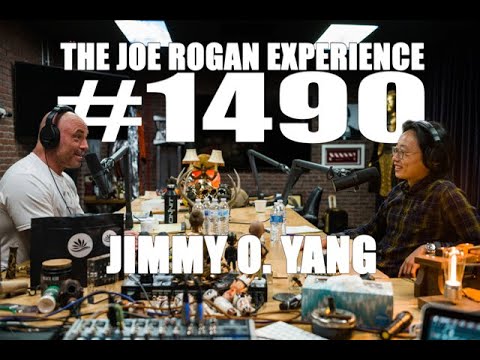
Joe Rogan Experience #1490 - Jimmy O Yang
Joe Rogan (host), Jimmy O. Yang (guest), Narrator, Narrator, Narrator, Jimmy O. Yang (guest)
In this episode of The Joe Rogan Experience, featuring Joe Rogan and Jimmy O. Yang, Joe Rogan Experience #1490 - Jimmy O Yang explores jimmy O. Yang, Comedy, and Culture Clashes in a Pandemic World Joe Rogan and Jimmy O. Yang riff on how COVID shut down live comedy, why Zoom stand-up mostly fails, and how some comics like Dave Chappelle are creatively adapting with outdoor, socially distanced shows.
Jimmy O. Yang, Comedy, and Culture Clashes in a Pandemic World
Joe Rogan and Jimmy O. Yang riff on how COVID shut down live comedy, why Zoom stand-up mostly fails, and how some comics like Dave Chappelle are creatively adapting with outdoor, socially distanced shows.
They dig into the realities of the stand-up grind: brutal rooms, bad openers, “urban” vs mainstream crowds, the importance of reps, and how fame or acting success can distort your relationship with stand-up.
A big portion centers on Asian identity, representation, and family—touching on stereotypes, intra-Asian hierarchies, Hong Kong–China politics, Chairman Mao’s legacy, and Jimmy’s complicated but funny dynamic with his hyper-confident actor dad.
They also explore culture-war topics like cancel culture, Twitter mobs, privacy erosion, protest policing, and why different styles of comedy—from Hannah Gadsby to Mitch Hedberg—can coexist without “killing” stand-up.
Key Takeaways
Virtual stand-up is usually a bad substitute for live comedy.
Rogan and Yang emphasize that Zoom shows remove the live feedback, timing, and energy stand-up relies on, often leaving comics looking flat—and permanently recorded while they “bomb.”
Get the full analysis with uListen AI
Room dynamics and openers can make or break a set.
They describe how bad openers can drain all the “comedy energy” from a room, while overly high-energy or musical acts can be impossible to follow; strong comics prefer openers who match their tone and don’t sabotage the headliner.
Get the full analysis with uListen AI
Representation matters, especially when there are few examples on screen.
Jimmy explains how figures like Bruce Lee and movies like Crazy Rich Asians directly influence how Asian men are perceived (and even sexualized) in the West, and why roles like William Hung feel regressive for Asian visibility.
Get the full analysis with uListen AI
China’s political system blends authoritarian control with capitalist efficiency.
Yang recounts family stories from the Communist Revolution—intellectuals jailed, doors kicked in—and links them to today’s Hong Kong crackdown, while Rogan notes how state-corporate fusion gives China strategic advantages but threatens freedoms.
Get the full analysis with uListen AI
Cancel culture and old tweets punish context-free jokes as if they were manifestos.
They argue that many comics’ old tweets were experimental or deliberately offensive for laughs, but online mobs weaponize them out of context, creating job losses and fear, especially among actors whose careers depend on image management.
Get the full analysis with uListen AI
Highly processed social media “information” is as unhealthy as junk food.
Rogan cites Alan Levinovitz’s analogy that tweets and hot takes are like processed food—stripped of nuance, overloaded with emotional triggers, and harmful if they become your primary “information diet.”
Get the full analysis with uListen AI
Stand-up is a meritocracy—but only if you accept pain, reps, and bombing.
Both highlight that whatever your angle (race, gender, fame), long-term success still requires relentless stage time, writing, and the willingness to eat bad sets; coasting on old material or celebrity eventually gets exposed.
Get the full analysis with uListen AI
Notable Quotes
“Virtual standup comedy shows on Zoom? They can eat shit.”
— Joe Rogan
“William Hung is the exact opposite of Bruce Lee.”
— Jimmy O. Yang
“The military’s banned from using tear gas on the battlefield, but police can use it on crowds at home.”
— Joe Rogan
“Typing in ‘local open mics’ in your Google search is one step away from typing in ‘what’s the best way to kill myself?’”
— Jimmy O. Yang
“Comedy’s a meritocracy. The weirder you are, the better you probably are—if you put the work in.”
— Paraphrased from Joe Rogan and Jimmy O. Yang’s discussion
Questions Answered in This Episode
How will the stand-up world permanently change after COVID—will outdoor or hybrid formats last, or will clubs just snap back to the old model?
Joe Rogan and Jimmy O. ...
Get the full analysis with uListen AI
Where should creators draw the line between accountability and forgiveness when it comes to old, contextless tweets or edgy bits from years ago?
They dig into the realities of the stand-up grind: brutal rooms, bad openers, “urban” vs mainstream crowds, the importance of reps, and how fame or acting success can distort your relationship with stand-up.
Get the full analysis with uListen AI
Is there an ethical way to make shows like American Idol that spotlight delusional or vulnerable contestants without exploiting them?
A big portion centers on Asian identity, representation, and family—touching on stereotypes, intra-Asian hierarchies, Hong Kong–China politics, Chairman Mao’s legacy, and Jimmy’s complicated but funny dynamic with his hyper-confident actor dad.
Get the full analysis with uListen AI
How can Asian performers balance taking high-profile roles that might be stereotypical with the need to increase representation and visibility overall?
They also explore culture-war topics like cancel culture, Twitter mobs, privacy erosion, protest policing, and why different styles of comedy—from Hannah Gadsby to Mitch Hedberg—can coexist without “killing” stand-up.
Get the full analysis with uListen AI
If social media is “processed information,” what practical habits can people adopt to build a healthier information diet without totally disengaging?
Get the full analysis with uListen AI
Transcript Preview
Um, hey, what's up, brother? How are you?
What's up, Joe?
Good to see you.
It's great seeing you. It's great seeing a fellow comedian that I, I don't think I've been inside a comedy club or seen any comedians for two months now.
It's weird. It's like they're trying to get it out of our system, like they're trying to, like, uh, like, if we were junkies, if we were comedy junkies, we've gone through a rehab. Y- you have to live like a regular person for months.
It's tough. I mean, I've gotten past the phase of, like... 'Cause back in the day, if I didn't do standup for a week, I would get depressed.
Yeah.
'Cause there's nothing else going on i- in my life. But now, I got other stuff going. I can do writing, whatever. But I feel bad for, like, the road guys. And, and-
Oh, yeah.
... and the open mic'ers that just coming up.
Oh, yeah.
And I'm sure you've gotten this. Are a lot of people inviting you to do virtual, virtual standup comedy shows on Zoom?
Yeah, they can eat shit.
Th- that is the worst idea on the fucking planet.
Bro, even great comics look terrible on those.
And, and they can record you forever.
Exactly, exactly. And record you looking terrible, bombing. Just, it's just not the right place. It's like, uh, let's play basketball underwater.
Yeah. (laughs)
No, that doesn't work.
But that shows you how desperate people are.
Yeah.
I- they would put their whole material on the line, uh, to do virtual, no real people audience, just to get their rocks off.
Dave Chappelle's got a very unique solution. He's doing some shit in his backyard. He sent me... Well, not his backyard. His friend has a wedding pavilion.
Ooh.
So, he set up this thing at a wedding pavilion. All of it is, uh, COVID-safe. Look at that. That's Dave on stage in Ohio at a wedding pavilion. (laughs)
Oh, wow, dude. That's awesome.
So, that, that's be where people would get married, and Dave's up there doing standup.
Yeah. Well, he's so good, he doesn't need, like, um, a low ceiling-
No.
... you know, packed seats.
He just needs a crowd. And, you know, he also, I think, he's just, he's a, he just figured out how to improvise. He's like, "There's gotta be a way to get around this. I'm going crazy."
Yeah.
"There's gotta be a way." And doing it outside, separating everybody, following all the COVID requirements. The governor actually had to approve this.
Oh, really?
Yeah, yeah. He's in Ohio. So, the governor of Ohio approved all this.
When did this happen? Like, recently?
He's just doing it. He just started doing it. He, he texted me a couple days ago saying it was gonna take like four days to work the kinks out. "We're making history over here, Joe Rogan." (laughs)
Install uListen to search the full transcript and get AI-powered insights
Get Full TranscriptGet more from every podcast
AI summaries, searchable transcripts, and fact-checking. Free forever.
Add to Chrome