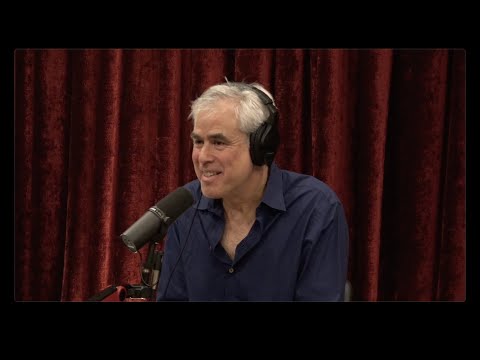
Joe Rogan Experience #2121 - Jonathan Haidt
Narrator, Jonathan Haidt (guest), Joe Rogan (host), Narrator, Narrator
In this episode of The Joe Rogan Experience, featuring Narrator and Jonathan Haidt, Joe Rogan Experience #2121 - Jonathan Haidt explores smartphones, social media, and how childhood got dangerously rewired worldwide Joe Rogan and psychologist Jonathan Haidt discuss Haidt’s book *The Anxious Generation* and the sharp rise in youth anxiety, depression, and social dysfunction since the early 2010s. Haidt argues that a rapid “phone-based childhood” replaced free play and real-world independence, with girls hit hardest by social media and boys by gaming and porn. They separate two problems: kids’ mental health versus broader threats to democracy, including TikTok’s national-security risks, bots, algorithmic outrage, and institutional capture. Haidt proposes four cultural norms and collective action by parents and schools to largely reverse the youth mental health crisis within a few years, even without waiting for tech companies or Congress.
Smartphones, social media, and how childhood got dangerously rewired worldwide
Joe Rogan and psychologist Jonathan Haidt discuss Haidt’s book *The Anxious Generation* and the sharp rise in youth anxiety, depression, and social dysfunction since the early 2010s. Haidt argues that a rapid “phone-based childhood” replaced free play and real-world independence, with girls hit hardest by social media and boys by gaming and porn. They separate two problems: kids’ mental health versus broader threats to democracy, including TikTok’s national-security risks, bots, algorithmic outrage, and institutional capture. Haidt proposes four cultural norms and collective action by parents and schools to largely reverse the youth mental health crisis within a few years, even without waiting for tech companies or Congress.
Key Takeaways
Treat smartphones as adult tools and delay them for kids.
Haidt’s first proposed norm is “no smartphone before high school”; instead, give flip phones that allow calls and texts but block apps, social media, and browsers that fragment attention and invite predators.
Get the full analysis with uListen AI
Raise the real social media age to 16 and enforce it.
Platforms nominally require users to be 13, but verification is weak. ...
Get the full analysis with uListen AI
Make schools truly phone-free, not phone-in-pocket.
Evidence shows that when smartphones are present in school, attention, learning, and achievement drop; schools that lock phones away (lockers/Yondr pouches) report more conversation, laughter, and focus within weeks.
Get the full analysis with uListen AI
Restore free play and unsupervised independence in the real world.
Haidt says we have “overprotected kids in the real world and underprotected them online”; letting kids roam, solve problems, and take age-appropriate risks builds executive function and resilience that screens erode.
Get the full analysis with uListen AI
Solve the ‘collective action problem’ by organizing locally.
Most kids and parents say they’d prefer a world where no one had social media early, but they feel trapped because “everyone else is on it”; norms can shift quickly if enough parents, schools, and communities coordinate rules together.
Get the full analysis with uListen AI
Push for identity/age verification on large platforms while preserving pseudonymity.
Haidt suggests “know your customer” style rules so platforms verify that accounts are real people of a certain age and country via a third party, which would massively reduce bots and foreign manipulation without forcing users to post under real names.
Get the full analysis with uListen AI
Focus regulation on architecture, not content or censorship.
Instead of governments or companies deciding which views are allowed, Haidt urges reforms to structural features—virality, algorithmic amplification, comment-thread design—that now supercharge extremes and intimidation while sidelining moderates.
Get the full analysis with uListen AI
Notable Quotes
“We have over‑protected our kids in the real world and under‑protected them online.”
— Jonathan Haidt
“When social media became super viral after 2009, it was as though everyone had a dart gun and everybody could shoot everyone.”
— Jonathan Haidt
“My fear is that we are paddling upriver toward a raging waterfall powered by these devices.”
— Joe Rogan
“This is a category change. It’s a rewiring of the basic communication network of society in ways we’ve never faced before.”
— Jonathan Haidt
“Parents everywhere are fed up. I think 2024 is going to be for kids’ digital lives what 1989 was for Soviet communism.”
— Jonathan Haidt
Questions Answered in This Episode
If most teenagers admit social media makes them miserable, what would it take in your community to coordinate a real “no social media before 16” norm?
Joe Rogan and psychologist Jonathan Haidt discuss Haidt’s book *The Anxious Generation* and the sharp rise in youth anxiety, depression, and social dysfunction since the early 2010s. ...
Get the full analysis with uListen AI
How should we balance legitimate concerns about government overreach with the clear national-security risks of a Chinese‑controlled TikTok shaping U.S. youth opinion?
Get the full analysis with uListen AI
What specific design changes to algorithms and virality would make social platforms healthier for democracy without becoming political censors?
Get the full analysis with uListen AI
How can parents practically increase kids’ real‑world independence and free play in environments that feel unsafe or hyper‑scheduled?
Get the full analysis with uListen AI
Are universities and media organizations capable of restoring trust and viewpoint diversity from within, or do we need new parallel institutions and platforms built on different values?
Get the full analysis with uListen AI
Transcript Preview
(drumbeats) Joe Rogan podcast, check it out.
The Joe Rogan Experience.
Train by day, Joe Rogan podcast by night, all day. (rock music) Hello, Jonathan. Good to see you, sir.
Good to see you again, Joe.
Um, the same problems that you talked about when you were here last, that I've referenced many times since on the podcast, have, uh, only exasperated unfortunately. And, uh, that's why you wrote this, The Anxious Generation. (smacks lips) And, uh, it could not be more true, how the great rewiring of childhood is causing an epidemic of mental illness. I don't think anybody can dispute that.
Yeah. Th- When I was on last time, there was a dispute. There were some psychologists who said, "Oh, this is just a moral panic. They said this about video games and comic books, and you know, no, this is, this is not a real thing," they said. Now they don't.
Yeah. I think it was pretty obvious. I think it was only their preconceived notions that were keeping them from admitting it before, or at least looking at it before. Or maybe they don't have children. You know? It could be that.
(laughs)
I think a lot of older people, particularly boomers, they're a little bit disconnected from it because they're not ... unless they're addicted to Twitter.
(laughs)
You know? They're not engaging in this stuff.
Yeah. And they're often thinking, "You know, when I was a kid, we watched too much TV and we turned out okay."
Yeah.
But part of the message of the book is that social media and these things kids are doing on screens are not really like TV. They're much, much worse for development.
Yeah. And even watching too much TV, d- I don't agree that they turned out okay.
(laughs)
(laughs) I think it had a ... It had a pervasive effect. It did.
I, yeah.
But nothing like this.
Well, that's right. Because you know, like, when we were watching TV, I'm a little older than you. I was born in 1963. Um, so I grew up watching a lot of TV. You know, maybe an hour or two a day weekdays and then two or three hours on the weekends. But it was a bigger screen. You're watching with your sisters or with your friends. You're arguing about things. You're eating. So it's, it's actually pretty social.
Right.
Uh, but now, kids are spending the latest, the latest survey Gallup finds that it's about, um, well, it's five hours a day just on social media. Just social media-
Yeah.
... including TikTok and Instagram. And when you add in all the other screen-based stuff, it's like nine hours a day. And that's not social. It's private on your little screen. You're not communicating with others. So, uh, in all these ways, the new way that kids are digital is really not like what we had when we were, when we were on t- on t- watching TV.
Install uListen to search the full transcript and get AI-powered insights
Get Full TranscriptGet more from every podcast
AI summaries, searchable transcripts, and fact-checking. Free forever.
Add to Chrome