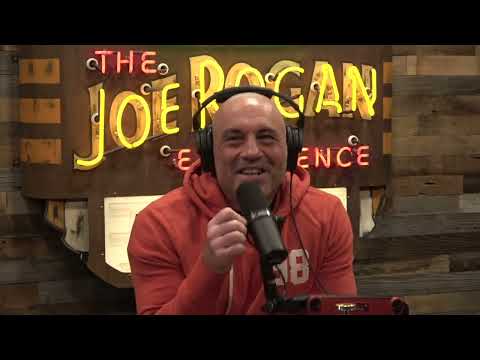
Joe Rogan Experience #1838 - Brian Simpson
Narrator, Narrator, Joe Rogan (host), Brian Simpson (guest), Joe Rogan (host), Narrator, Narrator, Narrator, Narrator, Narrator, Narrator, Narrator
In this episode of The Joe Rogan Experience, featuring Narrator and Narrator, Joe Rogan Experience #1838 - Brian Simpson explores tech, power, and apocalypse: Rogan and Simpson riff on everything Joe Rogan and comedian Brian Simpson bounce through an extremely wide-ranging conversation, starting with iPhone vs. Android and Apple’s walled-garden tactics, then moving into telecom history, streaming monopolies, and media economics.
Tech, power, and apocalypse: Rogan and Simpson riff on everything
Joe Rogan and comedian Brian Simpson bounce through an extremely wide-ranging conversation, starting with iPhone vs. Android and Apple’s walled-garden tactics, then moving into telecom history, streaming monopolies, and media economics.
They veer into existential threats like Yellowstone’s supervolcano and hypothetical asteroids, using them to criticize political dysfunction, tribalism, and performative activism on both left and right.
The discussion repeatedly returns to power structures—Big Tech ecosystems, the NFL and DirecTV, SiriusXM, Russian propaganda, U.S. ideological subversion, and institutional corruption in politics and policing.
They close on fight sports, cars, aging, and bodily maintenance, tying together themes of individual resilience versus systemic decay, all framed through dark humor and personal anecdotes.
Key Takeaways
Tech ecosystems are designed to lock you in psychologically, not just technically.
Simpson explains how Apple’s green vs. ...
Get the full analysis with uListen AI
Telecom business models simply shift what’s metered, but the constraint is always capacity.
They trace the evolution from paid minutes to paid texts to paid data, noting carriers blamed network congestion at each stage while still failing under stress (e. ...
Get the full analysis with uListen AI
“Anchor” content can keep entire legacy platforms alive far beyond their natural lifespan.
Rogan and Simpson argue NFL Sunday Ticket is essentially propping up DirecTV, just as Howard Stern anchors SiriusXM; when a single property holds that much power, rights negotiations become existential for platforms.
Get the full analysis with uListen AI
Propaganda has shifted from universities to algorithmic social media, but the goals are unchanged.
Using Yuri Bezmenov’s 1980s warning on ideological subversion, Rogan links Soviet-era strategies to modern troll farms running top Facebook Christian pages and staging opposing protests to deepen U. ...
Get the full analysis with uListen AI
Performative activism often alienates allies and fails on effectiveness.
They criticize climate and abortion protesters who block highways, arguing the tactic punishes random commuters (many of whom may agree with them) while doing nothing to address actual policy levers or emissions, and even increasing CO₂ via idling traffic.
Get the full analysis with uListen AI
Both major U.S. political factions are compromised, but in different ways.
Simpson frames Republicans as ruthlessly focused on winning (refusing to cancel their own), while Democrats are more concerned with moral purity, willing to sacrifice power by ousting people like Al Franken, which he sees as self-defeating in hardball politics.
Get the full analysis with uListen AI
Aging institutions create serious risk when led by visibly declining leaders.
They question the fitness of very elderly politicians, mock press-secretary spin about Biden’s stamina, and suggest age limits or capability tests for high office, warning that powers like the Patriot Act outlive any one ‘benevolent’ administration.
Get the full analysis with uListen AI
Notable Quotes
“Everything’s beautiful in the garden, but you try to do some shit outside.”
— Brian Simpson (on Apple’s walled-garden ecosystem)
“They don’t care that the house is on fire. They wanna know who’s in charge of the ashes when it’s over.”
— Brian Simpson (on political leadership priorities in crises)
“What that basically means is to change the perception of reality of every American… so that no one is able to come to sensible conclusions.”
— Yuri Bezmenov (clip quoted by Joe Rogan, on ideological subversion)
“We wanna feel good about who’s representing us instead of winning.”
— Brian Simpson (on liberals and cancel culture versus GOP ruthlessness)
“Some things you think are super impossible and bizarre are actually true.”
— Joe Rogan (on Bohemian Grove, Epstein’s island, and elite rituals)
Questions Answered in This Episode
How much responsibility do companies like Apple have to reduce social pressure and interoperability friction versus maximizing their ecosystem lock-in?
Joe Rogan and comedian Brian Simpson bounce through an extremely wide-ranging conversation, starting with iPhone vs. ...
Get the full analysis with uListen AI
If modern propaganda largely operates through social media algorithms, what practical steps could individuals or governments take to counter ideological subversion without sliding into censorship?
They veer into existential threats like Yellowstone’s supervolcano and hypothetical asteroids, using them to criticize political dysfunction, tribalism, and performative activism on both left and right.
Get the full analysis with uListen AI
Are Democrats wrong to prioritize ethical purity over raw political power, or is winning at all costs inherently corrosive to a democracy?
The discussion repeatedly returns to power structures—Big Tech ecosystems, the NFL and DirecTV, SiriusXM, Russian propaganda, U. ...
Get the full analysis with uListen AI
What would a realistic, effective form of activism look like on issues like abortion and climate change, in contrast to symbolic tactics like blocking highways?
They close on fight sports, cars, aging, and bodily maintenance, tying together themes of individual resilience versus systemic decay, all framed through dark humor and personal anecdotes.
Get the full analysis with uListen AI
Should there be formal age or cognitive/physical fitness requirements for top political offices, and how could those be implemented without becoming a new tool for partisan abuse?
Get the full analysis with uListen AI
Transcript Preview
(drumming music) Joe Rogan podcast, check it out.
The Joe Rogan Experience.
Train by day, Joe Rogan podcast by night, all day. (rock music) Uh, well, I appreciate that you're committed to this fucking Android thing.
(laughs)
I have a lot of friends that, uh, that they send me the green text and every now and then one will show up blue. They give up and they jump on the iPhone train. I'm like, "Interesting."
I can't do it, man.
No? Why?
I-
What is it about it?
I (clears throat) because I, it's one of those things where I'm so into my tech and shit.
Yeah.
And if you, if I go iPhone, then I gotta go Apple everything.
Why?
Because they're, because that's the, that's the whole advantage of going Apple is that it, it all just works together so well because they're on their own little ecosystem, you know?
What's the advantage of not going Apple?
Uh, customization.
Oh, okay. But you, you're not... Are you using the phone with other stuff? Does it integrate with other stuff?
Yeah.
The way an iPhone does?
Because I have, I have a Samsung phone, Samsung tablet, Samsung Watch.
Oh.
You know, and if I go iPhone then I gotta get an Apple Watch, I gotta get-
Oh.
... a, uh, iPad, you know?
What's better?
(sighs) Um...
Have you fucked with Apple stuff?
Oh, yeah, yeah, yeah.
Yeah?
I used to... I've had iPhones.
Yeah?
But I just, um-
Oh, so you went Android after you went iPhone?
I went, I went Android, iPhone, Android, iPhone, Android.
Oh, so back and forth, huh?
Yeah, I went back and forth. But at the end of the day, it was just like (sucks teeth) I, I stuck with Andro- because Android is more, you know, on top of, like, some of the latest fe- like, App- Apple won't do anything unless they can do it in a way where you, where it goes, "Oh, that's Apple." You know what I mean?
Mm-hmm.
Like, like the, the fucking headphones.
Right.
Like, they, they would, they would not come out with headphones until they could do something where you like, when you see it, you know that it's not something else.
Right, you know it's an Apple device.
Right.
Exactly.
Same thing with the Apple Watch. That's why it's shaped weird is because-
Yeah.
... they want you to look at it and go, "That's an A- that's an Apple."
That is true because the Samsung one, some dude had one the other day on, it looked like a regular watch. I go, "That's a dope watch. What is it?" And he's like, "It's a Galaxy Watch," and I thought it was a regular watch.
Install uListen to search the full transcript and get AI-powered insights
Get Full TranscriptGet more from every podcast
AI summaries, searchable transcripts, and fact-checking. Free forever.
Add to Chrome