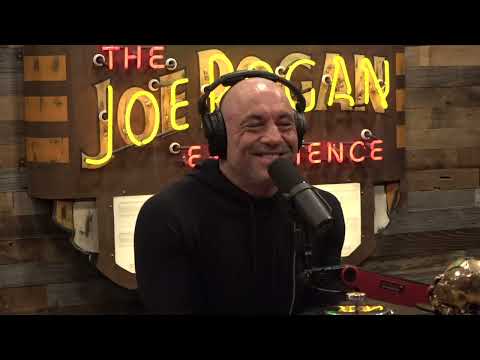
Joe Rogan Experience #1964 - Rick Doblin
Narrator, Rick Doblin (guest), Joe Rogan (host), Joe Rogan (host)
In this episode of The Joe Rogan Experience, featuring Narrator and Rick Doblin, Joe Rogan Experience #1964 - Rick Doblin explores rick Doblin and Joe Rogan on Healing Trauma With Psychedelics Rick Doblin, founder of MAPS, joins Joe Rogan to discuss the decades‑long effort to legitimize psychedelic‑assisted therapy, especially MDMA for PTSD and ibogaine for addiction. They trace Doblin’s journey from draft resister and underground psychedelic advocate to leading FDA‑level clinical trials and building bipartisan support, particularly through work with veterans. The conversation explores powerful personal psychedelic experiences (DMT, 5‑MeO‑DMT, ibogaine), neuroplasticity, and how these medicines can disrupt rigid psychological patterns and reduce trauma. They also examine propaganda, media distortions about drugs, the failures of the drug war, and the ethical crossroads MAPS faces as it considers philanthropy versus going public to fund final approvals and global access.
Rick Doblin and Joe Rogan on Healing Trauma With Psychedelics
Rick Doblin, founder of MAPS, joins Joe Rogan to discuss the decades‑long effort to legitimize psychedelic‑assisted therapy, especially MDMA for PTSD and ibogaine for addiction. They trace Doblin’s journey from draft resister and underground psychedelic advocate to leading FDA‑level clinical trials and building bipartisan support, particularly through work with veterans. The conversation explores powerful personal psychedelic experiences (DMT, 5‑MeO‑DMT, ibogaine), neuroplasticity, and how these medicines can disrupt rigid psychological patterns and reduce trauma. They also examine propaganda, media distortions about drugs, the failures of the drug war, and the ethical crossroads MAPS faces as it considers philanthropy versus going public to fund final approvals and global access.
Key Takeaways
MDMA‑assisted therapy shows unprecedented results for severe, chronic PTSD.
In MAPS’ phase 3 trials, about 88% of participants responded and 67% no longer met PTSD criteria after three MDMA‑assisted sessions plus psychotherapy, with strong safety data. ...
Get the full analysis with uListen AI
Ibogaine powerfully disrupts addiction and entrenched patterns but needs medicalized, legal access.
Doblin describes ibogaine’s ability to alleviate opioid withdrawal and open weeks of elevated neuroplasticity, as well as his own intense ibogaine experience that severed the link between self‑criticism and self‑hatred. ...
Get the full analysis with uListen AI
Psychedelics reduce rigid psychological defenses and can catalyze deep, lasting change when integrated.
Both men describe DMT and 5‑MeO‑DMT as encounters with a “source code” reality that strip away ideological armor and identity stories. ...
Get the full analysis with uListen AI
The drug war’s core error is demonizing substances instead of addressing relationships and context.
Doblin argues drugs are neither inherently good nor bad; outcomes depend on set, setting, dose, and social context. ...
Get the full analysis with uListen AI
Building unlikely alliances has been key to psychedelic normalization and policy change.
Support from veterans, right‑leaning politicians (e. ...
Get the full analysis with uListen AI
Scientific and media misconduct around MDMA created enduring myths that still shape public opinion.
They recount the fabricated “holes in the brain” imagery promoted on MTV and Oprah, and a retracted Science paper where primates were mistakenly given methamphetamine instead of MDMA. ...
Get the full analysis with uListen AI
MAPS faces an ethical funding crossroads that may reshape how psychedelic medicine is rolled out.
To finish FDA approval and reach financial sustainability, MAPS needs tens of millions of dollars and is weighing large‑scale philanthropy against taking private or public investment. ...
Get the full analysis with uListen AI
Notable Quotes
“The essence of democracy is trying to find common ground with people with whom you may disagree on everything else.”
— Rick Doblin (relaying Justice Stephen Breyer’s advice on accepting controversial donations)
“If anybody wants to say that people who enjoy psychedelics or marijuana are lazy and don’t contribute, what about me?”
— Joe Rogan
“I severed the connection between self‑criticism and self‑hatred. I accepted myself as a flawed human being, and I made an ally out of the self‑critical part of my brain.”
— Rick Doblin (describing his transformative ibogaine experience)
“The more dangerous the drug, the more important it is that it be legal.”
— Rick Doblin
“It’s very important that the people that are on this side don’t bullshit anybody. We have to be completely honest about the pros and cons.”
— Joe Rogan
Questions Answered in This Episode
How can regulators ensure broad, affordable access to MDMA‑assisted therapy while preventing commercialization from undermining therapeutic integrity?
Rick Doblin, founder of MAPS, joins Joe Rogan to discuss the decades‑long effort to legitimize psychedelic‑assisted therapy, especially MDMA for PTSD and ibogaine for addiction. ...
Get the full analysis with uListen AI
What safeguards and screening protocols are most important to minimize serious adverse psychological reactions to powerful psychedelics like 5‑MeO‑DMT and ibogaine?
Get the full analysis with uListen AI
If ibogaine truly has low abuse potential and high therapeutic value, what practical steps could advocates take to push for its removal from Schedule I?
Get the full analysis with uListen AI
How might a world aiming for “net‑zero trauma by 2070” actually measure progress, and what role should psychedelics play relative to social, economic, and environmental reforms?
Get the full analysis with uListen AI
Given past scientific misconduct and propaganda around drugs, what independent oversight or transparency mechanisms are needed to keep future psychedelic research honest and trustworthy?
Get the full analysis with uListen AI
Transcript Preview
(drumming music plays) Joe Rogan podcast, check it out. The Joe Rogan Experience.
Train by day, Joe Rogan podcast by night, all day. (instrumental music plays) Hello, Rick. (laughs)
Good to see you again, my friend. How are you?
Yeah, I'm doing great. It was so nice to be with you a couple weeks ago.
Yeah, it was fun to have you at the club. You were there, like, one of the first days.
Yeah, I think I saw the, um, first event in the small room.
Yes. Yeah, did you see Dave Chappelle?
I did.
Yeah, that, that was the first one. Yeah, we had Dave there. He wanted to do that room. We opened it specifically for him. That was the first time we did a show there. It was very exciting.
Yeah, I really liked having the opportunity to just talk to him a little bit afterwards, and to listen to him. It was, it was hilarious.
Yeah, he's a big fan of what you guys are doing.
Yes. (laughs)
As is, as is everybody, you know? And I think what you guys are doing at Maps is one of the most important things for society and culture, and just consciousness in general, that's, that's happening today, and I'm very, very happy that you're doing that.
Thank you, yeah. Yeah, I'm, I'm pretty e- extremely lucky that, uh, 51 years ago when I was 18, in 1972, and I decided to focus my life on psychedelics, that now I'm 69, all these years later, and it still makes sense. (laughs)
(laughs) Well, back then it must've been a big risk because in the 1970s, when you focused your life on psychedelics, that was like right after that whole sweeping Schedule One Psychedelics Act was passed, right?
Yeah, that was in 1970. Yeah, things looked grim.
Didn't look good.
Yeah. Well, I was a, um, draft resister. I th- I thought that I would, um, serve my country by going to jail, uh, which is kind of a funny way to say it. But I had felt that I'm, I'm not a conscientious, uh, objector. In order to do that, you have to be a pacifist, and so I, I'm not a pacifist. I think there are some times you need to fight and defend yourselves. Um, so the only options for me, as I studied how to respond to, to Vietnam, was to ... I didn't want to pretend I had bone spurs (laughs) or r- run away to Canada, or anything like that. And I studied, uh, Tolstoy and Gandhi and non-violent resistance and decided that, um, the thing that I would do would be to not register for the draft. And I was paying taxes, I had a Social Security number, I had a driver's license, I was in high school. I figured the government knows who I am, and knows where I am, and knows my age, and so I assumed that I would go to jail and that that would be a way to drain the system of energy and to register my protest that way. Martin Luther King actually said a great thing. He said, "The person that thinks a law is unjust and violates it and is willing to suffer the consequences as an example to others about the unjust nature of the law actually has the highest respect for the law."
Install uListen to search the full transcript and get AI-powered insights
Get Full TranscriptGet more from every podcast
AI summaries, searchable transcripts, and fact-checking. Free forever.
Add to Chrome