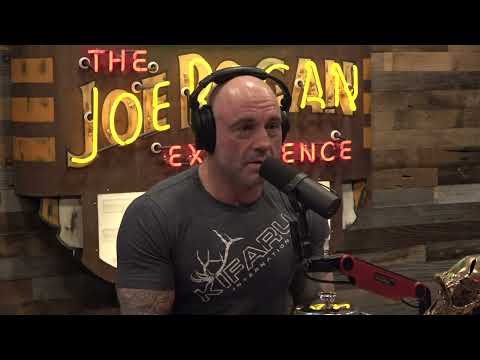
Joe Rogan Experience #1889 - Dr. Phil
Narrator, Dr. Phil McGraw (guest), Joe Rogan (host), Guest (Dr. Phil McGraw) (guest)
In this episode of The Joe Rogan Experience, featuring Narrator and Dr. Phil McGraw, Joe Rogan Experience #1889 - Dr. Phil explores dr. Phil and Joe Rogan Diagnose America’s Cultural and Social Crisis Joe Rogan and Dr. Phil dissect a broad range of societal problems, from declining educational standards and overprotective parenting to homelessness, drug epidemics, and toxic online culture.
Dr. Phil and Joe Rogan Diagnose America’s Cultural and Social Crisis
Joe Rogan and Dr. Phil dissect a broad range of societal problems, from declining educational standards and overprotective parenting to homelessness, drug epidemics, and toxic online culture.
Dr. Phil argues that technology, social media, and “concierge parenting” have undermined meritocracy, resilience, and basic psychological principles, leaving younger generations anxious, lonely, and ill-prepared for real-world competition.
They criticize institutional responses to homelessness, fentanyl, COVID-era school closures, and cancel culture as largely performative and counterproductive, emphasizing accountability, personal responsibility, and common sense solutions.
Both conclude that meaningful change requires honest dialogue, listening across ideological lines, and a renewed focus on shared goals—especially for children—rather than on “winning” partisan or cultural arguments.
Key Takeaways
Stop rewarding bad behavior and re-anchor society in meritocracy.
Dr. ...
Get the full analysis with uListen AI
Let kids struggle appropriately so they build real competence and self-esteem.
Overprotective “concierge parents” who remove every obstacle rob children of the chance to solve problems, learn their own capabilities, and develop the resilience needed to function in a competitive world.
Get the full analysis with uListen AI
Treat help as a hand up, not a handout—especially with homelessness.
They advocate combining empathy (safe shelter, realistic alternatives) with structured expectations (cleanliness, incremental goals, job pathways) and accountability metrics for agencies tasked with reducing homelessness.
Get the full analysis with uListen AI
Confront the fentanyl crisis as intentional poisoning, not just “overdose.”
With counterfeit pills laced with lethal doses of fentanyl, one pill can kill non–drug-addicted teens; parents must educate kids never to take non-prescribed pills and policymakers must prioritize enforcement and awareness.
Get the full analysis with uListen AI
Acknowledge the educational damage from remote learning and close the gap aggressively.
Massive learning loss, illiteracy, and watered-down grading standards will shorten lifespans and economic prospects; Dr. ...
Get the full analysis with uListen AI
Replace cancel culture with “counsel culture.”
Instead of trying to erase offensive voices, they urge confronting bad ideas through conversation, correction, and education—arguing that character assassination is often a sign that someone’s arguments can’t withstand scrutiny.
Get the full analysis with uListen AI
Lead with listening and shared goals to bridge political and cultural divides.
Dr. ...
Get the full analysis with uListen AI
Notable Quotes
“We’ve got too many people being quiet so other people can be comfortable.”
— Dr. Phil
“You don’t reward bad behavior. The world is a meritocracy, and we’ve somehow lost that.”
— Dr. Phil
“Cancel culture should be counsel culture. If you say something offensive, I should counsel with you about it, not cancel you.”
— Dr. Phil
“Very few people are good at ideas being discussed in arguments, because the argument becomes very personal.”
— Joe Rogan
“You can’t change what you don’t acknowledge.”
— Dr. Phil
Questions Answered in This Episode
How do we balance empathy and accountability when designing policies for homelessness and social welfare?
Joe Rogan and Dr. ...
Get the full analysis with uListen AI
What practical steps can parents take to avoid overprotecting their children while still keeping them safe?
Dr. ...
Get the full analysis with uListen AI
How should schools and governments realistically address the long-term learning loss and literacy crisis exacerbated by the pandemic?
They criticize institutional responses to homelessness, fentanyl, COVID-era school closures, and cancel culture as largely performative and counterproductive, emphasizing accountability, personal responsibility, and common sense solutions.
Get the full analysis with uListen AI
Where is the line between protecting marginalized groups from harm and enabling irrational or counterproductive social norms?
Both conclude that meaningful change requires honest dialogue, listening across ideological lines, and a renewed focus on shared goals—especially for children—rather than on “winning” partisan or cultural arguments.
Get the full analysis with uListen AI
What would a concrete, scalable model of “counsel culture” look like in universities, workplaces, and online platforms?
Get the full analysis with uListen AI
Transcript Preview
(drumming music plays) Joe Rogan podcast, check it out.
The Joe Rogan Experience.
Train by day, Joe Rogan podcast by night. All day. (rock music plays) All right, we're up and running.
What do you got there? Got detailed notes?
Well, I've got some statistics I might talk about, I don't know. Maybe I will, maybe I won't.
You're a voice of reason. How do we fix this world?
(laughs)
We're in a mess. This is, this is a weird time to be alive, isn't it?
Yeah, it's getting weirder too.
(laughs)
I mean, it is getting weirder, don't you think?
It is. Oh, certainly Well, it's, it's highlighted on your show. You know, you, you've kind of, uh, exposed a lot of it to America.
Uh, y- you know, every year, uh, in the, in the summer, we kind of work to reinvent ourselves, uh, about how we can tell our stories better and all that sort of thing. And we really focus on what our viewers are asking about and I have to tell you, this year the questions really changed-
Yeah.
... 'cause, you know, it's, we still deal with human functioning, you know, marriage and family and all that. But in addition to that, the questions we got over the summer this year started really changing like, "Are we gonna make it? Ar- are we gonna survive? W- what... Are we safe? Are our kids safe? Um, are they safe in school? What are they being taught in school? Should we be going down there and seeing what they're teaching em? Are we... What's happening a- as far as values in this country?" I mean, people started asking different questions and so I changed everything. I, you know, I used to have that studio audience out in the bleachers out there. I moved everybody on stage and we're just having a focus group every day. Like 110 people up there in a focus group and letting them talk and ask questions 'cause they're really concerned and I, I, I, I just said, "I can't take it anymore. I'm gonna start talking about the social issues along with everything else." Because if you, if you even took psychology in k- in high school, or you took Psych 101, one of the first fundamental principles you learned was you don't reward bad behavior, right?
Right.
You don't reward bad behavior. I mean, the world is a meritocracy and we've somehow lost that. We, all the sudden we're paying people not to work more than they get if they work. And then we say, "What happened to the supply chain?" Well, you s- paid everybody not to work. That's what happened to the supply chain and I, I'm stunned that we're running this country in so many areas where we're just violating the most fundamental psychological principles that you could ever imagine and I'm watching that happen and I say, "I just can't be silent about this anymore." So I'm talking about it.
Install uListen to search the full transcript and get AI-powered insights
Get Full TranscriptGet more from every podcast
AI summaries, searchable transcripts, and fact-checking. Free forever.
Add to Chrome