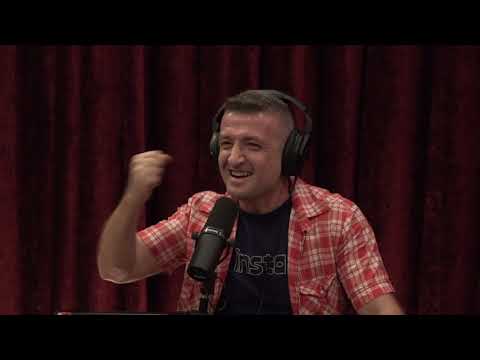
Joe Rogan Experience #1721 - Michael Malice
Narrator, Narrator, Joe Rogan (host), Michael Malice (guest), Narrator, Narrator, Narrator, Narrator, Narrator, Narrator, Narrator, Narrator, Narrator, Narrator
In this episode of The Joe Rogan Experience, featuring Narrator and Narrator, Joe Rogan Experience #1721 - Michael Malice explores joe Rogan and Michael Malice Torch Media, Mandates, and Narratives Joe Rogan and Michael Malice spend a long, free‑wheeling conversation moving from internet memes and trolling culture into a sustained critique of corporate media, COVID narratives, and political power.
Joe Rogan and Michael Malice Torch Media, Mandates, and Narratives
Joe Rogan and Michael Malice spend a long, free‑wheeling conversation moving from internet memes and trolling culture into a sustained critique of corporate media, COVID narratives, and political power.
They argue that legacy outlets like CNN and Rolling Stone routinely mislead the public, particularly around COVID treatments, vaccines, and war, and contrast that with the authenticity and reach of independent media and Substack writers.
The discussion repeatedly returns to themes of control vs. freedom: vaccine mandates, lockdowns, censorship in China, and how easily populations accept surveillance and authoritarian measures when framed as safety.
They also digress into comedy, Chappelle’s trans controversy, North Korea, social media pile‑ons, and personal ethics (honesty, not taking things personally, doing your best) as ways to navigate an increasingly chaotic information landscape.
Key Takeaways
Treat memes and trolling as serious cultural signals, not just jokes.
Rogan and Malice frame meme-making and trolling as a powerful, decentralized form of comedy and commentary that establishment figures neither control nor fully understand, which is why it scares and destabilizes them.
Get the full analysis with uListen AI
Interrogate COVID data categories and how institutions define “vaccinated.”
They highlight reports of hospitals counting people vaccinated more than six months ago as “unvaccinated,” arguing that shifting definitions can distort hospitalization statistics and bolster specific narratives.
Get the full analysis with uListen AI
Separate pharmaceutical efficacy from pharmaceutical incentives.
While acknowledging vaccines likely reduce severe disease, they stress that pharma companies have a financial incentive to maximize lifelong customers and to devalue cheap generics like ivermectin in favor of new patented antivirals.
Get the full analysis with uListen AI
Do not outsource your worldview to corporate media brands.
They cite examples like CNN’s “horse dewormer” framing, Rolling Stone’s debunked ER story, and war coverage to argue that major outlets routinely mislead, and that individuals should cross‑check with independent sources.
Get the full analysis with uListen AI
Recognize how fear and status drive calls for mandates and shaming.
Malice suggests that many pro‑mandate voices are anxious, status‑seeking urban professionals who finally have a socially validated excuse for their chronic anxiety and a way to feel morally superior by policing others.
Get the full analysis with uListen AI
Protect open dialogue by refusing to publicly “denounce” friends on command.
Malice argues that real integrity means talking to friends privately when you disagree rather than performatively condemning them online for clout, which only feeds cancel-culture dynamics and weakens trust.
Get the full analysis with uListen AI
Use simple personal rules to navigate a chaotic information environment.
Rogan leans on principles like being honest, not taking things personally, avoiding assumptions, and always doing his best as stabilizing anchors when dealing with media attacks, online criticism, and complex issues.
Get the full analysis with uListen AI
Notable Quotes
“A corporate journalist is the same as a tobacco executive. They’re selling a deadly product and the battle is won when the average American regards them as the same.”
— Michael Malice
“They don’t understand that when they say things that are absolutely untrue, it diminishes their authority.”
— Joe Rogan
“This show is more mainstream than they are. It’s more mainstream by a factor of 10.”
— Michael Malice
“We have a problem when we have these primal instincts and these human reward patterns that existed to make us survive against invasions… and we apply them when they don’t exist.”
— Joe Rogan
“How can you be hopeless about America when a cage-fighting commentator and a dirty comedian talking to his friends is the big problem?”
— Michael Malice
Questions Answered in This Episode
How fair or unfair is Rogan and Malice’s comparison of corporate journalists to tobacco executives in terms of harm and responsibility?
Joe Rogan and Michael Malice spend a long, free‑wheeling conversation moving from internet memes and trolling culture into a sustained critique of corporate media, COVID narratives, and political power.
Get the full analysis with uListen AI
In what ways do shifting definitions of “vaccinated” and “unvaccinated” change how the public perceives COVID risk, and who benefits from that ambiguity?
They argue that legacy outlets like CNN and Rolling Stone routinely mislead the public, particularly around COVID treatments, vaccines, and war, and contrast that with the authenticity and reach of independent media and Substack writers.
Get the full analysis with uListen AI
Where is the line between legitimate public health policy and authoritarian overreach, and how do we know when we’ve crossed it?
The discussion repeatedly returns to themes of control vs. ...
Get the full analysis with uListen AI
Are independent media and Substack writers genuinely more reliable, or are they just a different set of personalities with their own incentives and blind spots?
They also digress into comedy, Chappelle’s trans controversy, North Korea, social media pile‑ons, and personal ethics (honesty, not taking things personally, doing your best) as ways to navigate an increasingly chaotic information landscape.
Get the full analysis with uListen AI
How should comedians balance the right to joke about anything with the reality that some groups feel targeted or dehumanized by certain jokes?
Get the full analysis with uListen AI
Transcript Preview
(drumming) Joe Rogan podcast, check it out. The Joe Rogan Experience.
Train by day, Joe Rogan podcast by night. All day. (instrumental music)
Michael Malice, has there ever been a person in history-
(laughs) Here we go.
... that has more support than this fellow, Brandon?
(laughs) Let's go, Brandon!
It seems like that is the most popular person I've ever come across. Everyone is in support of this Brandon fella.
There, there's this internet meme about, I think his name is Kyle, uh, who drinks Monster Red Bull and puts his fist through drywall. Is that the- is that Kyle- is that name Kyle? But Brandon, um-
I don't know about Kyle.
Kyle's- Kyle is a white kid who drinks a lot of Monster-
(laughs)
... and puts his fist through- through drywall.
(laughs)
Uh, Brandon is, uh, everywhere.
Well, I don't know this Kyle fella though. Is this a f- a popular meme?
I thi-
Oh, here it is.
Yeah, there it is. Kyle, I was right.
Okay, so Kyle just punches shit?
When he drinks a lot of Monster.
It, uh, the- it's so crazy how, like, something will become popular. You know? Like that one guy, the- the large fella that's, uh, sitting on the edge of the bed with his giant cock hanging over the bed.
Yes, yes. That-
That one picture of this fella and his big dick...
This is the most boomer conversation. (laughs)
(laughs)
You know how on the internet, Jamie, these pictures-
(laughs)
... get names and the kids share them.
How does-
And who- who- how do these pictures come from?
How- where do they come from? How do these kids-
And why- why is it Tom Cruise laughing? I don't understand.
How this- is this coordinated? How-
(laughs) It's like a- it's a conspiracy.
(laughs) Why do they keep showing Michael Jordan crying?
(laughs) Or Michael Jackson eating popcorn?
(laughs)
Why isn't Michael Jackson?
It is amazing, like, what memes get used and what- what don't get used. Like, that one will just catch fire and just spread through the- the- the lines.
I'm trying to think of what my favorite meme is. Uh, and there's one that's not a meme, it's just a funny picture, but what do I use all the time? Like, the one I use is, um, it's not a meme, it's a GIF, when f- like, people on Twitter ask me, like, a bunch of questions in a row in, like, one tweet. I just reply with The Riddler 'cause it's all these question marks.
Oh.
But that's not that clever particularly. What is, like, some- what is the best meme? I'm blanking. I can't th- I- I can't think-
There's a lot of good ones. There's a lot of good ones. There's so many good ones. I mean, it's just- the- the beauty of it is it's really a new form of comedy. You know? Like, internet meme comedy is a new form of comedy, and it's a brilliant form of comedy that some people are masters at. Really like a Dave Chappelle, like a- they're masters- like a comic is a master, they're masters at this weird new form that's only existed for, like, 15 years now.
Install uListen to search the full transcript and get AI-powered insights
Get Full TranscriptGet more from every podcast
AI summaries, searchable transcripts, and fact-checking. Free forever.
Add to Chrome