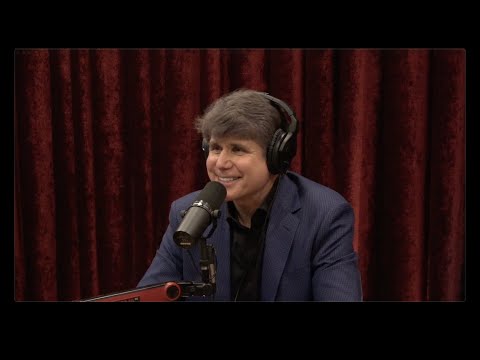
Joe Rogan Experience #2245 - Rod Blagojevich
Rod Blagojevich (guest), Joe Rogan (host), Narrator, Narrator
In this episode of The Joe Rogan Experience, featuring Rod Blagojevich and Joe Rogan, Joe Rogan Experience #2245 - Rod Blagojevich explores rod Blagojevich Claims Political Prosecution, Details Prison, Faith, Trump, Reform Joe Rogan interviews former Illinois Governor Rod Blagojevich about his corruption conviction, which Blagojevich insists was a politically motivated frame-up driven by ambitious federal prosecutors and a weaponized DOJ/FBI. He describes rejecting plea deals, getting a 14‑year sentence, and spending nearly eight years in federal prison with violent offenders and hundreds of pedophiles, arguing his case prefigured what later happened to Donald Trump. The conversation ranges through Chicago and national politics, prosecutorial abuse, prison culture and racial “cars,” his intense turn to the Bible, and his admiration for Trump as someone who loves America and fought a corrupt system. They close by discussing criminal justice reform, education, and how entrenched interests and media narratives distort democracy and public perception.
Rod Blagojevich Claims Political Prosecution, Details Prison, Faith, Trump, Reform
Joe Rogan interviews former Illinois Governor Rod Blagojevich about his corruption conviction, which Blagojevich insists was a politically motivated frame-up driven by ambitious federal prosecutors and a weaponized DOJ/FBI. He describes rejecting plea deals, getting a 14‑year sentence, and spending nearly eight years in federal prison with violent offenders and hundreds of pedophiles, arguing his case prefigured what later happened to Donald Trump. The conversation ranges through Chicago and national politics, prosecutorial abuse, prison culture and racial “cars,” his intense turn to the Bible, and his admiration for Trump as someone who loves America and fought a corrupt system. They close by discussing criminal justice reform, education, and how entrenched interests and media narratives distort democracy and public perception.
Key Takeaways
Blagojevich frames his conviction as a test case for criminalizing politics.
He argues prosecutors invented “non‑crimes” around his discussions of Barack Obama’s vacant Senate seat, suppressed 98% of wiretap recordings, and used unlawful legal standards—claiming this emboldened the same network of DOJ/FBI figures later involved in Trump‑related investigations.
Get the full analysis with uListen AI
Refusing plea deals can trigger harsher sentences in a tilted system.
He says he turned down an 18‑month plea because he believed he was innocent and had sworn to uphold the law, only to receive 14 years after a second trial—illustrating how the system financially and psychologically pressures defendants to plead regardless of guilt.
Get the full analysis with uListen AI
Prison is more warehousing than rehabilitation, but self‑driven growth is possible.
Blagojevich describes minimal vocational training and mostly “adult babysitting,” yet he used the time to work out intensively, read widely (especially Viktor Frankl), teach, form a prison band, and build relationships—showing how intentional structure can turn dead time into development.
Get the full analysis with uListen AI
Racial segregation and protected classes shape prison power dynamics.
He explains how inmates are informally forced into racial “cars” for safety, how correctional officers pushed him toward the white group, and how sex offenders—especially pedophiles—are paradoxically a protected class, with even slurs like “chomo” punishable by solitary confinement.
Get the full analysis with uListen AI
Intense, disciplined spiritual practice can be a survival tool in extreme adversity.
Blagojevich describes reading the Bible—especially Psalms, Isaiah, and the Gospels—every day for 2,896 days, drawing strength from figures like David and Jesus in Gethsemane and crediting this practice with keeping him from despair and giving meaning to his suffering.
Get the full analysis with uListen AI
Trump is portrayed as both personally loyal and institutionally disruptive.
He emphasizes Trump’s compassion in commuting his sentence and his willingness to challenge entrenched power centers; both men argue that Trump’s legal battles and even an assassination attempt show he’s a threat to the “deep state” and a defender of constitutional rights.
Get the full analysis with uListen AI
Real criminal justice reform must target over‑sentencing and prosecutorial power.
They criticize life and decades‑long sentences for nonviolent and first‑time offenders, disparities between sex offenders and drug dealers, and perverse incentives in private and public systems—arguing for guideline reform, more education/vocational programs, and accountability for abusive prosecutors.
Get the full analysis with uListen AI
Notable Quotes
““It was a total fucking frame‑up in a rigged criminal justice system, in a court that was rigged.””
— Rod Blagojevich
““I wasn’t strong enough to get through prison by myself. I needed God.””
— Rod Blagojevich
““If you want to stop crime and end mass incarceration in America, educate the kids when they’re young.””
— Rod Blagojevich
““They got away with it with me, and they got emboldened then to say, ‘We can do it to a Democratic governor… We can get away with it.’””
— Rod Blagojevich
““When you give people any kind of control over people, I don’t trust them.””
— Joe Rogan
Questions Answered in This Episode
Which parts of Blagojevich’s story are verifiable from court records and which rely primarily on his personal narrative?
Joe Rogan interviews former Illinois Governor Rod Blagojevich about his corruption conviction, which Blagojevich insists was a politically motivated frame-up driven by ambitious federal prosecutors and a weaponized DOJ/FBI. ...
Get the full analysis with uListen AI
How should a democracy balance aggressive anti‑corruption enforcement with protections against politicized prosecutions?
Get the full analysis with uListen AI
What concrete reforms could realistically curb over‑sentencing and prosecutorial abuse without undermining public safety?
Get the full analysis with uListen AI
To what extent did media coverage shape your initial perception of Blagojevich and Trump, and has it changed after hearing this discussion?
Get the full analysis with uListen AI
How can the U.S. address entrenched interests—like unions, lobbyists, and the “deep state”—while still preserving stable institutions and rule of law?
Get the full analysis with uListen AI
Transcript Preview
(drumbeats) Joe Rogan podcast, check it out. The Joe Rogan Experience.
Train by day, Joe Rogan podcast by night, all day. (rock music) How are you, sir?
I'm good. How are you?
Very good to meet you, man.
Nice to meet you.
I really enjoyed you on Tucker Carlson Show. Shout out to Tucker. Uh, it was a very eye-opening podcast. And, you know, uh, whenever someone is, uh, convicted of ... (deep breath) You know, any, any political figure, any person of power that's, uh, convicted of corruption, you automatically assume that they're guilty. And after listening to you on Tucker's show, I was like, "Oh, Jesus." Like, it was such an eye-opening podcast and such a disappointing one too. It was so disturbing to hear your version of the story, which was so different than the version that was, you know, put out on the media and it was just, "Oh, corrupt politician goes to jail. Oh, he went to jail? He must be guilty."
Mm-hmm.
And then you hear your take on it and you're like, "Oh, God." It's very disturbing and, uh, I just wanted to show you this just before we get rolling.
Hmm.
Biden just released a bunch of people, multiple Chinese spies and an individual convicted of possessing child pornography. (laughs)
(laughs)
I think he's, he's released ... H- how many people has he, uh, pardoned to date?
I saw a number of 1,500.
He's going ham.
Yeah.
Everybody can get their ... Sign your checks, send them in, let's go. (laughs)
(laughs)
(sighs)
Wow.
Wow. Possession of child pornography-
Yeah.
... should be like, you shouldn't be able to pardon for stuff like that. It's like there's certain things, it's like, come on.
You know, I spent, uh, almost eight years in prison, for politics not for crimes, and I'm happy to answer any questions you have about any of it 'cause I didn't do it. It was all politics. But the first three years, almost three years, they put me in a higher security prison and I'm in there with, uh, Crips and Bloods and Gangster Disciples and Sinaloa Cartel drug dealers.
Why would they do that? Wh-
They were squeezing me and pressuring me 'cause they wanted me to basically say I did something that I didn't do. They wanted me to plead guilty to non-crimes.
So, they wanted to scare you by putting in, you in with dangerous people?
Yeah. And, uh, and to really punish me 'cause I fought back in a way that no one really does except for Trump. I mean, I was fighting back when they brought those charges against me everywhere and I was calling them criminals. And they are.
What did they expect you to do? Did they expect you to just take a sentence, a lower sentence?
Install uListen to search the full transcript and get AI-powered insights
Get Full TranscriptGet more from every podcast
AI summaries, searchable transcripts, and fact-checking. Free forever.
Add to Chrome