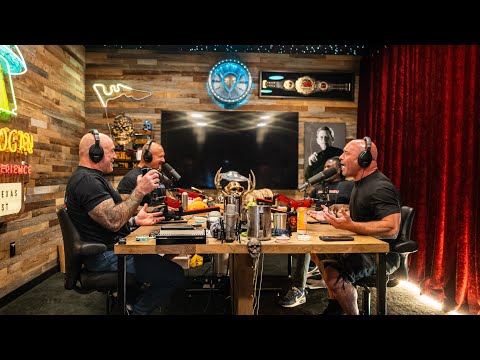
JRE MMA Show #169 - Protect Ya Neck
Narrator, Narrator, Matt Serra (guest), Joe Rogan (host), John Rallo (guest), Matt Serra (guest), Joe Rogan (host), Matt Serra (guest), Joe Rogan (host), Narrator, Narrator, Din Thomas (guest), Narrator, Narrator, Joe Rogan (host), Narrator, Narrator, Din Thomas (guest), Din Thomas (guest), Din Thomas (guest), John Rallo (guest), Joe Rogan (host), Narrator, John Rallo (guest), Narrator
In this episode of The Joe Rogan Experience, featuring Narrator and Narrator, JRE MMA Show #169 - Protect Ya Neck explores rogan, Serra, Thomas Debate Drugs, Food, Freedom, And Fighting Futures Joe Rogan, Matt Serra, and Dean Thomas bounce between policy, health, culture, and MMA, weaving personal stories with broader critiques of modern life. They argue strongly for cannabis legalization, criticizing alcohol and pharmaceutical lobbies, and connect prohibition to cartel power and unsafe black‑market products. A long segment dissects how US food additives like potassium bromate and ultra‑processed flour differ from European standards, linking them to health problems and regulatory capture. They close with wide‑ranging fight talk—UFC matchmaking, fighter durability, training methods, and legacy—while repeatedly returning to themes of personal responsibility, institutional failure, and how hard it is to stay sane and healthy in the current system.
Rogan, Serra, Thomas Debate Drugs, Food, Freedom, And Fighting Futures
Joe Rogan, Matt Serra, and Dean Thomas bounce between policy, health, culture, and MMA, weaving personal stories with broader critiques of modern life. They argue strongly for cannabis legalization, criticizing alcohol and pharmaceutical lobbies, and connect prohibition to cartel power and unsafe black‑market products. A long segment dissects how US food additives like potassium bromate and ultra‑processed flour differ from European standards, linking them to health problems and regulatory capture. They close with wide‑ranging fight talk—UFC matchmaking, fighter durability, training methods, and legacy—while repeatedly returning to themes of personal responsibility, institutional failure, and how hard it is to stay sane and healthy in the current system.
Key Takeaways
Black‑market cannabis is a policy problem, not a plant problem.
They argue that keeping marijuana illegal props up cartels, who grow on public lands with toxic pesticides and armed camps, while legalization with real regulation would shift production to inspected farms and displace criminal enterprises.
Get the full analysis with uListen AI
Food regulation gaps make US diets quietly more dangerous than many realize.
They highlight potassium bromate, bleached flour, glyphosate, and ultra‑processing as factors banned or restricted abroad but common in US bread and pizza dough, suggesting much of what people blame on ‘gluten’ is really the cumulative effect of these additives.
Get the full analysis with uListen AI
Moneyed interests shape both health policy and public narratives.
From pharma’s pandemic influence to alcohol companies lobbying against cannabis, and regulators tolerating questionable flour additives for a century, they contend decisions are often driven more by profit protection than by evidence‑based public health.
Get the full analysis with uListen AI
Free speech protections in the US remain unusually strong—and fragile elsewhere.
By contrasting UK ‘hate speech’ and social‑media prosecutions, Canadian fines, and other countries’ constraints, they argue Americans underestimate how unique First Amendment protections are, even as domestic culture wars push people toward more censorship.
Get the full analysis with uListen AI
Modern culture and tech amplify tribalism and political fatigue.
They describe algorithms feeding outrage, storytellers and filmmakers injecting overt politics into entertainment, and people feeling forced to ‘pick a side’ on every issue, which they see as corrosive to nuance, common ground, and psychological health.
Get the full analysis with uListen AI
Aging athletes need smarter training, not just more toughness.
With stories of ruined knees, back surgeries, stem cells, and TRT, they emphasize monitoring blood work, dialing back volume, and using science‑based conditioning (like Sam Calavitta’s methods) instead of the old ‘just grind harder’ mentality.
Get the full analysis with uListen AI
MMA is evolving toward individualized, high‑end specialty training.
They praise fighters like Ilia Topuria who train boxing with boxers, wrestling with wrestlers, and jiu‑jitsu with specialists—then integrate it themselves—arguing this ‘camp built around one athlete’ model will increasingly replace big generic team practices.
Get the full analysis with uListen AI
Notable Quotes
“If alcohol was illegal, we'd all be drinking moonshine and dying. That's what weed prohibition is—bad product from bad people.”
— Joe Rogan
“In America, what we call bread can’t even be considered food in parts of Europe.”
— Joe Rogan (quoting a health explainer video they play)
“Pizza is just a slow poison—with that poisoned dough. It would be just as good without the stuff that kills you.”
— Joe Rogan
“You can’t be proud of where you’re from anymore. You wear an American shirt and people think you’re some MAGA guy. America’s everything—it’s all the things.”
— Dean Thomas
“Settling for hot is a real problem. That’s always the most dangerous too.”
— Joe Rogan
Questions Answered in This Episode
How persuasive is their argument that cannabis legalization would significantly weaken cartels and improve public safety, and what unintended consequences might they be overlooking?
Joe Rogan, Matt Serra, and Dean Thomas bounce between policy, health, culture, and MMA, weaving personal stories with broader critiques of modern life. ...
Get the full analysis with uListen AI
Are the flour and additive differences between the US and Europe as impactful on health as they imply, or is the science more mixed than the clips they cite suggest?
Get the full analysis with uListen AI
Where should the line be drawn between protecting people from incitement and preserving free speech, especially in an era of viral posts and AI‑amplified content?
Get the full analysis with uListen AI
Does the shift toward super‑individualized MMA camps and specialty coaching give an unfair edge to fighters with more resources, or is it a natural evolution of a professional sport?
Get the full analysis with uListen AI
When Rogan and guests talk about political ‘tribes’ and culture‑war fatigue, what concrete changes—in media, education, or platforms—would actually reduce polarization instead of just complaining about it?
Get the full analysis with uListen AI
Transcript Preview
(drum roll) Joe Rogan podcast, check it out.
The Joe Rogan Experience.
Train by day, Joe Rogan podcast by night, all day. (rock music) You good?
We're up. We're up.
(laughs) What? Hey, guys. (laughs) We're back. (laughs)
Uh. It's just like getting pulled over by the cops, the window rolls down.
(laughs)
The cop's like-
(laughs)
... "What the fuck were you doing?"
Shit. Joe, I took, I took one hit of that shit. That shit was strong as hell. I feel high already.
Mm-hmm. That's good for you, D. It's good for you. Opens your mind. It's the right stuff. Yeah, there's some talk about, uh, Trump legalizing marijuana now.
Right?
That would be amazing.
That, I mean, it kinda feels like it is legal right now.
Well, it should be. It's so stupid. It's so da- we're- I can't believe we're still dealing with this. I mean, I would've thought by the time, I just turned 58, I would've thought by the time I'm 58, we would've figured this out.
Right?
Ca- can I tell you, when I, with my ulcerative colitis, it always ca- uh, we always start with my ass for some reason.
(laughs)
(laughs)
(laughs)
But with my ulcerative colitis, after my co-colonoscopy one time, the doctor's like, "Well, uh, there's this pill you could take. It, it could affect your liver, but not for many years. Like, not for..." Now, this was when I was like 39. I'm 51 now. I w- I'd be, I'd be going to Columbia for stem cells for my fucking liver at this point.
Liver, right?
Yeah.
So what I do is the natural stuff, and it does help me. It just, it just helps, and I don't have to... If that's not fucking up my liver or anything.
Bro, it would ru- it would take the place of so many different pharmaceutical drugs, and that's a big part of the problem.
(laughs)
(laughs)
The other part of the problem is the alcohol industry. The alcohol industry...
Oh, yeah, that would suffer for sure, right? Yeah.
Yeah. And they've done studies. They know.
Yeah.
And they lobby. They, they, they work on it hard. They do not want marijuana becoming legalized in the, in the whole nation.
Mm.
Alcohol's way worse. I mean, that's just-
Way worse.
... an age-old conversation, but sh- psh, it, it just is-
Well, the real big problem is who's selling if, if it's illegal? The cartel.
That's right.
You know, I've, I've talked about this before. If you've heard it before, I'm sorry. But there's a guy named Jon Norris who's been on the podcast before, who was a game warden. He wrote a book called Hidden War. It was a, he was a game warden in California, you know, just a guy who checks fishing licenses and shit, like liv- he loves the woods, loves being outdoors.
Install uListen to search the full transcript and get AI-powered insights
Get Full TranscriptGet more from every podcast
AI summaries, searchable transcripts, and fact-checking. Free forever.
Add to Chrome