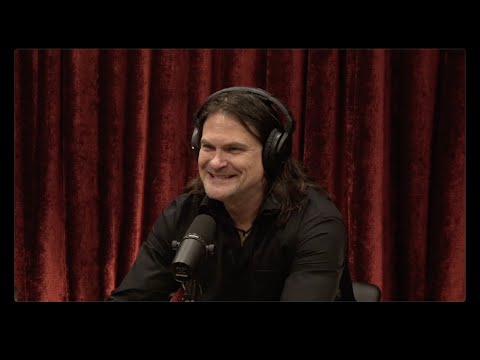
Joe Rogan Experience #2129 - David Holthouse
David Holthouse (guest), Narrator, Joe Rogan (host), Joe Rogan (host), Narrator
In this episode of The Joe Rogan Experience, featuring David Holthouse and Narrator, Joe Rogan Experience #2129 - David Holthouse explores cults, Krishnas, war, UFOs, and psychedelics in one conversation Joe Rogan and filmmaker David Holthouse discuss Holthouse’s Peacock docuseries “Krishnas,” about a violent, abusive chapter in the Hare Krishna movement centered on guru Kirtananda and the New Vrindavan commune. They examine how spiritual movements and cults go wrong, systemic child abuse and cover‑ups, and how ISKCON later tried to reform. The conversation then pivots to Holthouse’s recent reporting trip to Ukraine and his evolving view on the war, before roaming into UFOs, Holthouse’s firsthand Phoenix Lights sighting, and the transformative role of psychedelics, DMT, and MDMA. Throughout, they circle back to human nature, corruption, and whether psychedelics or advanced intelligence (digital or otherwise) could steer humanity away from war.
Cults, Krishnas, war, UFOs, and psychedelics in one conversation
Joe Rogan and filmmaker David Holthouse discuss Holthouse’s Peacock docuseries “Krishnas,” about a violent, abusive chapter in the Hare Krishna movement centered on guru Kirtananda and the New Vrindavan commune. They examine how spiritual movements and cults go wrong, systemic child abuse and cover‑ups, and how ISKCON later tried to reform. The conversation then pivots to Holthouse’s recent reporting trip to Ukraine and his evolving view on the war, before roaming into UFOs, Holthouse’s firsthand Phoenix Lights sighting, and the transformative role of psychedelics, DMT, and MDMA. Throughout, they circle back to human nature, corruption, and whether psychedelics or advanced intelligence (digital or otherwise) could steer humanity away from war.
Key Takeaways
Charismatic leaders can corrupt fundamentally positive spiritual traditions.
Holthouse stresses that Krishna consciousness is an ancient, generally benevolent tradition, but figures like Kirtananda exploited its structure and trust to build an abusive, violent cult at New Vrindavan—showing how any idealistic movement is vulnerable to a single unchecked despot.
Get the full analysis with uListen AI
Decentralized religious organizations must confront abuse directly or lose legitimacy.
Unlike the Catholic Church, ISKCON eventually investigated, expelled New Vrindavan, and paid settlements over child abuse, but many survivor communities still feel the organization hasn’t fully atoned, highlighting how accountability must go beyond money to meaningful acknowledgement and reform.
Get the full analysis with uListen AI
Cults prey on people’s need for meaning in chaotic times.
Rogan and Holthouse note how 1960s turmoil, materialism, and social alienation made utopian communes and gurus extremely attractive, a dynamic still active today in California and beyond—people want “someone with the answers,” making them susceptible to manipulation and control.
Get the full analysis with uListen AI
Psychedelics can radically shift views on death, ethics, and interconnectedness.
Holthouse’s single DMT trip convinced him of reincarnation and karma, while Rogan describes psychedelics as showing that everything is connected and that no one “gets away free,” which in turn changes how they view morality, fear of death, and the priority of love and community.
Get the full analysis with uListen AI
MDMA and similar therapies are powerful but have been suppressed by drug policy.
Both argue MDMA can be a lifesaving reset for PTSD survivors and war veterans, and that delaying legal therapeutic use—despite strong data from MAPS and others—has been “criminal,” reflecting how political motives have historically trumped public health and healing.
Get the full analysis with uListen AI
Firsthand exposure to war can change political and moral positions.
Holthouse went to Ukraine skeptical but returned believing the U. ...
Get the full analysis with uListen AI
Our species may be hitting the limits of ‘primate software’ in a high‑tech world.
Rogan frames humans as running ancient, resource‑hoarding, dominance‑driven “monkey code” on top of modern technology, which produces endless war and corruption; he wonders whether psychedelics or a superior digital intelligence are the only plausible ways out of this cycle.
Get the full analysis with uListen AI
Notable Quotes
“He built himself a little pedophile heaven up there once he had the power.”
— David Holthouse
“Psychedelia, which let's just call it what it is, raping kids, is just an incredibly destructive force in our culture and in all cultures. And I just… it's the one kind of criminal I think that I just have absolutely no sympathy for.”
— David Holthouse
“This is a small, tiny, finite experience that we're going through. It seems like it takes forever, but… it just happened. It's like a blip.”
— Joe Rogan
“Fifteen minutes later, I believed in reincarnation. I believed in karma and reincarnation.”
— David Holthouse
“I wonder if the limitations of our primate architecture will not allow us to escape this never‑ending cycle of war, and that maybe the only thing that will is an intelligence that far exceeds our own.”
— Joe Rogan
Questions Answered in This Episode
How do you draw a clear ethical line between a high‑commitment religion and a destructive cult, and who decides when that line has been crossed?
Joe Rogan and filmmaker David Holthouse discuss Holthouse’s Peacock docuseries “Krishnas,” about a violent, abusive chapter in the Hare Krishna movement centered on guru Kirtananda and the New Vrindavan commune. ...
Get the full analysis with uListen AI
What kinds of accountability or reparations would actually feel meaningful to survivors of abuse in movements like the Hare Krishnas, beyond financial settlements?
Get the full analysis with uListen AI
If psychedelics can reveal such profound ethical and existential insights, how should societies integrate them safely without creating new forms of spiritual exploitation?
Get the full analysis with uListen AI
Is it ever morally defensible to support a corrupt government (like parts of Ukraine’s system) in order to counter a worse geopolitical threat, and where is the limit?
Get the full analysis with uListen AI
If advanced AI or a non‑human intelligence concluded that humans are the main threat to planetary stability, what safeguards—if any—could we realistically have in place?
Get the full analysis with uListen AI
Transcript Preview
(drumbeats) Joe Rogan podcast, check it out.
The Joe Rogan Experience. Train by day, Joe Rogan podcast by night, all day. (instrumental music plays) How are you-
How are you, man? Good to see you again.
Good. Thanks for having me back, man.
My pleasure. You made another awesome one, man. This, uh, the Krishnas one, oh my God. Whoo. There is something about these cult documentaries.
Right.
It's just-
Right.
... whew. That one's heavy.
Do you remember the Hare Krishna devotees in the airports? 'Cause you're, like me, like you're old enough of that generation that you might remember the white robe, like-
I remember-
... they'd have the flowers, and they'd be-
Mm-hmm.
... selling books and shit in the airports.
I don't remem- know if I remember them at the airports. I remember them some places.
Yeah.
I def- have seen them, you know?
Yeah.
Yeah. But, um, y- I just always thought they were just kooks, you know?
(laughs)
It's just... It's, it's interesting, you know, knowing what I know now about the '60s and, you know, what, what was done to sort of... t- to kind of, uh, crush the hippie movement.
Right.
You know, it's interesting to see that this was connected to, you know, the Beatles and peace and love, and then you see this sect, that this, this j- what was his name again? The-
Kirtan Ananda-
Yes.
... was the guru that went-
Right, went-
... way wrong.
Yeah, went way wrong.
Yeah.
But it, it is, uh... Well, let's just get into from the beginning. How did you get involved in this particular subject?
So there's a production company, Marwar Junction, and they had actually sold this show to Peacock, and they, uh, were looking for a director. So this is the first show that I've made or helped to make that I haven't been involved in the sort of conception, the story from the jump. So they had developed the story and sold it to Peacock, and they were shopping for a director, and they liked my work, and so they hired me to make it.
And so did you have any experience with the Krishnas before this?
No. No. And I had a lo- you know, like a lot of people, I had a lot of misconceptions about them. Like I thought that there was a, a... that the Hare Krishna movement was invented in America in the 1960s. I just had it associated with the sort of the hippie movement, you know?
Mm-hmm.
That's not the, that's not the truth of it. It is... uh, at all. It's like actually a spiritual tradition that, you know, dates back thousands of years, like far predates, uh, Christianity.
Mm.
It's based in these ancient spiritual texts called the Vedas.
Install uListen to search the full transcript and get AI-powered insights
Get Full TranscriptGet more from every podcast
AI summaries, searchable transcripts, and fact-checking. Free forever.
Add to Chrome