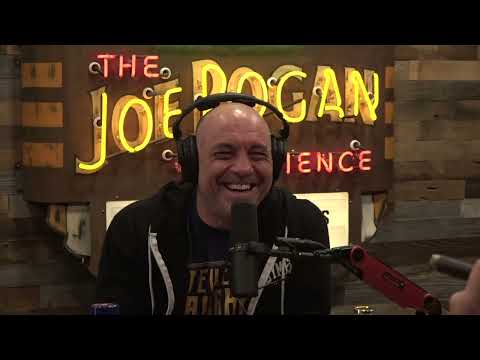
Joe Rogan Experience #1799 - Yannis Pappas
Narrator, Joe Rogan (host), Narrator, Yannis Pappas (guest), Narrator, Narrator, Narrator, Narrator, Narrator
In this episode of The Joe Rogan Experience, featuring Narrator and Joe Rogan, Joe Rogan Experience #1799 - Yannis Pappas explores comedy, dictators, dogs, and tech: Rogan and Pappas riff relentlessly Joe Rogan and Yannis Pappas bounce through a sprawling, free‑form conversation that mixes dark history, current geopolitics, combat sports, biology, and stand‑up comedy culture. They discuss homelessness and social work after 9/11, Putin and nuclear escalation, and why NATO and America are seen as both aggressors and stabilizers. The episode dives deep into MMA legends like Francis Ngannou and Mike Tyson, the biological impacts of plastics and hormones, and how wolves, dogs, and bears illustrate evolution and survival. Woven through it all are riffs on cancel culture, trans athletes, social media censorship, and how podcasting and the internet have reshaped stand‑up and creative freedom.
Comedy, dictators, dogs, and tech: Rogan and Pappas riff relentlessly
Joe Rogan and Yannis Pappas bounce through a sprawling, free‑form conversation that mixes dark history, current geopolitics, combat sports, biology, and stand‑up comedy culture. They discuss homelessness and social work after 9/11, Putin and nuclear escalation, and why NATO and America are seen as both aggressors and stabilizers. The episode dives deep into MMA legends like Francis Ngannou and Mike Tyson, the biological impacts of plastics and hormones, and how wolves, dogs, and bears illustrate evolution and survival. Woven through it all are riffs on cancel culture, trans athletes, social media censorship, and how podcasting and the internet have reshaped stand‑up and creative freedom.
Key Takeaways
Comedy scenes can be rebuilt quickly when conditions and incentives change.
Rogan describes how COVID-era migrations and his Austin club project transformed the city into a new comedy hub, showing how comics follow stage time, community, and relative freedom more than legacy markets like LA or New York.
Get the full analysis with uListen AI
Exposure to others’ trauma has real psychological costs and can cause burnout.
Yannis’s early work doing 9/11 disaster relief and in homeless SROs led to panic attacks and emotional exhaustion, illustrating how sustained empathy without boundaries can damage mental health in social work, policing, and similar roles.
Get the full analysis with uListen AI
Authoritarian aggression isn’t a relic; it reappears when power and opportunity align.
They connect Hitler’s rise and World War II to Putin’s invasion of Ukraine, arguing that dictators follow similar personality patterns and will expand unless constrained by alliances, deterrence, or internal resistance.
Get the full analysis with uListen AI
Modern weapons and tech are eroding the old logic of “mutually assured destruction.”
Hypersonic missiles that travel at tens of thousands of miles per hour and can change course mid‑flight reduce reaction time and predictability, making nuclear brinkmanship less stable than Cold War models assumed.
Get the full analysis with uListen AI
Endocrine‑disrupting chemicals in plastics are measurably altering human biology.
Citing Dr. ...
Get the full analysis with uListen AI
Predators and domestic animals show how environment and selection rapidly shape behavior.
Stories about wolves, wolf‑killing livestock dogs, grizzlies burying kills, and experimental domestication of foxes highlight how selection pressures can quickly alter temperament, morphology, and cooperation—paralleling concerns about how modern comforts are “domesticating” humans.
Get the full analysis with uListen AI
The internet has turned comedians from competitors into collaborators.
Rogan argues that podcasts and YouTube removed the old scarcity of TV slots and sitcoms; comics now benefit from cross‑promoting each other, building overlapping audiences, and treating each other as shared assets instead of rivals.
Get the full analysis with uListen AI
Notable Quotes
“You don’t slap a man in the face and then turn your back and walk away, unless you should have never slapped that man in the first place.”
— Joe Rogan
“Our innate instincts are to be emotional. You have to learn logic and reason; it’s not innate.”
— Yannis Pappas
“We are cave people. We just don’t know it. We are literally Neanderthals who think we’re advanced because we have cell phones.”
— Joe Rogan
“If comics weren’t crossing a line, how would you know you’re free?”
— Yannis Pappas
“The internet turned us from competitors into comrades. We became assets to each other instead of threats.”
— Joe Rogan
Questions Answered in This Episode
How should modern societies balance free expression in comedy with platform content rules and social pressure to avoid offense?
Joe Rogan and Yannis Pappas bounce through a sprawling, free‑form conversation that mixes dark history, current geopolitics, combat sports, biology, and stand‑up comedy culture. ...
Get the full analysis with uListen AI
If plastics and industrial chemicals are measurably altering human fertility and anatomy, what level of regulation or lifestyle change is realistic or ethical?
Get the full analysis with uListen AI
Are current NATO and U.S. strategies actually containing authoritarian regimes, or inadvertently provoking the very conflicts they aim to prevent?
Get the full analysis with uListen AI
What is a fair and scientifically coherent way to include or exclude trans athletes from sex‑segregated sports without erasing women’s categories or trans identities?
Get the full analysis with uListen AI
As genetic engineering and brain–computer interfaces emerge, who should control enhancement technologies, and how do we prevent a new class divide between “upgraded” and “natural” humans?
Get the full analysis with uListen AI
Transcript Preview
(drumbeats) Joe Rogan podcast, check it out. The Joe Rogan Experience.
Train by day, Joe Rogan podcast by night. All day. (instrumental music)
Hello, comics.
Hello, Joe Rogan.
When are you moving to Texas?
As soon as I can.
Are you thinking about it?
Absolutely.
Really?
I'm coming down, yeah. I'll be here. That club's opening. I love Texas, I love Terry's Barbecue.
How fun was last night?
Last night was a lot of fun at the Vulcan.
Those shows are fucking great.
Really great.
We're doing one of those shows every week.
Yeah.
It's just a, an amazing place where you can fuck around and work out and write new shit and practice in front of live audiences.
Yeah, they were an incredible audience, incredible show. It was nice. Green room's nice.
Yes.
Private bathroom.
Yes.
Push your coat in, that's nice.
Yes, it's fun. It's all fun.
So it's a win-win-win.
Yeah, it's fun, man.
Yeah.
It's a, it's a unique situation to be at a, you know, like a comedy scene. There was always a comedy scene here, but now it's like because of, uh, COVID, it got this new boost and, you know, so many guys moved here, and now it's flourishing, and now it's like, it's different. It's got a different feel to it.
Yeah. And it's not just comics, it's people. I mean, this place is growing and growing and growing. Every time I come here, it's like, it's like watching somebody who started working out and, like, you haven't seen them in a while, and you're like, "Wow, man, you're looking good."
(laughs)
"You're looking good. You shed a few pounds, you know, and by that I mean, like, shed a few homeless people in the street. Like, they're-"
Yeah.
"... less and less."
That's the big move.
Yeah.
We, we actually talked about that yesterday with Michael Shellenberger who got... A guy who's running for governor of California, and, uh, the mayor, Steven Adler of, uh, Austin, he had a plan and he fucking pulled it off. He was like, "If I can fix this homeless problem... If I can't fix this homeless problem by the time I leave office," he goes, "it'll be a big failure." He goes, "But I think I can do it." He goes, "It's only a couple thousand people. We think we can provide them housing, we the- we think we can get them help, give them shelter." You're always gonna have some people that just want to live in the woods in a tent.
Yeah.
You're gonna have some schizophrenics who think the government's got a chip in their brain. There's, it's always crazy people. But he managed to get all those tents off of Cesar Chavez, off of those main streets, off of downtown, and it's way better now. Way better.
Install uListen to search the full transcript and get AI-powered insights
Get Full TranscriptGet more from every podcast
AI summaries, searchable transcripts, and fact-checking. Free forever.
Add to Chrome