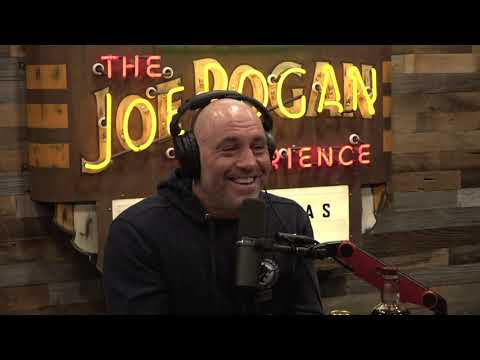
Joe Rogan Experience #1765 - Philip Frankland Lee
Philip Frankland Lee (guest), Narrator, Joe Rogan (host), Jamie Vernon (guest)
In this episode of The Joe Rogan Experience, featuring Philip Frankland Lee and Narrator, Joe Rogan Experience #1765 - Philip Frankland Lee explores from Dish Pit to Michelin Stars: Philip Frankland Lee’s Culinary Journey Joe Rogan talks with chef Philip Frankland Lee about his path from cooking as a kid, dropping out of culinary school, and grinding through brutal restaurant hours to earning Michelin stars and building acclaimed concepts like Sushi Bar and Pasta Bar.
From Dish Pit to Michelin Stars: Philip Frankland Lee’s Culinary Journey
Joe Rogan talks with chef Philip Frankland Lee about his path from cooking as a kid, dropping out of culinary school, and grinding through brutal restaurant hours to earning Michelin stars and building acclaimed concepts like Sushi Bar and Pasta Bar.
They dive deep into what makes great food—from wood‑fire cooking, Japanese whiskey, and high-end sushi sourcing to why some pastas and pizzas feel lighter in Italy than in the U.S.
Philip explains the difference between a cook and a chef, why tasting-menu formats make both creative and business sense, and how he trains teams to cook over live fire instead of relying on modern convenience tools.
The conversation also covers health and lifestyle: cutting back on rich foods, running daily with a Whoop tracker, fixing high cholesterol, and how different diets and habits affect performance and longevity in demanding careers.
Key Takeaways
On-the-job training often beats culinary school for real kitchen skills.
Philip dropped out of culinary school after realizing he was relearning basics he’d already mastered on the line, and that top restaurants would retrain him their way anyway; he argues kitchens are craft shops where you earn your place by doing, not by degrees.
Get the full analysis with uListen AI
A chef’s real job is leadership, not just cooking.
He distinguishes a cook (who executes dishes) from a chef (who designs menus, coordinates teams, manages operations, and solves problems), likening chefs to orchestra conductors rather than star soloists.
Get the full analysis with uListen AI
Tasting menus give chefs creative control and solve inventory waste.
By serving a fixed progression to a set number of guests, Philip can buy exactly what he needs, minimize spoilage, and design a coherent experience where each course tells part of a story instead of chasing à la carte crowd‑pleasers.
Get the full analysis with uListen AI
Live-fire cooking creates flavors and discipline you can’t fake.
Building and managing a wood fire forces cooks to truly understand heat, timing, and ingredients; Philip’s Scratch Bar runs almost entirely on a hearth where everything—from meat to fish to vegetables—passes through flame or coals for distinct textures and smoke profiles.
Get the full analysis with uListen AI
Great dishes often start with bad ideas refined, not flashes of genius.
He describes a young cook’s “bagel and cream cheese” notion that sounded simplistic; by workshopping it (rye-like crackers, house cream cheese, smoked roe, sea urchin, onion accents) they turned a cliché into a world‑class, bite‑size course.
Get the full analysis with uListen AI
Health scares can successfully trigger cold-turkey lifestyle changes.
After being told he had prediabetes and very high cholesterol, Philip immediately cut out high‑saturated‑fat meats, started running ~5 miles a day, cleaned up his diet, and dropped both weight and cholesterol numbers significantly in about three months.
Get the full analysis with uListen AI
Food culture thrives on narrative, scarcity, and ritual—not just taste.
From Michelin’s tire-company origins and super-rare Japanese whiskies to ultra‑expensive tunas and hidden omakase bars, they show how story, rarity, and journey (“worth a detour” vs. ...
Get the full analysis with uListen AI
Notable Quotes
“If I cooked you the best meal you’ve ever had by myself, that would make me a great cook. If I brought six people and orchestrated them to do it, that’s what makes me a chef.”
— Philip Frankland Lee
“Cooking is one of the only art forms where the artist has to take responsibility for the fact that the art is going to be ingested by the audience.”
— Philip Frankland Lee
“To do it just right, it’s an art form, but like most art forms, it’s a practicable craft.”
— Philip Frankland Lee
“You’re supposed to feel uncomfortable. The whole idea about being fat and why you’re upset people point it out is because you’re supposed to do something about it.”
— Joe Rogan
“Whatever we put out has to be, ‘Fuck, that’s the best version I’ve ever had.’ Otherwise, why are we serving it?”
— Philip Frankland Lee
Questions Answered in This Episode
How can aspiring chefs realistically decide between culinary school and going straight into restaurant kitchens, given Philip’s experience?
Joe Rogan talks with chef Philip Frankland Lee about his path from cooking as a kid, dropping out of culinary school, and grinding through brutal restaurant hours to earning Michelin stars and building acclaimed concepts like Sushi Bar and Pasta Bar.
Get the full analysis with uListen AI
What are the most impactful first steps for someone in a demanding career who wants to overhaul their health without burning out or quitting?
They dive deep into what makes great food—from wood‑fire cooking, Japanese whiskey, and high-end sushi sourcing to why some pastas and pizzas feel lighter in Italy than in the U.S.
Get the full analysis with uListen AI
How far should restaurants go in restricting choice (via tasting menus) in order to optimize both creativity and business sustainability?
Philip explains the difference between a cook and a chef, why tasting-menu formats make both creative and business sense, and how he trains teams to cook over live fire instead of relying on modern convenience tools.
Get the full analysis with uListen AI
In an era of sous vide, pellet smokers, and automation, where should chefs draw the line between tradition (like live fire) and technology?
The conversation also covers health and lifestyle: cutting back on rich foods, running daily with a Whoop tracker, fixing high cholesterol, and how different diets and habits affect performance and longevity in demanding careers.
Get the full analysis with uListen AI
How much of what we call ‘great food’ is about pure flavor versus narrative, exclusivity, environment, and the performance of service?
Get the full analysis with uListen AI
Transcript Preview
(drumming music) Joe Rogan podcast, check it out.
The Joe Rogan Experience. (rock music)
Train by day, Joe Rogan podcast by night, all day. So, Phillip, my friend Phillip here, who's the head chef of the greatest sushi place on planet Earth.
Yeah.
I say to young Jamie, "Young Jamie, have you had sushi at Sushi Bar ATX yet?" And he goes, "I don't like fish."
Yep. (laughs)
(laughs)
Put that mic in front of your face.
What's wrong with that?
What is ... What, what could you not like about fish?
Um, well, I've ... Like, I've eaten it. I'm not, like, afraid to try it all the time. I've worked at restaurants and, you know, they've made really great halibut and-
Okay, what about filet-o-fish sandwiches from McDonald's?
Oh, no, that's not ...
How ... What the fuck? Those are goddamn delicious.
It's like a smell and taste to it that just ...
I mean, have you, have you tried fish ... I mean, obviously, you know, a filet-o-fish sandwich is not gonna be, you know, $100 pound toro. Um-
But it's still delicious. Filet-o-fish is like the best thing McDonald's ever figured out.
I ... No.
(laughs)
Listen ... Yes. Listen, I know it's terrible for you. Like, every time I eat one, my ... I'm, I'm ... There's like the brain is saying to the mouth, "What the fuck is wrong with you?" And then the body's like, "Dude ..." But the mouth's like, "Shut up, bitch." And I'm having-
I don't know, man. I'm steak and potatoes from Ohio. Like, it's just ... That's, you know?
I enjoy steak and potatoes as well though.
I just ... It's, uh, uh, I don't know.
(laughs)
Some people just-
It's hard to say.
I always wonder if people just have ... Like, if their tongue works different. Like, uh, I have two, my youngest daught-... You've met my kids, right?
Yeah.
My youngest loves spicy food. I mean, she can fuck with some really spicy hot sauce. Like, uh, I got this, uh, Señor Lechuga, uh, uh, hot sauce. They sent me a bunch of it. It's awesome stuff. And they sent me some with, uh, Reapers.
(laughs)
I mean, it's got a fucking kick to it.
I don't have it.
And, uh, I ... And she goes, "What's that hot sauce?" And I go, "This one might be too hot for you." She goes, "Let me try." I go, "You serious?" And she's, like, dipping her finger into this Reaper sauce. She goes ... (smacks lips) "I can handle it." I go, "Wow, she's 11." And she's-
That's gnarly.
It's gnarly. My 13-year-old will not fuck with it at all. She's like, "Ew." She, she, she barely likes c- crushed red pepper on pizza. Like, she can't handle that.
Install uListen to search the full transcript and get AI-powered insights
Get Full TranscriptGet more from every podcast
AI summaries, searchable transcripts, and fact-checking. Free forever.
Add to Chrome