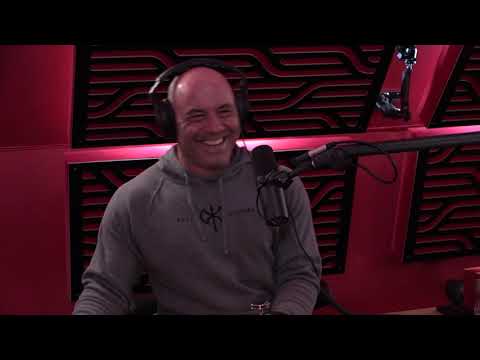
JRE MMA Show #99 with Francis Ngannou
Narrator, Francis Ngannou (guest), Narrator, Joe Rogan (host), Narrator, Narrator, Narrator, Narrator
In this episode of The Joe Rogan Experience, featuring Narrator and Francis Ngannou, JRE MMA Show #99 with Francis Ngannou explores from Sand Mines To UFC Gold: Francis Ngannou’s Relentless Journey Francis Ngannou recounts his extraordinary path from extreme poverty in Cameroon and child labor in sand mines to becoming a top UFC heavyweight contender. He details his 14‑month, life‑threatening illegal migration through Africa, the Sahara Desert, and Morocco to reach Europe, including multiple failed sea crossings and brutal treatment by security forces.
From Sand Mines To UFC Gold: Francis Ngannou’s Relentless Journey
Francis Ngannou recounts his extraordinary path from extreme poverty in Cameroon and child labor in sand mines to becoming a top UFC heavyweight contender. He details his 14‑month, life‑threatening illegal migration through Africa, the Sahara Desert, and Morocco to reach Europe, including multiple failed sea crossings and brutal treatment by security forces.
Once in Europe, Ngannou endures homelessness in Paris while obsessively pursuing his dream of combat sports, initially focused on boxing before being steered into MMA and rapidly rising to the UFC. He reflects on his first failed title shot against Stipe Miocic as a critical learning experience and explains how his training, mentality, and team have evolved for the rematch.
Throughout, he emphasizes the power of stubborn belief, long‑term vision, and refusing to accept imposed limitations, while also warning others not to replicate the deadly migration route he took.
Ngannou now uses his platform and foundation to create opportunities for children in Cameroon, hoping to offer safer, more structured paths to success than the one he survived.
Key Takeaways
Stubborn belief can override external doubt—but must be paired with action.
Ngannou ignored family, social, and cultural voices insisting he was too old, too poor, or from the wrong place to succeed, and instead chose to act relentlessly on his vision, selling his motorbike, moving cities, and later risking everything to leave Cameroon.
Get the full analysis with uListen AI
Extreme adversity can harden both body and mind into competitive advantages.
Years of child labor in sand mines, long walks to school without food, and constant social shame forged his physical strength and mental resilience, which later translated into his toughness and work ethic in combat sports.
Get the full analysis with uListen AI
Unstructured opportunity is dangerous; understanding systems and routes is critical.
Ngannou’s migration story shows that chasing opportunity blindly—through mafias, deserts, and hostile borders—can be fatal, and he now actively discourages others from taking these routes despite his own success.
Get the full analysis with uListen AI
Rapid success without experience can hide critical weaknesses.
He admits his quick UFC rise and string of knockouts left him without essential octagon time and five‑round pacing knowledge, which contributed to his loss against Stipe and exposed gaps in his game and preparation.
Get the full analysis with uListen AI
Environment and team quality fundamentally shape elite performance.
Ngannou highlights how moving his camp to the U. ...
Get the full analysis with uListen AI
Failure can be reframed as compressed learning instead of a dead end.
He views the first Miocic fight not primarily as a disaster but as a night where he gained more experience than in all his prior octagon time, using it to overhaul his mindset, gas management, and preparation.
Get the full analysis with uListen AI
Role models must inspire without glamorizing reckless paths.
Ngannou recognizes people at home now see his story as proof that ‘it’s never too late,’ but he is careful to separate the message of dreaming big from encouraging others to risk their lives on the same deadly migration trail.
Get the full analysis with uListen AI
Notable Quotes
““At some point, I knew something: I don’t wanna become like my dad.””
— Francis Ngannou
““I’d rather live with trying and failing than with regret.””
— Francis Ngannou
““Most of those people back home don’t even have a dream. As long as they eat before bed, that’s it.””
— Francis Ngannou
““It was just one year, but it felt like a decade—from Cameroon to Europe.””
— Francis Ngannou
““There are parts of my journey I cannot recommend to anyone. I was very lucky to get out alive.””
— Francis Ngannou
Questions Answered in This Episode
How did surviving the Sahara, the detention centers, and sea crossings change your sense of fear inside the octagon?
Francis Ngannou recounts his extraordinary path from extreme poverty in Cameroon and child labor in sand mines to becoming a top UFC heavyweight contender. ...
Get the full analysis with uListen AI
If you had had a safe, legal path to France or the U.S., do you think you’d be the same fighter mentally?
Once in Europe, Ngannou endures homelessness in Paris while obsessively pursuing his dream of combat sports, initially focused on boxing before being steered into MMA and rapidly rising to the UFC. ...
Get the full analysis with uListen AI
What specific technical and strategic changes have you made for the Stipe rematch compared to your first title shot?
Throughout, he emphasizes the power of stubborn belief, long‑term vision, and refusing to accept imposed limitations, while also warning others not to replicate the deadly migration route he took.
Get the full analysis with uListen AI
How do you reconcile being an inspiration for risky migration while actively warning people not to follow your path?
Ngannou now uses his platform and foundation to create opportunities for children in Cameroon, hoping to offer safer, more structured paths to success than the one he survived.
Get the full analysis with uListen AI
Looking ahead, how do you envision using your foundation and influence to create structured opportunities for young athletes in Cameroon so they don’t need to leave?
Get the full analysis with uListen AI
Transcript Preview
(drumbeats) Joe Rogan podcast, check it out. The Joe Rogan Experience.
Train by day, Joe Rogan podcast by night. All day.
(Rock music playing)
Welcome, Francis.
Thank you, Joe. (laughs)
I'm glad we finally did this.
Oh, finally. It's been a while.
Well, your English- your English has improved drastically.
Thank you. I think that's why, um, I wanted to st- to wait a little bit before come.
Yeah.
I'm like, "Well, I'm not sure if I will handle that." You know, sometime I listen to the podcast, and I- like basically when you are talking about different podcasts, different topic, I'm kind of like lost sometime. Like, "Okay, what does this mean? What does that mean?" You know. But now I feel little bo- little bit comfortable.
Yeah. You're much-
(laughs)
Well, it's easy to talk to you now. I remember when you first went into the UFC, I interviewed you-
(laughs)
... and you didn't know what the fuck I was saying. (laughs)
Oh, nothing, like... Hey, uh, growing up in c- uh... I went to- to school, like elementary school and co- um, um, middle school, and we were learning English. I know some few words like water and stuff, but just my accent was just so different than when I came here, my first, um, UFC event was in Orlando. And, um, I couldn't even hear people like water. Like, the accent was just so different. I'm like, "What the hell is going on?"
(laughs)
"I can't catch any wo-" You know, it was just crazy.
How long have you been in America now?
Uh, three years and half. I mean, uh-
That- that's pretty impressive that you picked up-
... not permanently because I travel a lot, but-
Yeah. Right.
... uh, total is like two years and a half.
And you were in France for how long before that?
Four years.
Four years. When you were in Cameroon, what- what language did they speak in Cameroon?
We speak, mainly we speak French in general, and, uh, just in our village that we speak our dialect.
Oh, okay. So you know the dialect from the village, and then French-
Yeah.
... and then English.
Well, I'm learning English.
Oof. Well you-
(laughs)
... we're talking. We're talking in English so you- you can speak English a lot better than I can speak French.
Well, I still have some lacune in English, but, uh, getting there.
Yeah. So this has been a wild ride for you, huh?
Yeah. It's been a long road. You know, nobody could've imagined basically from, uh, looking back from my life that, uh, we're gonna get here, you know. Today I have to talk with, uh, great people around the world, you know, such as you, and, uh, be in the biggest pod- podcast ever. (laughs)
Install uListen to search the full transcript and get AI-powered insights
Get Full TranscriptGet more from every podcast
AI summaries, searchable transcripts, and fact-checking. Free forever.
Add to Chrome