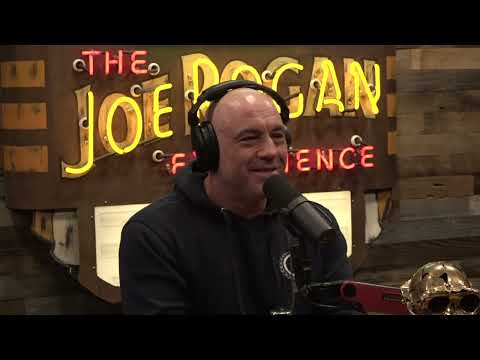
Joe Rogan Experience #1940 - Matt Taibbi
Joe Rogan (host), Narrator, Matt Taibbi (guest), Matt Taibbi (guest), Matt Taibbi (guest), Matt Taibbi (guest), Matt Taibbi (guest), Matt Taibbi (guest), Narrator, Narrator
In this episode of The Joe Rogan Experience, featuring Joe Rogan and Narrator, Joe Rogan Experience #1940 - Matt Taibbi explores matt Taibbi Exposes Twitter Files, Censorship Regime, And Media Capture Joe Rogan and journalist Matt Taibbi discuss Taibbi’s work on the Twitter Files, which revealed formalized relationships between U.S. security agencies and major social media platforms to suppress and shape online speech.
Matt Taibbi Exposes Twitter Files, Censorship Regime, And Media Capture
Joe Rogan and journalist Matt Taibbi discuss Taibbi’s work on the Twitter Files, which revealed formalized relationships between U.S. security agencies and major social media platforms to suppress and shape online speech.
They argue that this censorship infrastructure, backed by government pressure and fact‑checking networks, threatens free speech and democratic debate, and can be used against both left and right depending on who holds power.
The conversation broadens into a critique of legacy media’s transformation into partisan propaganda, the decline of journalistic integrity, and the rise of independent platforms like Substack, podcasts, and YouTube.
They also touch on the World Economic Forum, financial platforms policing “misinformation,” and the political establishment’s manipulation of candidates and narratives across both parties.
Key Takeaways
Government–platform coordination on content moderation is formal, large‑scale, and ongoing.
The Twitter Files show structured channels where agencies like the FBI and DHS regularly sent takedown and moderation requests to platforms, contradicting the idea of merely informal advice and raising serious First Amendment concerns.
Get the full analysis with uListen AI
Expanding censorship beyond direct incitement invites politicized control of speech.
Rogers and Taibbi highlight how Twitter abandoned its “public interest” policy after January 6 and adopted concepts like “context” and “stochastic terrorism” to justify banning Trump, a standard that can be used to silence almost any controversial figure.
Get the full analysis with uListen AI
Tools built to suppress “bad guys” will inevitably be used against everyone.
They compare modern censorship and surveillance powers to the Patriot Act: mechanisms justified against extremists can later be turned on dissidents, progressives, or inconvenient reporting, because the underlying tool—not the target—is what ultimately matters.
Get the full analysis with uListen AI
Legacy media has largely abandoned adversarial journalism in favor of narrative enforcement.
Taibbi describes how major outlets increasingly see themselves as partners of power, not its watchdogs—suppressing or reframing stories like Russiagate failures, the Hunter Biden laptop, or Twitter Files to protect preferred political outcomes.
Get the full analysis with uListen AI
Independent media is rapidly eclipsing corporate outlets in influence and trust.
With Substack, podcasts, and YouTube, reporters can bypass gatekeepers, correct their own mistakes publicly, and build direct relationships with audiences—while TV networks and big newspapers hemorrhage viewers, credibility, and cultural relevance.
Get the full analysis with uListen AI
Financial and tech infrastructure are becoming quasi‑regulators of acceptable speech.
Examples like PayPal proposing fines for “misinformation,” GoFundMe freezing trucker funds, and search engines suppressing inconvenient stories illustrate how payment processors, platforms, and search algorithms can be weaponized to control discourse and livelihoods.
Get the full analysis with uListen AI
Political and media establishments actively shape and limit viable candidates.
They argue that party machines and media ecosystems work together to elevate manageable figures (e. ...
Get the full analysis with uListen AI
Notable Quotes
“Elon Musk essentially spent $44 billion to become a whistleblower of his own company.”
— Matt Taibbi
“The significance is not who, the significance is the tool.”
— Matt Taibbi
“You gotta have free speech. It’s the most important thing we have, and it’s the one thing that separates us from everybody else.”
— Joe Rogan
“If you buy drugs, you support terrorism… that’s me and that lady from YouTube. ‘Because it’s hate speech.’ ‘Because it is true.’ Says who, motherfucker?”
— Joe Rogan
“They don’t have that absolute power anymore. The only way they can fight back is by calling every single one of them a racist, misogynist right‑winger… pretty soon you’ve done it to a million people and it loses its power.”
— Matt Taibbi
Questions Answered in This Episode
Given what the Twitter Files revealed, what concrete legal or policy safeguards are realistically achievable to limit government influence over social media moderation?
Joe Rogan and journalist Matt Taibbi discuss Taibbi’s work on the Twitter Files, which revealed formalized relationships between U. ...
Get the full analysis with uListen AI
How should platforms draw a workable line between dangerous incitement and controversial but legitimate political speech without becoming de facto state censors?
They argue that this censorship infrastructure, backed by government pressure and fact‑checking networks, threatens free speech and democratic debate, and can be used against both left and right depending on who holds power.
Get the full analysis with uListen AI
What would a healthy, modern media ecosystem look like in practice—balancing independent creators, legacy outlets, and some form of trustworthy verification?
The conversation broadens into a critique of legacy media’s transformation into partisan propaganda, the decline of journalistic integrity, and the rise of independent platforms like Substack, podcasts, and YouTube.
Get the full analysis with uListen AI
To what extent are organizations like the World Economic Forum actually driving policy versus simply networking among already‑powerful actors, and how can citizens meaningfully scrutinize that?
They also touch on the World Economic Forum, financial platforms policing “misinformation,” and the political establishment’s manipulation of candidates and narratives across both parties.
Get the full analysis with uListen AI
How can young journalists or creators maintain independence and integrity when powerful financial, political, and social incentives still reward conformity to dominant narratives?
Get the full analysis with uListen AI
Transcript Preview
(drum roll) Joe Rogan podcast, check it out.
The Joe Rogan Experience.
Train by day, Joe Rogan podcast by night, all day. (instrumental music) Hello, Matt Taibbi.
Hey, Joe. How's it going?
(laughs)
(laughs)
Good to see you. It's always so hard to get rolling after you've been talking.
(laughs)
I mean, so I'm always excited to see you so we're just blabbing.
(laughs)
And now we're rolling. So what's cracking?
Uh, a lot. A lot. It's been, uh, it's been a crazy, uh, couple of months, uh-
I have enjoyed your work with the Twitter file. I enjoy all your work, but I really have enjoyed the Twitter files. That has been some really fascinating views behind the curtain.
It- it- it's, uh, it- it's been one of the weirder, more surreal experiences of my life because m- you know, as- as a reporter, you- you're always, um, kind of, uh, banging away to try to get one little piece of reality, right? Like, you'll- you might make 30 or 40 phone calls to get one sentence. Uh, the Twitter files is, oh, by the way, here, you know, uh, take a laptop and look at 50,000 emails, you know, full of all kinds of stuff. And so it's, you know, for- for somebody like me, it's like a dream come true. We get to see all kinds of things, get the answers to questions that, uh, we've had for years. And it's- it's been really incredible.
Has anything been surprising to you?
Um, a- a- a little bit. I- I- I think going into it, I- I thought that the, um, that the relationship between the security agencies like the- the FBI and the DHS and companies like Twitter and Facebook, I thought it was a little bit less formal. Like I th- I thought maybe they had kind of an advisory role. And what we find is that it's not that. It's- it's very formalized. They have, um, a really intense structure, uh, that they've worked out over a period of years where they have regular meetings, um, they have a system where the DHS handles, um, you know, censorship requests that come up from the s- the states and the FBI handles the international ones, and they all float all these companies. And, um, it's a big bureaucracy and we- I don't think we expected to see that.
It's very bizarre to me that they o- that they would just openly call for censorship in emails and these p- private transmissions, but ones that are easily duplicated, you could send them to other people, it could g- it can easily get out. Like that they're so comfortable with the idea that the government should be involved in this censorship of what turns out to be true information, especially when it- in regards to the Hunter Biden laptop, that they would be so comfortable that they would just send it in emails.
Install uListen to search the full transcript and get AI-powered insights
Get Full TranscriptGet more from every podcast
AI summaries, searchable transcripts, and fact-checking. Free forever.
Add to Chrome