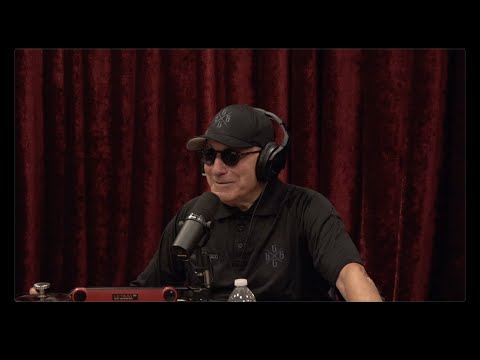
Joe Rogan Experience #2343 - Joe Pistone
Narrator, Joe Rogan (host), Joe Pistone (guest), Joe Rogan (host), Joe Rogan (host)
In this episode of The Joe Rogan Experience, featuring Narrator and Joe Rogan, Joe Rogan Experience #2343 - Joe Pistone explores undercover FBI Legend Donnie Brasco Recounts Six Years Inside Mafia Joe Rogan interviews former FBI agent Joe Pistone, best known as undercover operative Donnie Brasco, about his unprecedented six-year infiltration of the Bonanno crime family and other organized crime groups. Pistone explains how his streetwise New Jersey upbringing, meticulous preparation, and strict personal code allowed him to gain deep trust from high-ranking mobsters without losing himself in the role.
Undercover FBI Legend Donnie Brasco Recounts Six Years Inside Mafia
Joe Rogan interviews former FBI agent Joe Pistone, best known as undercover operative Donnie Brasco, about his unprecedented six-year infiltration of the Bonanno crime family and other organized crime groups. Pistone explains how his streetwise New Jersey upbringing, meticulous preparation, and strict personal code allowed him to gain deep trust from high-ranking mobsters without losing himself in the role.
He details operations stealing cars, posing as a jewel thief, marrying Mafia families together in business, and narrowly avoiding participation in multiple mob hits, all while maintaining a separate family life and minimal contact with the FBI. The conversation also explores the emotional fallout—mobsters executed for vouching for him, the lasting danger from a $500,000 contract on his life, and how he coped afterward.
Pistone contrasts the old-school Mafia culture of loyalty and silence with today’s more self-serving, informant-heavy underworld, and describes how modern surveillance and the internet have transformed undercover work. The episode closes with his reflections on the Donnie Brasco film, his deep friendship with Johnny Depp, and his current work supporting law enforcement families.
Key Takeaways
Deep undercover work requires total immersion but zero compromise of core values.
Pistone never drank heavily, never used drugs, and refused to fabricate skills or backgrounds he couldn’t sustain; instead, he built a persona closely aligned with his real habits and limits so he never had to keep track of a fake personality.
Get the full analysis with uListen AI
Meticulous preparation and “knowing your enemy” are non‑negotiable for infiltrating dangerous groups.
Before posing as a jewel thief, he attended diamond and gem school, learned lockpicking, safe-cracking basics, and alarm systems, and studied Mafia structure, rules, and social protocol to pass every credibility test under pressure.
Get the full analysis with uListen AI
Trust in criminal circles is earned slowly through consistent behavior and controlled risk-taking.
He spent months simply being seen in mob bars, used authentic street etiquette (like ‘going on record’), delivered underpriced diamonds, and strategically participated in low‑level crimes to prove usefulness without overpromising.
Get the full analysis with uListen AI
Undercover operatives must manage life‑and‑death credibility tests without losing tactical control.
When armed mobsters locked him in a room and threatened to kill him if he couldn’t prove his bona fides, he answered firmly but carefully, refused to name past associates, and then punched the non‑made guy afterward to display justified anger without violating Mafia rules.
Get the full analysis with uListen AI
The biggest threats often come from leaks and external systems, not just the criminals themselves.
A parallel Milwaukee operation collapsed when mobsters discovered one undercover had previously been a local cop—intel that didn’t come from the Bonannos—leaving Pistone exposed to suspicion through no fault of his own.
Get the full analysis with uListen AI
Old‑school Mafia culture prized loyalty and acceptance of consequences, even in death.
After Pistone was exposed, several mobsters who had vouched for him were killed; one capo, Sonny Black, knowingly walked to his own likely execution and left word that Brasco had simply been “better than we were,” without blaming him.
Get the full analysis with uListen AI
Modern surveillance and data make classic deep-cover infiltration far harder to replicate.
Pistone notes that today’s omnipresent cameras, phones, social media, and easy image searches make building a fully backstopped legend extremely difficult, fundamentally changing how undercover operations must be conceived and executed.
Get the full analysis with uListen AI
Notable Quotes
“I'm not dying for a gangster. I'll die for a citizen. I'll take a beating for a citizen, but not for a gangster.”
— Joe Pistone
“You can't be A in the daytime and B at night. I never changed my personality.”
— Joe Pistone
“If I don't come back, I want you to tell Donnie I loved him. He was just better than we were.”
— Joe Pistone recounting Sonny Black’s message
“Nothing moved in this country without them getting a cut of it.”
— Joe Pistone on the Mafia’s former power
“I think our problem is we don't study our enemy. You gotta know your enemy. The Art of War, right?”
— Joe Pistone
Questions Answered in This Episode
What psychological strategies did Pistone use to avoid becoming emotionally bonded to the mobsters who trusted—and later died because of—him?
Joe Rogan interviews former FBI agent Joe Pistone, best known as undercover operative Donnie Brasco, about his unprecedented six-year infiltration of the Bonanno crime family and other organized crime groups. ...
Get the full analysis with uListen AI
Given today’s digital footprint and surveillance environment, what would a viable deep-cover operation against organized crime look like now?
He details operations stealing cars, posing as a jewel thief, marrying Mafia families together in business, and narrowly avoiding participation in multiple mob hits, all while maintaining a separate family life and minimal contact with the FBI. ...
Get the full analysis with uListen AI
Where does Pistone personally draw the ethical line between participating in crimes to maintain cover and preventing harm to innocent people?
Pistone contrasts the old-school Mafia culture of loyalty and silence with today’s more self-serving, informant-heavy underworld, and describes how modern surveillance and the internet have transformed undercover work. ...
Get the full analysis with uListen AI
How did living seven days a week as Donnie Brasco for six years affect his family relationships and sense of identity afterward?
Get the full analysis with uListen AI
What lessons from Mafia organization, discipline, and failure does Pistone think law enforcement and policymakers still haven’t fully absorbed?
Get the full analysis with uListen AI
Transcript Preview
(drumbeats) Joe Rogan podcast, check it out. The Joe Rogan Experience. Train by day, Joe Rogan podcast by night, all day. (instrumental music plays)
Nice to meet you.
My pleasure.
You always wear sunglasses. Is that to hide your identity still?
Yeah.
Force of habit?
A- actually, it's, it's... (sighs) I have to see, number one. (laughs) But where I, where I reside now, uh, my neighbors d- have no idea that they're living next to Donnie Brasco, so...
Well, you have a very distinct voice.
Yeah, I know. (laughs)
(laughs) I don't wanna ask where you live. But, you know. What a wild life you've had, sir.
Well, pretty much. Yeah. Yeah. It, uh, never expected to go like that, but it, uh, it took off.
So when you, w- you first started working, it was with the FBI, correct?
Well, I was with Naval Intelligence, uh, for three years. And then, um, uh, I always wanted to be, uh, in law enforcement. Uh, and I was working in Philadelphia actually, and, uh, you do a lot of work with the FBI because, you know, on the, uh, government installations, government, uh, bases. So I became friendly with some FBI agents and then, uh, I, I figured if I, you know, if w- when I get a- when I finish this, uh, tour with NIS, um, I'm gonna go into law enforcement, so I might as well try it for the best and the best is, you know, the FBI.
And so how does that lead to you infiltrating the mob?
W- well, you know, I didn't, it, I didn't im- infiltrate the mob right from the get-go, you know? It, um... Look, I grew up in, uh, in Paterson, New Jersey. I grew up in an all-Italian neighborhood. Uh, knew wise guys, went to high school with sons of wise guys. And when you're in a neighborhood, you know, you know, you know who the wise guys are. You hang out at the, you're th- they let you hang out at the, the social clubs because, you know, you're a neighborhood kid, they know it. So I knew the streets. Um, so when I went into the FBI, I was, you know, I was street smart basically, Joe. That's what it comes down to, you know? Uh, and, uh, my first assignments were bank robberies, fugitives, gambling cases, and, uh, I started, uh, doing some, uh, little undercover work, uh, on gambling cases 'cause back then, the FBI was big into, into gambling, uh, interstate gambling cases.
So what was your first undercover work?
First was, uh, infiltrating a, um, a gambling house in, uh, Jacksonville, Florida actually. That was my first office.
What kind of gambling were they doing?
Uh, craps. Uh, they had a regular casino going. And, uh, you know, I felt comfortable around that stuff because I grew up with that stuff. You know, I grew up, uh, uh, like I say, in the neighborhood, uh, crap games, card games. It wasn't, wasn't anything new to me and being around gangsters was not like, uh, intimidating because I was around (laughs) gangsters growing up. So, uh, I didn't have any problem, you know, getting into these games, um, and identifying the major players, uh, and who was running them and that's basically what it was.
Install uListen to search the full transcript and get AI-powered insights
Get Full TranscriptGet more from every podcast
AI summaries, searchable transcripts, and fact-checking. Free forever.
Add to Chrome