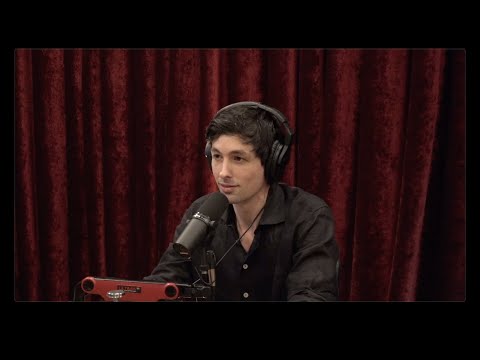
Joe Rogan Experience #2261 - Warren Smith
Warren Smith (guest), Narrator, Narrator, Joe Rogan (host), Narrator, Narrator, Narrator, Narrator, Narrator, Narrator
In this episode of The Joe Rogan Experience, featuring Warren Smith and Narrator, Joe Rogan Experience #2261 - Warren Smith explores fired Teacher Exposes Critical Thinking Crisis, Media Narratives, Systemic Failures Joe Rogan interviews former special-education multimedia teacher and filmmaker Warren Smith about how his calm, Socratic-style school videos on JK Rowling, gender ideology, and politics went viral—and ultimately cost him his job.
Fired Teacher Exposes Critical Thinking Crisis, Media Narratives, Systemic Failures
Joe Rogan interviews former special-education multimedia teacher and filmmaker Warren Smith about how his calm, Socratic-style school videos on JK Rowling, gender ideology, and politics went viral—and ultimately cost him his job.
They use his story to explore resistance to critical thinking in academia, how narratives override facts, and why students crave honest debate despite institutional pressure to conform.
The conversation widens into media trust collapse after 2016, ideological cults on both left and right, crime and policing statistics, homelessness and fires in California, climate-change narratives, and the structural incentives behind censorship on platforms like YouTube.
Both argue that transparent dialogue, personal responsibility, and merit-based systems (from YouTube to education) are essential to counter propaganda, institutional incompetence, and story-driven distortions of reality.
Key Takeaways
Institutions often resist genuine critical thinking when it threatens their narratives.
Smith’s dialogue-based classroom videos—meant to model calm, rational inquiry—were embraced by students but punished by administrators, illustrating how schools prioritize reputation and ideological conformity over honest exploration.
Get the full analysis with uListen AI
People see the world through stories, which can override facts and logic.
Both guests argue that labels like “professor,” “politician,” or “racist institution” carry narrative weight, causing people to filter ambiguous events (like a fried-chicken comment or a JK Rowling quote) through preselected storylines rather than evidence.
Get the full analysis with uListen AI
Mainstream media’s failures have accelerated a turn toward independent content.
The shock of the 2016 election, overt partisanship on air, and things like YouTube suppressing Rogan’s Trump interview demonstrated to many that legacy outlets and platforms are not neutral, pushing audiences toward long-form, unscripted alternatives.
Get the full analysis with uListen AI
Ideological “cults” exist on both left and right, enforced by social fear.
Rogan and Smith describe friends and family who refuse debate with lines like “I just can’t do this,” noting that fear of being ostracized from one’s in-group often replaces a willingness to examine logical inconsistencies or uncomfortable data.
Get the full analysis with uListen AI
Complex social problems are misdiagnosed when equity narratives replace root-cause analysis.
They discuss Roland Fryer’s policing research and argue that focusing solely on racial outcome statistics ignores deeper drivers like crime-infested, gang-ridden neighborhoods and long-neglected socioeconomic conditions across races.
Get the full analysis with uListen AI
California’s crises reflect governance failure more than simple ‘climate change’ slogans.
From underreported crime and homelessness spending to unmanaged brush, empty reservoirs, unfixed firetrucks, and arson in the Pacific Palisades fires, they argue LA’s disasters stem from poor planning and policy, not just global warming.
Get the full analysis with uListen AI
Merit-based, independent platforms can outcompete gatekeepers—but creators must guard their autonomy.
The discussion of Daily Wire contracts, Brett Cooper’s departure, and YouTube demonetization shows how creators can build massive audiences yet still be constrained by corporate deals and opaque moderation; owning your feed and diversifying platforms is strategically safer.
Get the full analysis with uListen AI
Notable Quotes
“People kind of labeled me as the critical thinking guy all of a sudden, so I really started to think about it: what is critical thinking? And the best I can articulate, it's thinking for yourself to contend with the stories that make up the world.”
— Warren Smith
“If this isn’t an encapsulation of all that is wrong with our current higher education system, then I don’t know what is.”
— Joe Rogan
“There’s a power in truth. It can be felt. You can’t explain how we can sense that off someone when they’re bullshitting, but you can feel it.”
— Warren Smith
“It doesn’t make sense to be on a team. The idea that I have to ignore things that make sense to me because it’s coming from the wrong team is just stupid.”
— Joe Rogan
“Hollywood is the very definition of a rigged game. They can shut you out.”
— Warren Smith
Questions Answered in This Episode
How can schools realistically encourage genuine critical thinking without triggering institutional panic over reputational risk or ideological nonconformity?
Joe Rogan interviews former special-education multimedia teacher and filmmaker Warren Smith about how his calm, Socratic-style school videos on JK Rowling, gender ideology, and politics went viral—and ultimately cost him his job.
Get the full analysis with uListen AI
In a world where everyone lives inside competing narratives, what practical methods can individuals use day-to-day to separate story from fact?
They use his story to explore resistance to critical thinking in academia, how narratives override facts, and why students crave honest debate despite institutional pressure to conform.
Get the full analysis with uListen AI
Where is the ethical line between protecting vulnerable groups from genuine hate and using ‘hate speech’ as a pretext to suppress legitimate debate?
The conversation widens into media trust collapse after 2016, ideological cults on both left and right, crime and policing statistics, homelessness and fires in California, climate-change narratives, and the structural incentives behind censorship on platforms like YouTube.
Get the full analysis with uListen AI
What concrete policy steps could California take—on homelessness, crime, and fire management—that would demonstrate competent governance rather than symbolic climate or equity messaging?
Both argue that transparent dialogue, personal responsibility, and merit-based systems (from YouTube to education) are essential to counter propaganda, institutional incompetence, and story-driven distortions of reality.
Get the full analysis with uListen AI
Given the dependence of creators on platforms with opaque algorithms and political pressure, how should independent voices diversify and protect their ability to speak freely?
Get the full analysis with uListen AI
Transcript Preview
(drumbeats) Joe Rogan podcast. Check it out.
The Joe Rogan Experience.
Train by day, Joe Rogan podcast by night. All day. (instrumental music plays)
How's it going, man? How are you?
Hey.
Pleasure to meet you.
Thank you for having me.
My pleasure. I, uh, I wound up seeing you, as many people did, on those, uh, videos that you're making where you were talking to students. You know, just kind of like exploring critical thinking and asking students questions and why they're upset about certain things and getting to the bo-... And I'm like, "Wow, this guy is like..." He's young, he's obviously, uh, an academic but super reasonable, and like really level-headed. I'm like, "We need more of this. This is really interesting." And then, (laughs) and then I found out you got fired for doing that. (laughs) And I was like, if this isn't an encapsulation of all that is wrong with, uh, our current higher education system, then I don't know what is.
Mm-hmm. Well, to be fair, I didn't get fired for that, technically. I think I got, I got fired for posting another one similar to it. But I think they were looking kind of... That whole thing was so bizarre for everyone. It was so big. I think there was... At the school where I teach, there's kind of one... There's echo, sorry. I gotta get used to this. One, like, person in control of everything that makes these decisions, and it was so nuts. I think they genuinely were like, "We don't know what to do 'cause if we fire him, it'll... Our name might get out there," which is their primary, you know, concern, I think, and...
Do you not want their name to get out there?
I just... No, it doesn't feel right.
Okay.
I, um...
It's not important.
Yeah, it's not.
No, what's important is that what, what it is, is that this is a resistance to thinking. I mean, it's really what it is.
It's out there, for sure.
It's a resistance to questioning why people have, like, certain, like, deeply ingrained thought processes that are a part of an ideology.
Mm-hmm.
And I think what you were doing was really pretty brilliant. It was awesome. And I, I love the way you were handling it. It was like, you know, very calm and rational, and just having discussions with students, and you kinda see, like, a lot of their flailing and trying to rationalize why they have these sort of incoherent beliefs.
Yeah, and I don't teach critical thinking. I was... When I was a teacher, I was teaching multimedia, like what we're doing now. Working with cameras, did a lot of podcasting. I had this lab that I developed over four years with a bunch of Mac computers with Adobe Premier Pro, Photoshop, a 3D printer. So it was using technology to make art at a special education school with kids that had behavioral challenges and some... A variety. Anything you could come up with, we had it-
Install uListen to search the full transcript and get AI-powered insights
Get Full TranscriptGet more from every podcast
AI summaries, searchable transcripts, and fact-checking. Free forever.
Add to Chrome