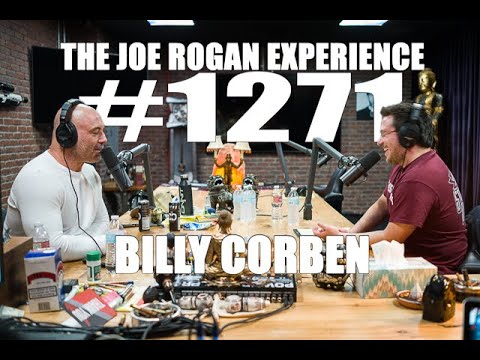
Joe Rogan Experience #1271 - Billy Corben
Joe Rogan (host), Billy Corben (guest), Narrator, Narrator, Narrator
In this episode of The Joe Rogan Experience, featuring Joe Rogan and Billy Corben, Joe Rogan Experience #1271 - Billy Corben explores steroids, scams, and “Florida fuckery” behind baseball’s wildest scandal Joe Rogan and documentary filmmaker Billy Corben break down Corben’s film “Screwball,” which exposes the Biogenesis steroid scandal that ensnared Alex Rodriguez and Major League Baseball. Corben explains his creative choice to reenact the saga using child actors, highlighting how absurd and childish the real-life players behaved. The conversation widens into a deep dive on Miami as a hub of scams, Medicare fraud, pill mills, cocaine culture, and political corruption—and how those dynamics mirror broader American trends. They also touch on drugs, prostitution laws, religion-as-hustle, Trump-era values, and the role of failure in creative growth and comedy.
Steroids, scams, and “Florida fuckery” behind baseball’s wildest scandal
Joe Rogan and documentary filmmaker Billy Corben break down Corben’s film “Screwball,” which exposes the Biogenesis steroid scandal that ensnared Alex Rodriguez and Major League Baseball. Corben explains his creative choice to reenact the saga using child actors, highlighting how absurd and childish the real-life players behaved. The conversation widens into a deep dive on Miami as a hub of scams, Medicare fraud, pill mills, cocaine culture, and political corruption—and how those dynamics mirror broader American trends. They also touch on drugs, prostitution laws, religion-as-hustle, Trump-era values, and the role of failure in creative growth and comedy.
Key Takeaways
Turning a serious scandal into a farce can reveal its true absurdity.
By casting children to lip-sync adult testimony, Corben underscores how ego-driven and juvenile the adults’ behavior was, making the complexity of the scandal more accessible and memorable.
Get the full analysis with uListen AI
Miami functions as a laboratory for America’s future problems.
Corben argues that Miami’s extremes—income inequality, real-estate bubbles, pill mills, Medicare fraud, and political corruption—often appear there first, making the city a “canary in the coal mine” for national trends.
Get the full analysis with uListen AI
Weak or selective enforcement breeds systemic corruption and impunity.
His stories about banks, crooked developers, and police killings show how regulators and prosecutors failing to act consistently send a message that white-collar and official misconduct will not be punished.
Get the full analysis with uListen AI
Prohibition of consensual vices tends to make them more dangerous, not safer.
Rogan and Corben note parallels between alcohol prohibition, the drug war, and illegal sex work, arguing that pushing these activities underground adds violence, exploitation, and disease that regulation could mitigate.
Get the full analysis with uListen AI
Modern American ‘values’ often reward lying, cheating, and gaming the system.
Using A-Rod, MLB, and Trump as examples, Corben worries that young people are being taught that success comes from manipulation rather than integrity, with long-term cultural consequences.
Get the full analysis with uListen AI
Failure and public humiliation are powerful catalysts for creative growth.
Both men emphasize that bombing on stage or releasing a weak project can be more instructive than success, forcing a painful but productive re-evaluation that leads to better work later.
Get the full analysis with uListen AI
Charismatic hustlers thrive where people are desperate and information is ignored.
Whether it’s prosperity televangelists, fake doctors like Tony Bosch, or political strongmen, they all exploit hope, fear, and willful ignorance in populations that either can’t or won’t scrutinize claims.
Get the full analysis with uListen AI
Notable Quotes
““Our primary export from Miami is just schemes and scams.””
— Billy Corben
““The Miami of today is the America of tomorrow.””
— Billy Corben
““Lie, cheat, and steal, and you too, kids, can be president of the United States.””
— Billy Corben
““Bombing is like sucking a thousand dicks in front of your mother.””
— Joe Rogan
““It’s not about A-Rod. He was collateral damage in a $4,000 debt between a cocaine‑addicted fake doctor and his fake‑tan‑addicted steroid patient.””
— Billy Corben
Questions Answered in This Episode
Does depicting real scandals with comedy and child actors risk trivializing the harm, or does it actually deepen understanding by exposing the absurdity?
Joe Rogan and documentary filmmaker Billy Corben break down Corben’s film “Screwball,” which exposes the Biogenesis steroid scandal that ensnared Alex Rodriguez and Major League Baseball. ...
Get the full analysis with uListen AI
To what extent should we hold leagues like MLB morally responsible when they selectively enforce rules for PR rather than fairness?
Get the full analysis with uListen AI
Is Miami uniquely corrupt, or just less discreet than other American cities with similar practices and incentives?
Get the full analysis with uListen AI
If prostitution and most drugs were legalized and regulated, what concrete safeguards would be needed to prevent new forms of exploitation?
Get the full analysis with uListen AI
How can parents and educators counter the emerging “lie, cheat, steal, get rich” ethos that high-profile public figures seem to embody and reward?
Get the full analysis with uListen AI
Transcript Preview
5, 4, 3, 2... Hello, Billy. We're live.
Yo, Joe.
What's going on buddy?
How you doing?
I watched your new documentary this morning in the gym. Loved it. It was fucking great.
(laughs)
It's crazy. I love your use of little kids. I, I don't wanna give away too much of it, uh, but it's about the steroid scandal involving baseball and Alex Rodriguez, but what, what was the choice to use little kids to play Arod and all the other key principles involved in the scandal, like to, to play, use little actors?
What kids?
Oh, come on, fella.
You're just, (laughs) you're just high, dude.
Oh.
No. (laughs)
I was pretty sober.
(laughs) It's the gym, yeah. Um, so you, you now know the story because you've seen the doc, and if people remember the Biogenesis steroid scandal. If not, the movie, I think, recaps it pretty, pretty well. But the thing that struck me is that, like, all these guys acted like children.
(laughs)
They really did.
Yeah.
And, and to boot, so, you know, we've done some, some sports docs in the past. We did, you know, some of the ESPN 30 for 30s, like the U, and, um, when you do a sports doc, I mean, uh, I don't wanna say it's, it's easy 'cause it's, you know, making documentaries i- is a challenge, but sports docs are pretty, like, paint by numbers. It's like you interview some players, you interview some coaches, some journalists. They mention a bunch of games, and you show a bunch of game footage. You know? Like, it's a pretty straightforward process. Uh-
Yeah.
... with this one, it's not about baseball. It's, it's baseball adjacent, I guess-
Right.
... but, like, it's about shit that went down in nightclubs, in shady clinics with fake doctors, hotel rooms, bars, locker rooms. So you got a bunch of guy- talking heads in your documentary, but then you got, you got nothing to cut to. You got no B-roll. So I'm like, "We're gonna need to shoot recrees, you know, recreations here."
Right.
Which is, which is, to me, I, (sighs) I don't know. It's like when you're doing nonfiction filmmaking, it's fake shit when y- when you film recreations. So it's like, I'm like, "How do we do this in a creative way that, that's consistent with the tone of the movie?" Which was always called Screwball, meaning it was always like a farce, you know, like a Carl Hiaasen or Elmore Leonard, Cohen brothers-esque-
Mm-hmm. Yeah.
... sort of Florida fuckery farce.
Yeah.
And so we just wanted to keep in that, in that mode, so I'm watching the characters. So we got Tony Bosch, uh, who was the fake doctor, and Porter Fisher, who was the whistleblower who stole the medical records and, and started this whole thing. They were then stolen from him and then sold to, not the highest bidder, but any bidder and every bidder, they were sold to. And they're talking, and I'm noticing that they had, like, a very similar storytelling style. Like, for example, guy will be like, "So I walk into his office, and I say, 'I want my money.'" And he says, "I don't have your money." And I said, "Well, you better get my money." And he said, "What are you gonna do about it?" And I said, "I'm gonna break your neck." And I'm like, "Oh, shit." They, they're so vivid and in the moment and, and, and talking dialogue, so we could Drunk History this, right? We could-
Install uListen to search the full transcript and get AI-powered insights
Get Full TranscriptGet more from every podcast
AI summaries, searchable transcripts, and fact-checking. Free forever.
Add to Chrome