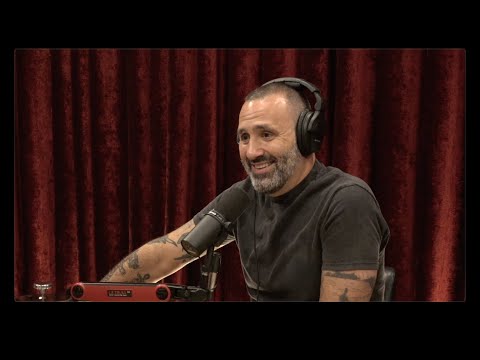
Joe Rogan Experience #2228 - Josh Dubin
Josh Dubin (guest), Joe Rogan (host), Narrator, Narrator
In this episode of The Joe Rogan Experience, featuring Josh Dubin and Joe Rogan, Joe Rogan Experience #2228 - Josh Dubin explores wrongful Convictions, Psychedelics, and Lawfare: Justice System Under Fire Joe Rogan and civil rights attorney Josh Dubin revisit the fallout from a prior guest, Sheldon Johnson, who allegedly committed a brutal murder after being resentenced and released, and use it to examine guilt, recidivism, and the mental health needs of long‑term prisoners. They discuss Dubin’s self‑reflection on second chances, the rarity of violent reoffending among exonerees, and the systemic stigma around therapy—while advocating for serious rehabilitation, including psychedelic therapy, in prisons. The conversation broadens into how race, propaganda, and drug policy shaped mass incarceration, and how media, prosecutors, and politicians weaponize the legal system, with Trump’s prosecutions as a central example. Dubin then details the “Ohio Four” case—four drug dealers he argues were wrongfully convicted of murder on the testimony of a paid informant who later recanted—and calls for public pressure on the local DA to correct the injustice.
Wrongful Convictions, Psychedelics, and Lawfare: Justice System Under Fire
Joe Rogan and civil rights attorney Josh Dubin revisit the fallout from a prior guest, Sheldon Johnson, who allegedly committed a brutal murder after being resentenced and released, and use it to examine guilt, recidivism, and the mental health needs of long‑term prisoners. They discuss Dubin’s self‑reflection on second chances, the rarity of violent reoffending among exonerees, and the systemic stigma around therapy—while advocating for serious rehabilitation, including psychedelic therapy, in prisons. The conversation broadens into how race, propaganda, and drug policy shaped mass incarceration, and how media, prosecutors, and politicians weaponize the legal system, with Trump’s prosecutions as a central example. Dubin then details the “Ohio Four” case—four drug dealers he argues were wrongfully convicted of murder on the testimony of a paid informant who later recanted—and calls for public pressure on the local DA to correct the injustice.
Key Takeaways
Second chances carry risk, but one egregious failure shouldn’t erase decades of progress.
Dubin refuses to apologize for believing in second chances, even after Johnson’s alleged murder; instead, he reframes the event as an outlier (recidivism among long‑term releases is under 1%) and a hard reminder that some people will squander opportunities.
Get the full analysis with uListen AI
Long‑term prisoners need structured mental health care and post‑release support.
Decades in violent, traumatic environments fundamentally change people; Dubin argues that anyone incarcerated for long stretches—guilty or exonerated—should have systematic access to trauma-informed therapy and reentry support, and admits he must push this much harder in his own cases.
Get the full analysis with uListen AI
Normalizing therapy inside prisons is essential to real rehabilitation.
Formerly incarcerated advocate Derek Hamilton describes how counseling used to signal weakness and ‘going soft’ behind bars; Dubin is working on town halls in tough prisons to reframe mental health services as strength and survival tools, not stigma.
Get the full analysis with uListen AI
Psychedelic therapy could be a powerful rehabilitation tool for veterans and prisoners.
Rogan cites overwhelming evidence of psychedelics’ efficacy in treating PTSD and argues they could help inmates reshape identity and perspective; both criticize Schedule I status as a political relic of Nixon-era efforts to crush civil rights and antiwar movements.
Get the full analysis with uListen AI
Media and political narratives often rely on selective, misleading “facts.”
They highlight examples like the ‘very fine people’ Charlottesville quote and Kamala Harris’s false ‘no troops in war zones’ debate claim to show how partial clips, propaganda, and un-fact-checked statements distort reality and harden partisan views.
Get the full analysis with uListen AI
The justice system can be weaponized from the top down and the bottom up.
Using Trump’s New York prosecutions and a local Ohio DA’s indictment as examples, Dubin and Rogan describe how cases can be stretched, overcharged, or timed for political gain—often with dubious victims and enormous human and financial costs.
Get the full analysis with uListen AI
Public scrutiny and direct pressure can materially affect wrongful conviction cases.
In the “Ohio Four” case, Dubin lays out how a paid informant’s lies, recantation, and judicial threats to prosecute him for perjury likely kept innocent men imprisoned; he has posted all documents online and is explicitly asking the public to review the evidence and contact the DA before his term ends.
Get the full analysis with uListen AI
Notable Quotes
““What I’m guilty of is giving a guy a second chance. I can’t apologize for that.””
— Josh Dubin
““Do you want them out like an animal let out of a cage, or do you want them out where rehabilitation was a cornerstone of their incarceration?””
— Josh Dubin
““I think prisoners could benefit from psychedelic therapy as well… One of the best ways to rehabilitate people is to literally change how they view themselves and the world.””
— Joe Rogan
““Know what it’s like to be incarcerated, or get in the fucking arena and do it yourself. Otherwise you have no business giving me your shitty opinion about this work.””
— Josh Dubin
““Hopefully what happened to Trump is eye‑opening because if they can do it to the president, it could happen to you.””
— Josh Dubin
Questions Answered in This Episode
How should advocates for criminal justice reform balance the real risk of rare but catastrophic reoffenses with the moral imperative to grant second chances?
Joe Rogan and civil rights attorney Josh Dubin revisit the fallout from a prior guest, Sheldon Johnson, who allegedly committed a brutal murder after being resentenced and released, and use it to examine guilt, recidivism, and the mental health needs of long‑term prisoners. ...
Get the full analysis with uListen AI
What would a serious, evidence-based rehabilitation model inside U.S. prisons look like if psychedelic-assisted therapy and normalized mental health care were fully integrated?
Get the full analysis with uListen AI
Where should we draw the line between legitimate prosecution and politically motivated ‘lawfare’—and who should enforce that boundary?
Get the full analysis with uListen AI
How can ordinary people become better consumers of information when mainstream outlets and political leaders repeatedly misrepresent quotes, statistics, and legal facts?
Get the full analysis with uListen AI
In the Ohio Four case, what systemic safeguards could prevent a single incentivized witness and a resistant judiciary from locking in a wrongful conviction for decades?
Get the full analysis with uListen AI
Transcript Preview
(drumming) Joe Rogan podcast, check it out. The Joe Rogan Experience.
Train by day, Joe Rogan podcast by night, all day. (rock music plays) What's up?
What's up, man?
Good to see ya.
Good to see you.
Uh, so I guess we just get right into it. The last case that we talked about, we had, uh, a, a very unfortunate incident happen after the podcast, uh, about a month later.
Yeah.
Uh, the gentleman beheaded somebody.
Allegedly, yes. Uh...
(laughs) Allegedly.
Yeah.
There's a lot of allegedlys, but-
Yeah.
... there were so many crazy things to that case. The craziest thing was him, uh, trying to fool the security cameras with a wig. Like, I guess he didn't know how high resolution cameras had gotten over the 25 years that he was in jail.
Uh, I mean, apparently there's a lot he didn't know.
Yeah.
Uh, uh, the only reason I say allegedly is because, um, I'd be a bit of a hypocrite if I started calling him guilty, um-
Yes.
... before he has a trial. But-
Of course.
... based on the surveillance, um-
It doesn't look good.
... what do they say in Texas? It ain't too shiny.
(laughs) It's so crazy, because, uh, you know, we went out with him that evening. We brought him to the comedy club. He was hanging out with us in the green room, and then the news broke, and then, uh, the comics were all like, "Hey, man, what the fuck?" (laughs)
(laughs)
"What the fuck are you doing bringing that guy around?" I'm like, "Well, we didn't know."
I, I, I mean, he-
Who could've known he was gonna do that other than him?
Uh, I, man, uh, I'm as, I'm as, uh, I'm as shocked over it now as, as I was in the moment. I mean, yeah, I don't, uh, you know, there are no words. I, I went through, um, it's really not funny. I mean, I'm only laughing out of sort of nervousness, I guess.
Of course.
And, uh, I mean, yeah, I was in, I was in St. Louis, of all places, which is only memorable because that's where I was when someone called me and said, "Have you looked at the news?" (clears throat) And I said, "I was in court, and I was on a break." And, um, you know, I called him a miracle on this show.
(laughs)
And-
Yeah.
... and the, the media shoved that straight up my ass. I mean...
Of course, but that's what they're gonna do. Well, he was the only guy that you had ever brought in that was actually guilty-
Yeah.
... that you felt was in jail for too long. You know, he, he got a 50-year sentence, correct?
Install uListen to search the full transcript and get AI-powered insights
Get Full TranscriptGet more from every podcast
AI summaries, searchable transcripts, and fact-checking. Free forever.
Add to Chrome