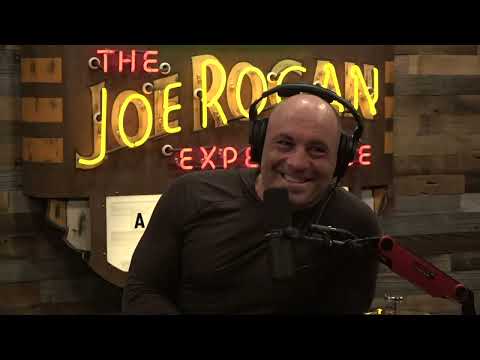
Joe Rogan Experience #1822 - Chris DiStefano
Chris DiStefano (guest), Narrator, Narrator, Joe Rogan (host), Guest’s friend (caller/clip) (guest), Guest’s friend (caller/clip) (guest), Narrator, Guest’s friend (caller/clip) (guest), Narrator, Narrator, Narrator, Narrator
In this episode of The Joe Rogan Experience, featuring Chris DiStefano and Narrator, Joe Rogan Experience #1822 - Chris DiStefano explores comedy, Anxiety, and Chaos: Chris DiStefano’s Wild Life Stories Unleashed Joe Rogan and comedian Chris DiStefano spend over three hours bouncing between stand-up, childhood trauma, anxiety, fame, and bizarre life experiences. Chris tells long-form stories about 9/11, his mob-connected father, near-expulsions, and career-defining moments like John Travolta calming him before Letterman.
Comedy, Anxiety, and Chaos: Chris DiStefano’s Wild Life Stories Unleashed
Joe Rogan and comedian Chris DiStefano spend over three hours bouncing between stand-up, childhood trauma, anxiety, fame, and bizarre life experiences. Chris tells long-form stories about 9/11, his mob-connected father, near-expulsions, and career-defining moments like John Travolta calming him before Letterman.
They dig into mental health, especially anxiety and narcissism, and how becoming a father and doing stand-up changed Chris’s perspective on fear, self-criticism, and work ethic.
The conversation also covers psychedelics, social media’s impact on mental well-being, historical obsessions (Revolutionary War, Spartans, pyramids), crime and prison stories, and modern cultural volatility.
Throughout, the tone stays comedic and confessional, blending serious insights with absurd, often graphic anecdotes about sex, drugs, bombing onstage, and getting knocked around by life.
Key Takeaways
Self-loathing can drive work ethic, but it’s not sustainable.
Chris’s habit of waking up calling himself a “piece of shit” pushed him to work harder in the gym and on stage, but he’s realizing that constant mental abuse is corrosive and increasingly incompatible with being a present father.
Get the full analysis with uListen AI
Anxiety often has a specific origin story—and can become identity.
Chris traces his debilitating anxiety back to 9/11, when he believed his mom had died, and notes how it later attached itself to relationships, sports performance, and daily life, eventually becoming a public persona he now resents.
Get the full analysis with uListen AI
Anxiety and narcissism can be tightly linked.
Both men float the idea that much anxiety is hyper-focus on self—your feelings, your death, your performance—rather than on reality or other people, and that recognizing this “self-serving loop” is key to loosening its grip.
Get the full analysis with uListen AI
Preparation dramatically reduces fear, in comedy and in combat sports.
Joe explains how under-training for martial arts tournaments made fear spike, whereas full preparation brought calm; Chris sees the same principle in stand-up and life—doing the work ahead of time shrinks anxiety.
Get the full analysis with uListen AI
Psychedelics may help rewire entrenched mental patterns, but they’re not risk-free.
They discuss psilocybin and ayahuasca as potential tools for disrupting rigid anxiety pathways and ego loops, while Joe stresses that edibles and heavy cannabis use have triggered lasting psychotic breaks in some people.
Get the full analysis with uListen AI
Boundaries with social media are crucial for mental health in public life.
As Chris’s profile rose, negative comments about his looks and comedy began to dominate his thoughts; stepping away from Twitter and delegating posting made him noticeably happier within days.
Get the full analysis with uListen AI
Failure and humiliation can become long-term advantages.
Chris’s total bomb in front of the Letterman bookers is what finally got him booked, because they wanted to see if he could ‘fail gracefully’; similarly, brutal bombs and corporate gig disasters become hardening experiences and material.
Get the full analysis with uListen AI
Notable Quotes
“I always feel like an impersonator… like an imposter. But I’ve felt that way since I was a little kid.”
— Chris DiStefano
“You’ve done it already. The work is over. Now you just have to go be in the present.”
— John Travolta, as retold by Chris DiStefano, calming him before Letterman
“I can’t have all this mental energy eaten up by my self‑serving, narcissistic anxiety.”
— Chris DiStefano
“There’s something about anxiety that’s narcissistic. You’re thinking entirely about yourself and your feelings.”
— Joe Rogan
“If you’re not lying, you get better at things. The people that lie suck… they never get good at stuff.”
— Joe Rogan
Questions Answered in This Episode
How much of Chris’s anxiety do you think is rooted in real trauma versus learned mental habits he could unlearn?
Joe Rogan and comedian Chris DiStefano spend over three hours bouncing between stand-up, childhood trauma, anxiety, fame, and bizarre life experiences. ...
Get the full analysis with uListen AI
Do you agree with the idea that a lot of anxiety is a form of narcissism, or does that feel dismissive of genuine mental illness?
They dig into mental health, especially anxiety and narcissism, and how becoming a father and doing stand-up changed Chris’s perspective on fear, self-criticism, and work ethic.
Get the full analysis with uListen AI
If psychedelics truly can ‘reset’ stuck mental patterns, should they be part of standard treatment for anxiety and trauma—or are the risks too high?
The conversation also covers psychedelics, social media’s impact on mental well-being, historical obsessions (Revolutionary War, Spartans, pyramids), crime and prison stories, and modern cultural volatility.
Get the full analysis with uListen AI
What do Chris’s stories about social media criticism say about how audiences and artists should relate online?
Throughout, the tone stays comedic and confessional, blending serious insights with absurd, often graphic anecdotes about sex, drugs, bombing onstage, and getting knocked around by life.
Get the full analysis with uListen AI
Does hearing detailed stories about criminals and prison life (Son of Sam, Henry Lee Lucas, TT Jerry) change how you think about ‘evil’ versus environment and mental illness?
Get the full analysis with uListen AI
Transcript Preview
(drum roll) Joe Rogan podcast, check it out.
The Joe Rogan Experience.
Train by day, Joe Rogan podcast by night. All day. (instrumental music plays) And we're up.
Chrissy D in the place to be. What's happening, baby?
Thank you for having me, my friend.
My pleasure. I'm glad you wore that shirt.
Oh, yeah. I know.
'Cause I was gonna wear one just like it.
Like this? Like-
No.
... Miami vibes?
(laughs)
I, um-
Where'd you get that?
This is from a company called RSVLTS, um, R-S-V-L-T-S, and, um, they sent me a bunch of shirts. And I got that kinda body where I'm like ... Somebody said once that I had leading man face, best friend body, a casting director, which was crushing, but-
Casting director said that to you?
... but an accurate description. Yeah, and I was like, "Oh, that's nice." So-
Here's the thing though.
Yeah.
You can change your body. You can't change your face.
Yes. That's the truth.
'Cause you have ... Leading man face is a great thing to have.
Yeah, I-
The rest of it is, like, workable.
I have these, like, like ... No matter ... Since I been a little kid, I've just had, like, these, like, puffy nipples. Even when I was, like, skinny and ripped, I just always had just nice nipple fat.
Hmm.
And this shirt, what I've learned is wearing shirts with a lot of patterns like this distracts from the nipple fat. I actually was flying out here yesterday, and I was wearing this green shirt, and I, when I went to the b- And I was wearing a book bag. And when I went to the bathroom, my tits were, like, pointed out like this. I was like, "I gotta change my shirt."
Hmm.
And then I just changed my shirt in the public bathroom at JFK, and then I just threw that shirt out in the garbage.
Wow, it was that bad?
Well, I think I make it worse in my head probably. I just usually ... I've been trying to do ... be better. You know, like, good wolf, bad wolf. Like, that-
(laughs) Yes.
... ancient Native American thing.
Yeah.
I've been trying to, I've been trying to not feed that bad wolf. I've been trying to feed the good wolf over the last two weeks. But it's harder ... It's very hard for me to feed the good wolf 'cause I usually just get up every day and I'm like, "You piece-of-shit, asshole loser, Chris."
Y- I honestly think that's better than getting up and going, "Chris, you're the fucking man."
Yeah, I've n- I don't think I've ever said that once about myself in any situation, even comedy. I've never ... I'm just always like ... I just always feel like a dummy after-
Install uListen to search the full transcript and get AI-powered insights
Get Full TranscriptGet more from every podcast
AI summaries, searchable transcripts, and fact-checking. Free forever.
Add to Chrome