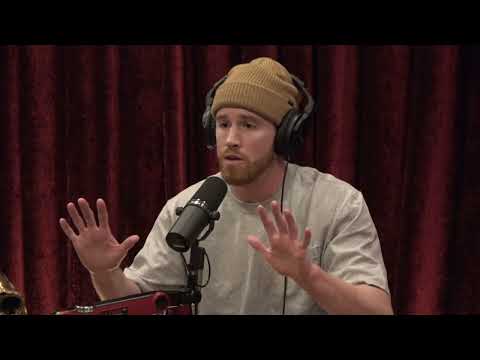
JRE MMA Show #138 with Cory Sandhagen
Joe Rogan (host), Narrator, Narrator, Cory Sandhagen (guest), Narrator, Narrator, Guest (fighter demonstrating gloves) (guest), Narrator
In this episode of The Joe Rogan Experience, featuring Joe Rogan and Narrator, JRE MMA Show #138 with Cory Sandhagen explores cory Sandhagen Explains Evolving Mindset, Mastery, And MMA’s Future Cory Sandhagen breaks down the mental and technical evolution behind his dominant win over Marlon “Chito” Vera, focusing on shifting from an angry “war” mindset to a calm, present, ultra-learner approach.
Cory Sandhagen Explains Evolving Mindset, Mastery, And MMA’s Future
Cory Sandhagen breaks down the mental and technical evolution behind his dominant win over Marlon “Chito” Vera, focusing on shifting from an angry “war” mindset to a calm, present, ultra-learner approach.
He details how obsessive note-taking, self-directed training, sports psychology, and deep technical study of striking and wrestling have accelerated his growth and made him a “quarterback” of his own career.
Sandhagen and Rogan dive into high-level strategy—stance switching, space and position in striking, conditioning through extended hard sparring—and compare MMA’s rapid evolution to other sports.
They also explore systemic issues like judging, rule sets, and gloves, plus broader life themes: identity beyond fighting, burnout, handling fear, and the pressure-cooker reality of the stacked bantamweight division.
Key Takeaways
Shift from emotional hype to calm, present focus for peak performance.
Sandhagen describes abandoning his old strategy of forcing anger and “war mode,” which became distracting and exhausting, and instead training himself to simply observe fear, stay present, and move step-by-step into the fight—leading to a near out-of-body flow state against Vera.
Get the full analysis with uListen AI
Treat learning like a system: track, reflect, and refine weekly.
He keeps structured Monday “to-do” notes and Saturday reviews on technical, mental, and tactical goals—what worked, what didn’t, and what’s worth more drilling—so improvement becomes intentional and compounding rather than random.
Get the full analysis with uListen AI
Be the “quarterback” of your own career, not a passive athlete.
Influenced by coach Christian Allen and Bruce Lee’s philosophy, Sandhagen designs his own 10-week camps, decides how to train, challenges coaches on what’s truly reliable, and accepts full responsibility for results instead of blaming others.
Get the full analysis with uListen AI
Train your decision-making under fatigue, not just your lungs.
He uses brutal seven- and eight-round hard sparring days as his primary conditioning, intentionally pushing past the point where he “can’t make decisions” so that a five-round fight feels mentally and physically manageable.
Get the full analysis with uListen AI
Build striking around concepts—space, position, and angles—not memorized combos.
Sandhagen argues most fighters misunderstand striking, chasing “tricks” and set combinations; he instead prioritizes controlling reaction time (space), stance and target shifts (position), and off-angle entries, which makes his style unpredictable and overwhelming.
Get the full analysis with uListen AI
Painful losses can be pivotal if you overhaul your mindset, not just tactics.
His losses to Aljamain Sterling and Petr Yan forced him to confront complacency, identity, and fear of losing; he used them to mature, redefine how “up” he needs to be, and become more thoughtful rather than more emotional.
Get the full analysis with uListen AI
MMA’s systems—judging, rules, and equipment—need modernization as the sport evolves.
They critique the 10-9 boxing-based scoring system, inconsistent refereeing, and glove design that encourages eye pokes, proposing more judges, detailed point-based criteria, fight-as-a-whole scoring, clearer rules, and better gloves that curve the fingers down.
Get the full analysis with uListen AI
Notable Quotes
“I felt like this higher being, best no-thinker just actor was running the show.”
— Cory Sandhagen (describing his flow state in the Vera fight)
“Everyone works hard physically. There’s gotta be some X factors. It has to be everything if you really wanna be a world champ.”
— Cory Sandhagen
“Striking isn’t combinations and set things. It’s a positional battle and a battle for space.”
— Cory Sandhagen
“This is about as high level as it gets… you were mixing shit up so well for five fucking rounds.”
— Joe Rogan (on Sandhagen vs. Vera)
“Once we’re in the cage, there’s no more entertainment show happening. It’s a fight at that point, and it feels like it’s real as hell.”
— Cory Sandhagen
Questions Answered in This Episode
How can non-fighters apply Sandhagen’s shift from emotional hype to calm presence in their own high-pressure situations, like work or competition?
Cory Sandhagen breaks down the mental and technical evolution behind his dominant win over Marlon “Chito” Vera, focusing on shifting from an angry “war” mindset to a calm, present, ultra-learner approach.
Get the full analysis with uListen AI
What would a truly modern, MMA-specific scoring and rules system look like if fighters, coaches, and referees redesigned it from scratch?
He details how obsessive note-taking, self-directed training, sports psychology, and deep technical study of striking and wrestling have accelerated his growth and made him a “quarterback” of his own career.
Get the full analysis with uListen AI
How much responsibility should elite athletes take for self-programming their training versus trusting established coaches and systems?
Sandhagen and Rogan dive into high-level strategy—stance switching, space and position in striking, conditioning through extended hard sparring—and compare MMA’s rapid evolution to other sports.
Get the full analysis with uListen AI
Can the extreme obsession and single-mindedness needed to reach a championship level be balanced with long-term mental health and life outside of sport?
They also explore systemic issues like judging, rule sets, and gloves, plus broader life themes: identity beyond fighting, burnout, handling fear, and the pressure-cooker reality of the stacked bantamweight division.
Get the full analysis with uListen AI
As MMA continues to evolve, what styles or training innovations might define the next generation of fighters the way stance switching and layered striking define Sandhagen’s era?
Get the full analysis with uListen AI
Transcript Preview
(drumming music) Joe Rogan podcast. Check it out.
The Joe Rogan Experience.
Train by day, Joe Rogan podcast by night, all day. (rock music) Mr. Sam Hangman, how are you?
I'm good. How are you guys?
You're on top of the world right now, dude.
I'm a pretty happy guy right now.
Woo.
(laughs)
What a fight that was.
Yeah.
What a fight. That was i- in my opinion, one of the most technical and one of the, like, the finest performances in that division, that 135-pound division, to have a guy like you and Marlon go after it like that. That was a fucking great fight.
Thank you.
Really great fight. And you're, you're like on top of it right now, man. It's really exciting to watch.
Yeah. Um, I'm getting pretty good. (laughs) You know?
(laughs) Yeah, for real.
Like, uh, I've, I've really been just plugging up some holes, like figuring some, some stuff out. I feel like, uh, I'm at the part in the martial arts journey where I've gotten really good at being a really good learner. Like I can learn super fast and super efficiently now. Um, and it's like big time paying off. Like not only that, but I also ... The space I was in before that Cheeto fight was, uh, unlike one that I feel like I've ever been in in my life.
How so?
You know, uh, have you read like a decent amount of sports psych books?
Yes.
Where, where they'll sometimes talk about how you're almost having this out-of-body experience-
Mm-hmm.
... where you're ha- where you're almost like, uh, floating above the court or the field or whatever? It was almost like that, except I wouldn't use the word like floating above. But I got to a space in that fight where, um, I felt like all of the thoughts and all of the distracting things that sometimes happen in a fight were completely ignored, and this like higher being, better version, like best no thinker just actor was running the show. Like it's almost like I was watching the thing happen while I was in the fight, and there would be bits of me hopping in and being like, "Hey, throw this combination. Hey, take a little bit more of a risk. Hey, do this," and then that would get completely just watched and this whoever was fighting that night that didn't even feel like me was the person that was fighting. It was fucking cool, man.
Wow.
It was cool, dude. It was like, you know, like a psychedelic experience feeling type of thing.
Really?
It was cool.
What do you attribute that to? How d- how did you get to that mindset?
It's a lot of, uh, you know, messing stuff up. Like I remember the last time I was on was right after I had beaten Frankie, and, uh, I was in ... It's just a bunch of different parts of the journey, and, and, uh, in that part of the journey, I was really in the space where if I could make myself more war, if I could make myself more angry, if I could make, make myself be up here, I would have success. That kind of stopped working a little bit after, uh, like around the TJ fight and then kind of during the Yan fight, and then definitely I tried to be that guy against Song, and it was like too much of a distracting feeling, where now my mindset's going into the last fight because it was such like a distracting feeling, just feeling like I have to get myself to a point of anger or upness before a fight where it, it, it just be- became distracting, where it was helpful before, it became distracting in that Song fight. I bailed on that, and I just tried to be as mindful and as present as I possibly could, um, for like... And I know that those are like kind of corny words now, but, uh, there is some real substance to them, uh, when, when they're like really done well. And I would say maybe about six weeks before the fight, I, I had this moment where I was sitting on the couch because I put a lot of pressure on myself, and I, I, uh, I want to be a world champ real bad, um, where I was to the point where I wasn't enjoying any part of the camp, any part of the experience of fighting or anything. And I was sitting on the couch and I just like ... I, I think I was crying a little bit, and I was like, "I can't fucking do this for the next five years of my life," you know. Like, "I can't do this for the rest of my career." And I was like, "Well, what's gotta change?" And I was like, "I gotta lose ... I gotta take this pressure off of me, and I gotta start enjoying every day a lot more than I am right now." And from that like six weeks before the fight, I started doing that, and I really think that that carried into the fight, and it made me be a lot less tense, a lot less tight, and it made me be able to fight with just like a completely free way of being.
Install uListen to search the full transcript and get AI-powered insights
Get Full TranscriptGet more from every podcast
AI summaries, searchable transcripts, and fact-checking. Free forever.
Add to Chrome