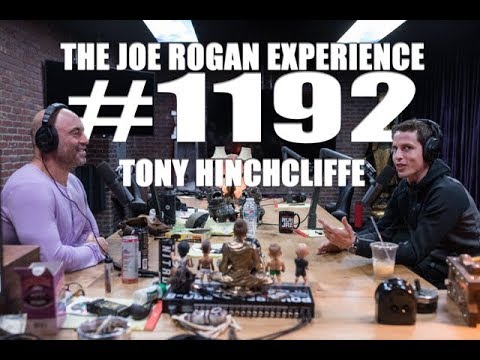
Joe Rogan Experience #1192 - Tony Hinchcliffe
Joe Rogan (host), Tony Hinchcliffe (guest), Redban (guest), Guest (guest), Guest (guest), Guest (guest), Guest (guest), Narrator
In this episode of The Joe Rogan Experience, featuring Joe Rogan and Tony Hinchcliffe, Joe Rogan Experience #1192 - Tony Hinchcliffe explores joe Rogan, Tony Hinchcliffe Trade War Stories on Comedy, Vices, Fame Joe Rogan and Tony Hinchcliffe have a long-form, freewheeling conversation that bounces from addiction, painkillers, and quitting cigarettes to fame, divorce settlements, and stand-up comedy culture.
Joe Rogan, Tony Hinchcliffe Trade War Stories on Comedy, Vices, Fame
Joe Rogan and Tony Hinchcliffe have a long-form, freewheeling conversation that bounces from addiction, painkillers, and quitting cigarettes to fame, divorce settlements, and stand-up comedy culture.
They discuss the dangers and appeal of drugs (especially pain pills), the impact of intense cardio and 'runner’s high,' and the mental toll of professions exposed to death and trauma, like EMTs and prison guards.
A large portion centers on comedy: Kill Tony’s evolution, how audiences and outrage culture are changing stand-up, and why working out material in clubs is crucial even for big-name comics.
They also touch on extreme human behavior and sexuality, organized crime stories from Boston and Miami, and how society revels in both the rise and the downfall of celebrities.
Key Takeaways
Quitting one addiction can make others easier to manage.
Tony notes that dropping cigarettes significantly decreased his urge to drink heavily, illustrating how intertwined vices are and how removing one can weaken the others’ hold.
Get the full analysis with uListen AI
Painkillers feel incredible but carry devastating long-term costs.
Both describe how opiates and strong medications can feel uniquely euphoric, yet they underscore that this is exactly why they’re so dangerous and life-destroying for many people.
Get the full analysis with uListen AI
Intense, consistent exercise can dramatically reduce anxiety and negative mental chatter.
Rogan’s Sober October regimen led to a strong 'runner’s high' and near-total absence of anxiety, suggesting that for many, under-exercising may fuel mental restlessness and overthinking.
Get the full analysis with uListen AI
Exposure to death and trauma can profoundly distort people’s behavior and coping mechanisms.
They speculate that EMTs, prison guards, and trauma-exposed workers may engage in extreme behaviors (like reckless sex or detachment) as a way to cope with seeing death and brutality daily.
Get the full analysis with uListen AI
Fame magnifies both adoration and hatred, making public downfalls a spectator sport.
From Roseanne and Megyn Kelly to ex-child stars bagging groceries, they highlight how audiences relish watching formerly successful people fall, often ignoring context like mental illness or head trauma.
Get the full analysis with uListen AI
Modern stand-up requires sharper writing to navigate sensitive topics without losing the room.
Rogan explains restructuring bits after seeing where audiences tune out, treating his material like a defense attorney would, to address objections before they arise and still hit taboo themes.
Get the full analysis with uListen AI
Working only for your own fans can make comics soft and out of touch.
They argue that big-name comedians who avoid small clubs and mixed crowds risk losing their edge, because true development happens where audiences aren’t automatically on your side.
Get the full analysis with uListen AI
Notable Quotes
“What else gives you nothing and takes everything? That’s cigarettes.”
— Tony Hinchcliffe
“If you could take a pill that puts you in the state of mind that I am when I work out this much, everybody would take it.”
— Joe Rogan
“We went from wanting to see people become stars to watching their dreams get destroyed.”
— Tony Hinchcliffe
“People that have schizophrenia don’t realize that they’re schizophrenic.”
— Joe Rogan
“If you see that much death, it rewires the way your brain works.”
— Joe Rogan (relaying a friend’s view on EMTs)
Questions Answered in This Episode
How much of modern 'cancel culture' is driven by genuine moral concern versus envy or resentment toward successful people?
Joe Rogan and Tony Hinchcliffe have a long-form, freewheeling conversation that bounces from addiction, painkillers, and quitting cigarettes to fame, divorce settlements, and stand-up comedy culture.
Get the full analysis with uListen AI
Could structured, intense exercise be realistically prescribed or integrated as a frontline tool for managing anxiety and depression?
They discuss the dangers and appeal of drugs (especially pain pills), the impact of intense cardio and 'runner’s high,' and the mental toll of professions exposed to death and trauma, like EMTs and prison guards.
Get the full analysis with uListen AI
Where should comedians draw the line between pushing boundaries and respecting audience sensitivities, if at all?
A large portion centers on comedy: Kill Tony’s evolution, how audiences and outrage culture are changing stand-up, and why working out material in clubs is crucial even for big-name comics.
Get the full analysis with uListen AI
What ethical responsibilities do doctors, EMTs, and prison guards have when treating or guarding people who’ve committed horrific crimes?
They also touch on extreme human behavior and sexuality, organized crime stories from Boston and Miami, and how society revels in both the rise and the downfall of celebrities.
Get the full analysis with uListen AI
Does society underestimate how brain injuries and trauma (like Roseanne’s car accident) change personality and decision-making, especially in public figures?
Get the full analysis with uListen AI
Transcript Preview
... -on. Powerful young Tony Hinchcliffe.
Hello.
I'm smelling this weed. (sniffs) In 12 hours, I'll be free.
I'm excited for you, dude. I didn't do shit for Sober October.
(sighs) Did you stay drunk?
Uh, I didn't stay drunk. I just had a, a drink or two pretty much every night.
Would you ever consider doing something like Sober October?
I mean, like, if, you know, if I was a part of it, and, like, I got all that promotional push that everybody's giving themselves, hell yeah. For the business point, for the-
That's the only reason why you'd do it?
That's the only reason I would do it.
Hm.
I have no reason. I'm in, I'm in, you know, I'm in perfect shape, feel good about life.
(laughs)
Every day is good. You know, I- I- I've been cutting back on things naturally. Like, I'm done with my, like, college years of, you know, getting wasted at the store and things like that. Like, it's like, you-
Well, you're also not smoking cigarettes anymore.
Right. I'm off cigarettes, which helps a lot, by the way. You know, I gotta say, for anybody out there that drinks and smokes, the two correlate. You quit one, it's gonna help with the other big time. S- but I mean, I'm just saying, like, cutting back on smoking, 'cause the two go so good together.
Yeah, you were finding that those pens weren't really helping you that much, huh?
The nicotine pens?
Yeah.
Oh, yeah, no, I loved them. Yeah, they're, they're-
But did it help you quit?
Yeah.
'Cause you s- you were still, you were saying that it's not the same.
It's not the same. I mean, when you're a c- when you love cigarettes, and both of my parents smoked. N- my mom quit when she got pregnant with me and then started again, like, a year later, and she would smoke, like, in the little, you know, the little house that I grew up in. And it was just always, like, my whole life was, I was built to be a cigarette smoker.
(laughs)
Those two were probably smoking ciggies while banging, making me. Like, it was like, I just love cigarettes. I even still love the nice gust of secondhand smoke. It... Now that I'm a non-smoker, it blows my mind hearing people all those years say, "Oh, cigarettes stink." Like, it's like, I f- I fucking love it.
Really?
Oh, I just love it. It just makes me feel good. It's weird, and I know-
That is weird.
... 'cause it's pure poison. It just goes to show, like-
(laughs)
... what a dark lord I am.
Is that you, or is that just cigarettes in general have a grip on people? It's a dark grip.
Install uListen to search the full transcript and get AI-powered insights
Get Full TranscriptGet more from every podcast
AI summaries, searchable transcripts, and fact-checking. Free forever.
Add to Chrome