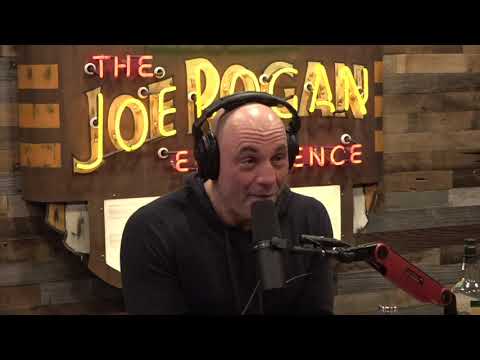
Joe Rogan Experience #1777 - Andrew Dessler
Narrator, Narrator, Joe Rogan (host), Andrew Dessler (guest), Narrator, Narrator, Narrator
In this episode of The Joe Rogan Experience, featuring Narrator and Narrator, Joe Rogan Experience #1777 - Andrew Dessler explores climate Scientist Debunks Comforting Myths About Fossil Fuels And Risk Atmospheric scientist Andrew Dessler joins Joe Rogan to respond point‑by‑point to Steve Koonin’s downplaying of climate risk, arguing that Koonin selectively presents facts like a “defense attorney for CO₂.”
Climate Scientist Debunks Comforting Myths About Fossil Fuels And Risk
Atmospheric scientist Andrew Dessler joins Joe Rogan to respond point‑by‑point to Steve Koonin’s downplaying of climate risk, arguing that Koonin selectively presents facts like a “defense attorney for CO₂.”
Dessler explains why the scientific consensus attributes essentially all recent global warming to human greenhouse gas emissions, and details the multiple, often ignored costs of fossil fuels: climate change, air pollution, health impacts, economic volatility, and national security vulnerabilities.
He outlines a technically feasible path to decarbonization built around cheap wind and solar backed by firm power (nuclear, geothermal, hydro), while emphasizing that political obstruction and corporate influence—not technology—are the primary barriers.
The conversation also covers infrastructure fragility, carbon removal ideas, agriculture, and the political economy of energy, concluding that delaying action dramatically raises long‑term risk and future government intrusion in response to crises.
Key Takeaways
Recent global warming is overwhelmingly human‑caused.
Dessler states the best estimate is that humans are responsible for essentially 100% of the observed warming over the past century, backed by multiple lines of evidence (basic physics, CO₂ measurements, paleoclimate data, and atmospheric “fingerprints” showing lower atmosphere warming and upper atmosphere cooling).
Get the full analysis with uListen AI
Koonin’s facts are often accurate, but highly selective.
Dessler likens Koonin to a defense attorney for CO₂: he rarely lies, but cherry‑picks uncertainties and favorable numbers (e. ...
Get the full analysis with uListen AI
Fossil fuels impose massive hidden costs beyond climate change.
Air pollution from fossil fuels is linked to roughly one in five global deaths, causes severe local harms (e. ...
Get the full analysis with uListen AI
Clean energy is already economically competitive and rapidly scaling.
Wind and solar costs have plummeted; in many regions they’re now the cheapest new power sources. ...
Get the full analysis with uListen AI
A reliable low‑carbon grid is technically straightforward in principle.
He describes a grid with ~75% wind/solar plus ~25% “firm dispatchable” power (nuclear, geothermal, hydro, or gas with carbon capture), with short‑duration storage to shift solar from midday to evening—no exotic long‑term batteries are strictly required.
Get the full analysis with uListen AI
Economic damage estimates from climate change are deeply uncertain and likely conservative.
Dessler shows that different economic models give wildly divergent GDP loss estimates for the same warming, and that results hinge on value judgments (e. ...
Get the full analysis with uListen AI
Delaying decarbonization greatly amplifies long‑term risk and future government intervention.
Because CO₂ persists for thousands of years, today’s emissions lock in long‑lived warming. ...
Get the full analysis with uListen AI
Notable Quotes
“He’s really acting like a defense attorney for carbon dioxide.”
— Andrew Dessler
“Anybody who tells you that they know what three degrees is gonna be like is either a liar or a fool. We have no idea.”
— Andrew Dessler
“Fossil fuel air pollution was responsible for one in five deaths in 2018 worldwide.”
— Andrew Dessler
“If you want to have a world where the government doesn’t tell you what to do, we need to solve climate change now.”
— Andrew Dessler
“We’re already 20% of the way to an Ice Age amount of warming—just in the other direction.”
— Andrew Dessler
Questions Answered in This Episode
If the scientific case that humans cause recent warming is so strong, why do “merchants of doubt” arguments remain so persuasive to the public and policymakers?
Atmospheric scientist Andrew Dessler joins Joe Rogan to respond point‑by‑point to Steve Koonin’s downplaying of climate risk, arguing that Koonin selectively presents facts like a “defense attorney for CO₂.”
Get the full analysis with uListen AI
How should society make decisions when economic models of climate damage are so uncertain and heavily influenced by moral value judgments?
Dessler explains why the scientific consensus attributes essentially all recent global warming to human greenhouse gas emissions, and details the multiple, often ignored costs of fossil fuels: climate change, air pollution, health impacts, economic volatility, and national security vulnerabilities.
Get the full analysis with uListen AI
What specific policy mix (carbon pricing, subsidies, regulations) would most effectively accelerate the shift from fossil fuels to a wind/solar plus firm‑power grid?
He outlines a technically feasible path to decarbonization built around cheap wind and solar backed by firm power (nuclear, geothermal, hydro), while emphasizing that political obstruction and corporate influence—not technology—are the primary barriers.
Get the full analysis with uListen AI
Given the political power of fossil fuel and agricultural interests, what realistic strategies exist to overcome the structural obstacles Dessler describes?
The conversation also covers infrastructure fragility, carbon removal ideas, agriculture, and the political economy of energy, concluding that delaying action dramatically raises long‑term risk and future government intrusion in response to crises.
Get the full analysis with uListen AI
How much should we invest in speculative solutions like direct air capture and geoengineering versus proven mitigation options such as efficiency and clean power deployment?
Get the full analysis with uListen AI
Transcript Preview
(drumming) Joe Rogan podcast, check it out.
The Joe Rogan Experience.
Train by day, Joe Rogan podcast by night. All day. (instrumental music plays) Alright, we're up. Well, thank you very much for being here, Andrew. I appreciate it. Uh, why don't you tell everybody, if you would, uh, what you do and what your credentials are.
So, I'm a professor of atmospheric sciences at Texas A&M University. I'm the director of the Texas Center for Climate Studies. Uh, I've been studying climate and the atmosphere for about 30 years.
Okay. And, uh, I, I ... Thank you for being here. And I brought you on here to counter this book. Uh, Steve Koonin, who was my last guest, and, uh, I'm trying to do this and, and balance things out. He has a very different take on what the science says about climate change than you do. So, let's, uh ... I guess we should start ... I know you've read the book. What do you think about his book?
Yeah. Well, let me start with a little context.
Okay.
Like some historical context. So, um, for decades on a number of problems, there have been scientists who show up and say, "The consensus is all wrong." So, it started in the '60s with tobacco. So, you know, the, the evidence was very clear that smoking is bad for you, and then these scientists started showing up and saying, "No, you know, we don't really understand. Uh, there's, there's all these problems with the science." And what the tobacco companies figured out very early is that having a scientist advance that message was much better than having a PR person.
Mm.
So, they would go out and hire scientists to say, "Hey, we need you to push this message." And they went out, and it was very effective. They delayed the recognition that smoking is bad for you for decades.
Have you seen the documentary, uh, Ministers of Doubt-
Merchants of Doubt.
Oh, I'm sorry. Merchants of Doubt.
Yeah. In fact, I was gonna say-
Yeah.
... you know, that's the fanta- a fantastic book, uh, by Naomi Oreskes and Erik Conway that really goes over this, all the way into climate change, about how science is used to try to undermine policy action. Um, so then, you know, fast-forward to the '80s and you have fluorocarbons and ozone depletion. And in fact, uh, the exact same thing happens. The, the science was really well-established, but these scientists started showing up and saying, "The scientists have it all wrong." And in fact, the arguments they're advancing are almost exactly the same as the arguments that Dr. Koonin is advancing. If you take a Word document and you just do a global word replace, ozone depletion for climate change, you have exactly the same argument. In fact, I have a slide with a quote that ... I normally don't (laughs) make people read a paragraph, but I think this is actually really useful. If you go to slide 52, this is from 1989, and I think ... Is it gonna show up there?
Install uListen to search the full transcript and get AI-powered insights
Get Full TranscriptGet more from every podcast
AI summaries, searchable transcripts, and fact-checking. Free forever.
Add to Chrome