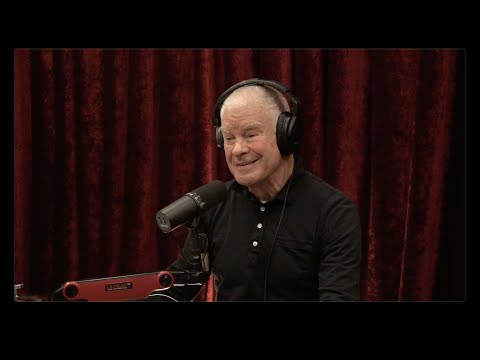
Joe Rogan Experience #2346 - Jim Lampley
Jim Lampley (guest), Joe Rogan (host)
In this episode of The Joe Rogan Experience, featuring Jim Lampley and Joe Rogan, Joe Rogan Experience #2346 - Jim Lampley explores jim Lampley Dissects Boxing History, Legends, and Modern Fight Business Joe Rogan and legendary boxing commentator Jim Lampley dive deep into decades of boxing history, from Muhammad Ali, George Foreman, and Sugar Ray Robinson to modern stars like Canelo Álvarez, Terence Crawford, and Gervonta Davis. They compare the structures of boxing and UFC, examining how promoters, networks, and matchmaking shape fighter pay, careers, and fan experience. Lampley shares intimate behind-the-scenes stories on iconic fights and calls—Tyson–Douglas, Foreman–Moorer, Hagler–Hearns, Chavez–Taylor—and reflects on the risks, injustices, and tragedies that haunt the sport. The conversation also traces Lampley’s unlikely career path in sports television and his return to ringside, while debating upcoming mega-fights like Canelo vs. Crawford and the evolving science of training, power, and longevity.
Jim Lampley Dissects Boxing History, Legends, and Modern Fight Business
Joe Rogan and legendary boxing commentator Jim Lampley dive deep into decades of boxing history, from Muhammad Ali, George Foreman, and Sugar Ray Robinson to modern stars like Canelo Álvarez, Terence Crawford, and Gervonta Davis. They compare the structures of boxing and UFC, examining how promoters, networks, and matchmaking shape fighter pay, careers, and fan experience. Lampley shares intimate behind-the-scenes stories on iconic fights and calls—Tyson–Douglas, Foreman–Moorer, Hagler–Hearns, Chavez–Taylor—and reflects on the risks, injustices, and tragedies that haunt the sport. The conversation also traces Lampley’s unlikely career path in sports television and his return to ringside, while debating upcoming mega-fights like Canelo vs. Crawford and the evolving science of training, power, and longevity.
Key Takeaways
Trainer independence and innovation can redefine an entire sport.
Emanuel Steward quietly overturned many ‘time-honored’ boxing norms—like extreme heat training at Kronk—and his success with champions made the rest of the sport follow, showing how one visionary coach can reset best practices.
Get the full analysis with uListen AI
Promoter and network dynamics heavily influence commentary and matchmaking.
Lampley explains how the shift from network control (HBO) to promoter influence (PBC, star promoters) changed who gets on air and which fights get made, underscoring that business politics shape what fans see and hear as much as merit does.
Get the full analysis with uListen AI
Boxing’s card structure weakens its product compared to UFC’s stacked events.
Rogan contrasts UFC’s ‘every fight matters’ model with boxing’s top-heavy cards where fans often only care about the main event, arguing that neglecting undercards is shortsighted for audience engagement and fighter development.
Get the full analysis with uListen AI
Power and durability are as much about technique and structure as raw strength.
Foreman taught Lampley that power punching is a science—angles, weight transfer, and footwork—while Canelo’s near-impossible to-drop chin likely stems from extraordinary lower-body strength and balance built partly through serious horse riding.
Get the full analysis with uListen AI
Fine margins and single mistakes often decide supposedly ‘one-sided’ knockouts.
They stress that many spectacular KOs reflect one tactical error rather than huge talent gaps; examples like Marquez–Pacquiao and Tyson–Douglas show how a brief lapse or wrong read can rewrite careers and legacies.
Get the full analysis with uListen AI
Referees carry immense psychological and moral burden for life-and-death calls.
Cases like Duk Koo Kim, Jimmy Garcia, and the Chavez–Taylor fight illustrate how a single stoppage decision can lead to a fighter’s death and haunt referees for years, sometimes contributing to their own suicides.
Get the full analysis with uListen AI
Ring IQ and adaptability can overcome size, but only with a perfect game plan.
In debating Canelo vs. ...
Get the full analysis with uListen AI
Notable Quotes
“He will come and stand in front of me and let me knock him out.”
— George Foreman (as recounted by Jim Lampley about the Moorer fight prediction)
“The lesson he taught me then was a man’s identity is his own.”
— Jim Lampley on Muhammad Ali changing his name from Cassius Clay
“You can’t win the heavyweight championship of the world without being smart. A stupid person couldn’t do this.”
— George Foreman (as quoted by Jim Lampley)
“Boxing is a hurt business. Everybody’s got a plan until you hit them.”
— Jim Lampley paraphrasing classic Mike Tyson lines he heard early in Tyson’s career
“If Ray Leonard could beat Marvelous Marvin Hagler, then Terence Crawford can beat Canelo Álvarez.”
— Larry Merchant (as quoted by Jim Lampley)
Questions Answered in This Episode
Given the influence of promoters and streaming platforms today, what would a truly fighter- and fan-first boxing ecosystem look like?
Joe Rogan and legendary boxing commentator Jim Lampley dive deep into decades of boxing history, from Muhammad Ali, George Foreman, and Sugar Ray Robinson to modern stars like Canelo Álvarez, Terence Crawford, and Gervonta Davis. ...
Get the full analysis with uListen AI
How far can technical brilliance and ring IQ (like Crawford’s) realistically go in offsetting size and strength disadvantages against someone like Canelo?
Get the full analysis with uListen AI
Where should the line be drawn for referees between allowing a fighter the chance for a comeback and protecting them from long-term damage or death?
Get the full analysis with uListen AI
Could boxing sustainably adopt a UFC-style model of stacked cards and unified promotion, or is its fragmented structure too deeply entrenched?
Get the full analysis with uListen AI
What modern training innovations—akin to Lomachenko’s dance or Canelo’s riding—might become the next big competitive edge in combat sports?
Get the full analysis with uListen AI
Transcript Preview
(drumming music) Joe Rogan podcast, check it out. The Joe Rogan Experience.
Train by day, Joe Rogan podcast by night, all day. (rock music) Oh, really? That was your closest male friend?
Unexpected.
Yeah?
Unexpected, but over a period of time, we just got closer and closer and closer, and, you know, very brotherly. And the last public appearance Emanuel ever made was my wedding in September of 2012. And that night, the wedding was at our house in Del Mar, California, and that night he, uh, his girlfriend came to me and said, "We have to leave early. Emanuel's having stomach pains." He was in oncology by the next week.
(groans)
He was gone by three weeks later.
Oh.
So, very touching to me, and, you know, deeply symbolic of my love for him, and thus the Kronk hat.
Yeah. What a classic gem. And he was one of the first guys to realize, like if you crank the heat up, it actually gives guys better conditioning.
He realized a lot of things.
Yes.
And he, uh, Emanuel was a genius, uh, in a lot of ways. And there were a lot of, um, sort of time-honored rules and techniques in boxing that he quietly upended.
Yes.
You know? Because he was more advanced in his point of view and thought processes.
And then everybody else sort of followed his lead.
Once they understood-
Yeah.
... what he was doing.
Yeah.
Once you, if you, if you saw the McCrorys and Tommy-
Yes.
... and those guys-
Yes.
... why wouldn't you imitate, right?
Right, right. Exactly, yeah. No, he was a-
And he did it at both the amateur and pro level too.
Mm-hmm.
You know? So...
And he was always fantastic too as a commentator, because he would give insight that you're really not gonna get from someone that's not, like with these fighters day in, day out, through an entire camp. He really understood things.
But when you consider the privilege I had, the expert commentators I work with, starting with Ray.
Yes.
That's one perspective. Then gravitating through George Foreman and Roy Jones. Emanuel's in there.
Yes.
And to me, he was the best. I agree with you. The public responded more to Roy and Ray-
Of course.
You know.
Famous guys.
Because of their stardom.
Yes.
Et cetera. But...
And they were really good too.
And they were good.
Yeah.
But Emanuel taught me more, you know.
Interesting.
Because he was totally well-rounded.
Yeah.
As a human being as well as as a, um, boxing trainer.
I was very pleased to hear you back on the microphone for that Times Square event.
Thank you.
Install uListen to search the full transcript and get AI-powered insights
Get Full TranscriptGet more from every podcast
AI summaries, searchable transcripts, and fact-checking. Free forever.
Add to Chrome