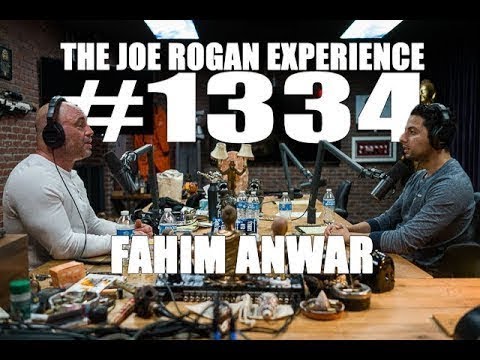
Joe Rogan Experience #1334 - Fahim Anwar
Joe Rogan (host), Fahim Anwar (guest), Jamie Vernon (guest), Jamie Vernon (guest)
In this episode of The Joe Rogan Experience, featuring Joe Rogan and Fahim Anwar, Joe Rogan Experience #1334 - Fahim Anwar explores inside Comedy’s Grind: Fahim Anwar, Joe Rogan Decode Standup Reality Joe Rogan and Fahim Anwar spend the episode breaking down the realities of standup comedy: the grind at The Comedy Store, working out material, and the culture around comics and clubs.
Inside Comedy’s Grind: Fahim Anwar, Joe Rogan Decode Standup Reality
Joe Rogan and Fahim Anwar spend the episode breaking down the realities of standup comedy: the grind at The Comedy Store, working out material, and the culture around comics and clubs.
They contrast the old industry model (festivals, sitcom deals, gatekeepers) with the new ecosystem of podcasts, YouTube, streaming specials, and self-made audiences like Andrew Schulz and Theo Von.
Fahim tells his backstory from aerospace engineer at Boeing to full‑time comic, including parental pressure, getting booed off the Apollo stage, and quitting his ‘safe’ job via a technically engineered firing.
They also dive into issues like joke theft (the Mencia saga), industry hypocrisy, political labeling, social‑media shadowbanning, and how ego, humility, and community shape a comedian’s long‑term survival.
Key Takeaways
Standup is a live, iterative craft that can’t be perfected alone.
Rogan and Anwar emphasize you must work jokes in front of audiences repeatedly; inflection, timing, and subtle performance choices often matter more than the exact words on the page.
Get the full analysis with uListen AI
A consistent stage habit at strong clubs is critical to staying sharp.
Rogan stresses that even big comics need frequent reps at places like The Comedy Store; comics who ‘slack off’ after getting famous typically see their act decline.
Get the full analysis with uListen AI
The power balance has shifted from gatekeepers to creators.
They contrast the old JFL/sitcom deal era with today’s world where comics like Andrew Schulz and Theo Von build direct audiences via YouTube and podcasts, often outpacing network exposure.
Get the full analysis with uListen AI
Having a ‘real’ career can be a strategic bridge into comedy.
Fahim deliberately got an engineering degree and Boeing job to fund and geographically position his standup ambitions, then engineered his exit once opportunities made the risk justifiable.
Get the full analysis with uListen AI
Humility and community-mindedness pay off more than elitism.
Rogan argues that treating door guys and up‑and‑comers as peers—rather than as beneath you—creates long‑term goodwill and a healthier scene, and avoids awkward ‘180s’ when careers flip.
Get the full analysis with uListen AI
Ethical behavior and originality matter long‑term, even if thieves spike short‑term.
Using the Carlos Mencia saga, Rogan shows that joke theft and industry-enabled hacks can thrive briefly, but eventually audiences and other comics catch up and reputations collapse.
Get the full analysis with uListen AI
Artists benefit from structure, planning, and disciplined thinking.
Fahim frames his engineering background as ‘a high threshold for academic pain’ that now fuels disciplined writing, time management, and long‑horizon planning for his creative career.
Get the full analysis with uListen AI
Notable Quotes
“Standup is your car. It’s your business. You’re in control over it.”
— Joe Rogan
“The beauty of standup is you can’t skip steps. When you see a comic on stage, it’s like when you cut a tree open and you see all the rings.”
— Fahim Anwar
“If you get 30 years down and what you get out of those 30 years is that you’re better than everybody, you’ve missed everything.”
— Joe Rogan
“I had a high threshold for academic pain… engineering was a means to an end for me to do standup comedy.”
— Fahim Anwar
“Of all the art forms, standup has the most justice in it.”
— Fahim Anwar
Questions Answered in This Episode
How much of a comedian’s success today depends on mastering platforms like YouTube and podcasts versus traditional TV and festivals?
Joe Rogan and Fahim Anwar spend the episode breaking down the realities of standup comedy: the grind at The Comedy Store, working out material, and the culture around comics and clubs.
Get the full analysis with uListen AI
What are the ethical lines between parallel thinking, influence, and outright joke theft—and who should police them?
They contrast the old industry model (festivals, sitcom deals, gatekeepers) with the new ecosystem of podcasts, YouTube, streaming specials, and self-made audiences like Andrew Schulz and Theo Von.
Get the full analysis with uListen AI
Can someone realistically plan a ‘safe’ professional path like Fahim’s and still go all‑in creatively, or does security always slow you down?
Fahim tells his backstory from aerospace engineer at Boeing to full‑time comic, including parental pressure, getting booed off the Apollo stage, and quitting his ‘safe’ job via a technically engineered firing.
Get the full analysis with uListen AI
Is the current cultural climate making standup sharper and more thoughtful, or just more cautious and self‑censoring?
They also dive into issues like joke theft (the Mencia saga), industry hypocrisy, political labeling, social‑media shadowbanning, and how ego, humility, and community shape a comedian’s long‑term survival.
Get the full analysis with uListen AI
What would a genuine, useful ‘handbook’ for standup comedy look like, and could it avoid producing more formulaic, derivative acts?
Get the full analysis with uListen AI
Transcript Preview
(instrumental music plays) What's up, bro?
What's up, man? How are you?
Good.
Good to see you, outside the store.
I know.
Isn't it weird when you run into a comedian that you don't normally hang out with outside the store? Like, "Oh." I mean, I would recognize you, but sometimes you'll meet someone that you met at a meeting, and then it's like at a Ralph's.
Ooh.
And you can't place the context.
That's bad, especially if it's like an executive and they really like you to remember them.
Yeah. Are you good at faking it?
Nope.
(laughs)
Terrible.
What's your tell?
I just say, " I don't know. I'm sorry."
Mm-hmm.
I say, "I'm sorry."
Do you do this thing where you go, "It's good seeing you," instead of-
Nope.
... "Nice meeting you"?
Nope. I've done, "Nice meeting you," and they've go... We've met five times.
Mm-hmm.
And I go, "Oh, shit."
I don't think people understand the volume of people that comedians, especially at your level, like, come across every day.
Yeah.
Like, how many shows we do. People coming, coming up to you afterwards and being like, "Oh, great set. Blah, blah, blah." And how many meetings in general.
Are you aware of, uh, Dunbar's number?
Oh, is that like how many number of people you-
Yeah.
It's like 100 or something you can keep in your head?
So they think it's some... Well, I don't think it's an exact science, but I think they think it's somewhere around 150.
I believe it.
You got about 150 people in your head.
Mm-hmm.
And after that, you're fucked.
Yeah.
Yeah.
It's tough.
It makes sense, right?
Yeah.
There's no way you can keep them all in there.
No.
That doesn't make any sense. Yeah.
I mean, it's cool outside of the store, you know, having a chat.
Yes.
Yeah.
It's like it... You, you feel the most comradery with other comedians outside the store when you run into them at an airport.
I was just thinking-
Like, ah.
... about that. Every time I go to LAX, I'll bump into, like, someone. Jo Koy, or last time it was Bert Kreischer-
Mm-hmm.
And like Jesus Trejo were going to do, I think Utah. It's just like a hub for all of us.
Yes.
So-
Yeah.
You'll see so many 'cause we're all just transients.
Mm-hmm.
We're here for the middle of the week, and then when the weekends come for the clubs, we're all going somewhere.
Yeah, like people that wanna-
Like all we're-
... come to the store, Tuesday is like probably the best night.
Install uListen to search the full transcript and get AI-powered insights
Get Full TranscriptGet more from every podcast
AI summaries, searchable transcripts, and fact-checking. Free forever.
Add to Chrome