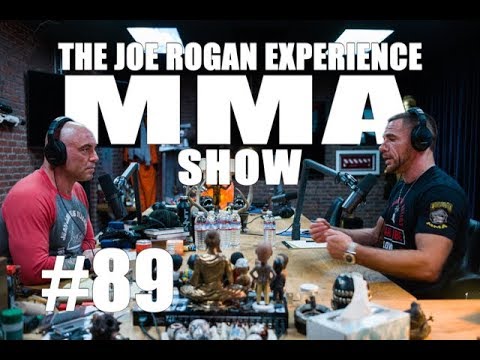
JRE MMA Show #89 with Rafael Lovato Jr
Joe Rogan (host), Rafael Lovato Jr. (guest), Narrator
In this episode of The Joe Rogan Experience, featuring Joe Rogan and Rafael Lovato Jr., JRE MMA Show #89 with Rafael Lovato Jr explores rafael Lovato Jr’s Hidden Brain Condition Behind His Bellator Title Win Rafael Lovato Jr. recounts how a routine pre-fight MRI for his Bellator title bout with Gegard Mousasi revealed a serious, hereditary brain condition called cavernoma—clusters of fragile blood vessels prone to slow bleeding.
Rafael Lovato Jr’s Hidden Brain Condition Behind His Bellator Title Win
Rafael Lovato Jr. recounts how a routine pre-fight MRI for his Bellator title bout with Gegard Mousasi revealed a serious, hereditary brain condition called cavernoma—clusters of fragile blood vessels prone to slow bleeding.
Despite multiple doctors in Brazil telling him he should never fight again, a senior neurosurgeon cleared him to compete, leading to a chaotic camp marked by fear, insomnia, a severe hamstring injury, and last-minute medical uncertainty.
He ultimately received approval just two weeks before the fight, went to London on an injured leg, and won a close, emotional decision over Mousasi, becoming Bellator middleweight champion under extraordinary psychological and physical pressure.
Post-fight, new medical opinions led European and California commissions to pull him from future MMA competition, leaving his title status in limbo as he pursues more expert opinions, continues in jiu-jitsu, and urges fighters and the public to get brain scans and take brain health seriously.
Key Takeaways
Get brain imaging even if you feel healthy, especially in combat sports.
Lovato had zero symptoms—no knockouts, no headaches—yet his MRI revealed a large cavernoma and multiple smaller lesions that could have had catastrophic consequences if they bled; he stresses that most commissions don’t require scans, so fighters must proactively protect themselves.
Get the full analysis with uListen AI
Conflicting expert opinions are common with rare medical conditions; seek multiple specialists.
Lovato heard everything from “never fight again” to “you’re safe to compete with <1% annual risk” from different neurologists and neurosurgeons, showing the need to consult true subspecialists and gather several high-level viewpoints before life-altering decisions.
Get the full analysis with uListen AI
Emotional and psychological stress can severely undermine training and increase injury risk.
Haunted by thoughts of dying in sparring and losing his career, Lovato describes insomnia, constant crying, and distraction in hard sessions that likely contributed to a serious hamstring strain mid-camp.
Get the full analysis with uListen AI
Support systems can be the decisive factor in surviving crises and performing under pressure.
Lovato repeatedly credits his partner, coaches, teammates, and parents for keeping him from mentally breaking, turning his title win into a collective achievement rather than a solo feat.
Get the full analysis with uListen AI
Adversity can be reframed into fuel for performance and resilience.
Backstage before the fight, Lovato reread Napoleon Hill’s line, “Every adversity carries with it the seed of an equivalent advantage,” which he used to reinterpret his medical and training disasters as the source of his fifth‑round grit and championship performance.
Get the full analysis with uListen AI
Athletic commissions are balancing individual ambition against long-term safety in uncharted territory.
European and California regulators, facing a rare condition with little data in MMA, chose caution despite some specialists’ green lights—highlighting the systemic tension between fighter autonomy, medical ambiguity, and regulatory responsibility.
Get the full analysis with uListen AI
Identity beyond competition is crucial, especially late in a career.
At 36, Lovato is deliberately investing in his academy, jiu-jitsu competition, and potential ambassador roles, acknowledging he may never fight MMA again and needs a meaningful path forward regardless of doctors’ final verdicts.
Get the full analysis with uListen AI
Notable Quotes
““Every adversity carries with it the seed of an equivalent advantage.””
— Rafael Lovato Jr. (quoting Napoleon Hill, describing what fueled him before the Mousasi fight)
““I was going into sparring thinking, ‘Am I slowly killing myself right here?’””
— Rafael Lovato Jr.
““Victory is always possible for the person who refuses to stop fighting.””
— Rafael Lovato Jr. (quoting Napoleon Hill on his martial arts philosophy)
““It really was destiny that I was able to do that fight, and I’m just so grateful that it happened.””
— Rafael Lovato Jr.
““I’m not officially retiring. I’m sort of, I guess, indefinitely on the sidelines right now.””
— Rafael Lovato Jr.
Questions Answered in This Episode
Given such conflicting medical advice, how should athletes weigh personal risk tolerance against expert uncertainty when deciding to continue competing?
Rafael Lovato Jr. ...
Get the full analysis with uListen AI
Should athletic commissions mandate baseline brain imaging for all professional fighters, even in states that currently don’t require it?
Despite multiple doctors in Brazil telling him he should never fight again, a senior neurosurgeon cleared him to compete, leading to a chaotic camp marked by fear, insomnia, a severe hamstring injury, and last-minute medical uncertainty.
Get the full analysis with uListen AI
If doctors eventually clear Lovato at a high level of confidence, should commissions revisit past denials and change their stance—or does precedent and liability outweigh new data?
He ultimately received approval just two weeks before the fight, went to London on an injured leg, and won a close, emotional decision over Mousasi, becoming Bellator middleweight champion under extraordinary psychological and physical pressure.
Get the full analysis with uListen AI
How much ethical responsibility do coaches and promotions have to stop a fighter from competing when the fighter is willing to accept serious medical risk?
Post-fight, new medical opinions led European and California commissions to pull him from future MMA competition, leaving his title status in limbo as he pursues more expert opinions, continues in jiu-jitsu, and urges fighters and the public to get brain scans and take brain health seriously.
Get the full analysis with uListen AI
In what ways can fighters better prepare psychologically and financially for the possibility that their career might end suddenly for medical reasons beyond their control?
Get the full analysis with uListen AI
Transcript Preview
Three, two... All right. What's up? How are you, brother?
I'm doing great. It's great to be back.
Great to see you, man.
Thank you.
Congratulations on winning the title.
Appreciate that.
Fantastic achievement. I mean, beating Gegard Mousasi, who's, you know, top flight, one of the best in the, in the sport for sure.
Yeah.
And to beat him and win the Bellator middleweight title, that's... Gotta make you feel happy.
It was surreal. It was something else. And (laughs) when you hear the story about everything, um, man, it, it takes it to another level.
Yeah, well this is why you're here. Um, we're here to talk about that, um, and w- just... I guess you should probably just explain what's going on.
Well, um, I guess I'll, I'll just kind of take you through the, the-
Yeah.
... order of events here. Um, you know, uh, that was my 10th fight, fighting for the Bellator title, and, uh, in all my other nine fights previously it was never required for me to get a brain scan done, um, just due to the, to the different states that I was fighting in at the time, the commissions there didn't require it. Um, in the US it's California and New York, and then Europe, um, you know, requires a brain scan. We were originally scheduled to fight, um, in January at The Forum in California, um, the same event that just happened this past Saturday night. Um, and, uh, so we were gonna fight 2019 at The Forum in January, and that fight got postponed. Uh, Mousasi was injured. And we eventually got rescheduled to fight in June in London. Um, so I already had a brain scan scheduled, um, for December, um, to get approved for that fight in January. But, I got the news about the fight getting canceled, um, like the week of that scan, a couple of days before, so I canceled it. I said, "I don't need to go get that done now." Um, and, so fast-forward, you know, I basically stayed in camp the whole year, uh, training, you know, with that fight on my mind, all the way from November when I started the first camp for the fight in January, you know, into the new year, uh, waiting for the, the new date. Um, and it was March that, uh, that I got the word that we were gonna fight in June in London. Um, and so, you know, I was basically training all year and I just picked right back up into camp. And, um, fast-forward, um, on into the very beginning of May, um, I was t- you know, already a good month into, like, the serious camp. Um, and I was just getting ready to fly to Brazil, Curitiba, uh, to get into the, you know, the hardest phase of camp. Uh, I was gonna be there for three weeks. And I had to get my MRI done, you know, and I wanted to get it done before I went to Brazil, uh, just to check it off the list. Um, so this was actually, uh, the week I had, um... I had two good buddies of mine, um, Jake Mapes and Sam Alvey, uh, were in Oklahoma, uh, training with me, and, uh, we had a great week of training. Everything's going really, really well. And, um, and it's Thursday, and so I go get my brain scan done to get that done, um, before I went to Brazil. And I'm in there and, you know, we're... we, we get through the whole process and, uh, the machine is done. Uh, it's not, you know, operating anymore. But they haven't called me out of the room yet, and I could kinda just sense something was going on. Um, so finally they say, "Okay, come on out." And the radiologist, with really no, like, no, uh, candor or, or like, like an easy, soft way of saying it was like, "Dude, uh, have you seen your brain before? Um, there's some stuff in here you need to see." And he, you know, pulls me into the room and shows me on the, on the screen. He's like, pointing out these, uh, you know, look like little balls. Um, uh, obviously it looked like something was wrong. It didn't look like a normal scan, but I'm not... I don't know, you know?
Install uListen to search the full transcript and get AI-powered insights
Get Full TranscriptGet more from every podcast
AI summaries, searchable transcripts, and fact-checking. Free forever.
Add to Chrome