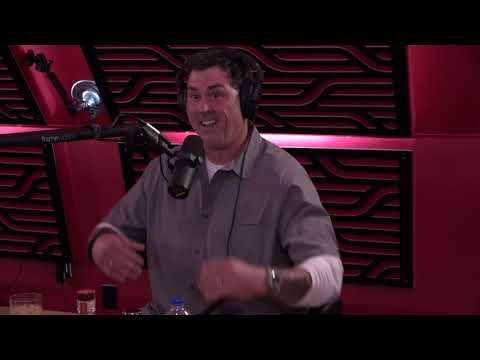
Joe Rogan Experience #1622 - Marcus Luttrell
Joe Rogan (host), Marcus Luttrell (guest), Narrator
In this episode of The Joe Rogan Experience, featuring Joe Rogan and Marcus Luttrell, Joe Rogan Experience #1622 - Marcus Luttrell explores war, Brotherhood, and Resilience: Marcus Luttrell on Survival and Meaning Joe Rogan and former Navy SEAL Marcus Luttrell revisit the events behind Lone Survivor, exploring what it meant to have a catastrophic mission turned into a bestselling book and Hollywood film. Luttrell walks through the aftermath of Operation Red Wings, his rescue by Afghan villagers, and the complicated honor of publicly representing fallen teammates. They range from combat, training, and leadership to cancel culture, social media, fatherhood, and the necessity of hardship in shaping character. The conversation ultimately centers on resilience, forgiveness, and what extreme experiences teach about human nature and how to live.
War, Brotherhood, and Resilience: Marcus Luttrell on Survival and Meaning
Joe Rogan and former Navy SEAL Marcus Luttrell revisit the events behind Lone Survivor, exploring what it meant to have a catastrophic mission turned into a bestselling book and Hollywood film. Luttrell walks through the aftermath of Operation Red Wings, his rescue by Afghan villagers, and the complicated honor of publicly representing fallen teammates. They range from combat, training, and leadership to cancel culture, social media, fatherhood, and the necessity of hardship in shaping character. The conversation ultimately centers on resilience, forgiveness, and what extreme experiences teach about human nature and how to live.
Key Takeaways
Extreme hardship reveals both limits and potential.
Luttrell describes being broken physically and psychologically in Afghanistan—thirst, pain, loss of all gear and teammates—and still finding the capacity to crawl forward. ...
Get the full analysis with uListen AI
Brotherhood and team composition are deliberately engineered in the SEALs.
SEAL platoons are regularly broken up after deployments so operators are forced to work with many different personalities and skill sets. ...
Get the full analysis with uListen AI
Forgiveness and growth are essential antidotes to cancel culture.
Rogan and Luttrell criticize online mobs that dig up decade-old mistakes, arguing that people change every 7–10 years and should not be frozen in their worst moments. ...
Get the full analysis with uListen AI
Discomfort and being a beginner are necessary for progress.
They compare jiu-jitsu and SEAL training to life: you must accept being humbled, tapped out, or feeling lost when trying something new. ...
Get the full analysis with uListen AI
Not all ‘hard men’ are the same—and society needs all of them.
From Jocko Willink and David Goggins to programmers and poets, they emphasize that society functions because of a spectrum of people: warriors, thinkers, builders, and artists. ...
Get the full analysis with uListen AI
Family roles and discipline shape long-term character.
Luttrell recounts his father’s philosophy: give children discipline so they earn self-respect and respect for others, and accept that a father is not there to be a ‘friend’ but a demanding guide. ...
Get the full analysis with uListen AI
Enemies can also be protectors; context changes everything.
The same Afghan terrain where the Taliban tried to kill Luttrell is where Muhammad Gulab and his village risked everything to save him, guided by the Pashtunwali code and simple decency. ...
Get the full analysis with uListen AI
Notable Quotes
“Every emotion that you have that you're born with is raw. You spend your entire life training each one of them.”
— Marcus Luttrell
“The most dangerous thing down here is an undisciplined human mind.”
— Marcus Luttrell
“Hard times make hard men. Hard men make easy times. Easy times make soft men. Soft men make hard times.”
— Joe Rogan
“I was in a hole in Afghanistan, all my friends were dead and I was naked, dying. And now I'm sitting here with you. So you can't tell me that the hardest part of your day is not gonna reveal the best part of it.”
— Marcus Luttrell
“Never let anybody’s perception of you become your reality.”
— Marcus Luttrell
Questions Answered in This Episode
How should civilians think ethically about consuming war stories as entertainment when those stories depict real people’s worst days?
Joe Rogan and former Navy SEAL Marcus Luttrell revisit the events behind Lone Survivor, exploring what it meant to have a catastrophic mission turned into a bestselling book and Hollywood film. ...
Get the full analysis with uListen AI
What can non-military people practically borrow from SEAL training—without the war—to build similar resilience and discipline?
Get the full analysis with uListen AI
Where is the line between holding people accountable for past words and allowing for genuine growth and forgiveness in a digital age?
Get the full analysis with uListen AI
How do experiences like Luttrell’s reshape your understanding of ‘enemy’ and ‘ally’ when someone like Muhammad Gulab risks everything to save a U.S. soldier?
Get the full analysis with uListen AI
Given Luttrell’s view that extreme pain enables true appreciation of life, how much hardship is necessary—and how much is too much—for healthy personal development?
Get the full analysis with uListen AI
Transcript Preview
(drumbeats) Joe Rogan podcast, check it out. The Joe Rogan Experience. Train by day, Joe Rogan podcast by night. All day. (instrumental music) Alright. Marcus, what's up? How are you?
Great.
Thanks for coming, man.
One year to the date.
Yeah?
I think we were supposed to do this last year right when the quarantine hit.
Right.
It was kind of go- 'cause it was April 1st that I, I called. It was new-
Yeah.
I remember 'cause Melanie was yelling at me. She's like, "If you call Joe and tell him we're not gonna be making out there, we're not gonna be able to make it out there." And I was like... I was putting it off, putting it off. I was like, "Bro, I'll, I'll get out there." And then they did the lockdown. So, almost to the day.
It was spicy a year ago. No one knew what was happening.
It's crazy, right?
It was a little weird.
It was.
Now, it's like, eh, nobody's worried anymore.
I, uh, well-
Except California people.
We learn fast.
Yeah.
Our people.
(laughs)
They pick stuff up quick. I mean, we suffer together, then there'll always be those that are trying to figure out, uh, ways to, to get us back to where we're supposed to be, and that just took some time.
Yeah. Well, it seems like Texas did a much better job of relaxing once the pandemic hit, where people just... You know, for some folks it's very dangerous, but it same- it seemed like Texas did a much better job of just going like, "Wait a minute. Why is everybody freaking out over this?"
Yeah.
Like, "We, we can open things up."
Big place too.
Yeah.
I think that has a lot to do with it because in the outlying towns and... There's a lot of things that got shut down when there's some things aren't. Like money never got shut down, 'cause that, everything that... People still had to go out and they, they talk about that herd, uh, immunity.
Mm-hmm.
'Cause with the families, they bunch up with them, you get sick, lock down, get the antibodies. But the more spread out... And some of the towns, they didn't even get it.
Right.
And then in the big cities, it would show up. But then just kind of common sense, that whole, "We're gonna get through this." And always look for the better, the better day. I mean, you can sit there and become a victim of being a victim and fear. Like, "I'm so scared to go out because it might be out there." "Well, yeah, of course it is. Everything's out there."
That's what a lot of people are like in LA.
Yeah.
In LA, it's, there's a, a tangible feel.
Install uListen to search the full transcript and get AI-powered insights
Get Full TranscriptGet more from every podcast
AI summaries, searchable transcripts, and fact-checking. Free forever.
Add to Chrome