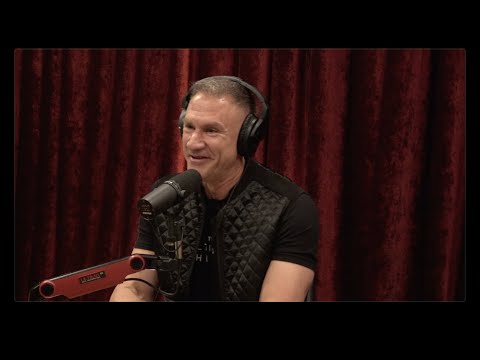
Joe Rogan Experience #2304 - Gary Brecka
Narrator, Gary Brecka (guest), Joe Rogan (host), Narrator
In this episode of The Joe Rogan Experience, featuring Narrator and Gary Brecka, Joe Rogan Experience #2304 - Gary Brecka explores gary Brecka and Joe Rogan Attack Chronic Disease, Seed Oils, Sanity Joe Rogan and Gary Brecka discuss the structural corruption of modern healthcare and nutrition, arguing that chronic disease is fueled by ultra-processed foods, seed oils, and ‘micro-poisoning’ via weak regulatory standards. Brecka outlines his work with RFK Jr.’s health initiatives, critiques statin-centric cardiology and the LDL “bad cholesterol” narrative, and emphasizes big data and methylation science over pharma-driven dogma. They dive into biohacks like hydrogen water, hyperbaric oxygen, sauna, cold plunges, and amino acids, framing them as low-cost, high-impact tools for inflammation, cognition, and longevity. The conversation also covers isolation, nature, movement, and mental “fitness” as critical antidotes to rising depression, anxiety, and addiction.
Gary Brecka and Joe Rogan Attack Chronic Disease, Seed Oils, Sanity
Joe Rogan and Gary Brecka discuss the structural corruption of modern healthcare and nutrition, arguing that chronic disease is fueled by ultra-processed foods, seed oils, and ‘micro-poisoning’ via weak regulatory standards. Brecka outlines his work with RFK Jr.’s health initiatives, critiques statin-centric cardiology and the LDL “bad cholesterol” narrative, and emphasizes big data and methylation science over pharma-driven dogma. They dive into biohacks like hydrogen water, hyperbaric oxygen, sauna, cold plunges, and amino acids, framing them as low-cost, high-impact tools for inflammation, cognition, and longevity. The conversation also covers isolation, nature, movement, and mental “fitness” as critical antidotes to rising depression, anxiety, and addiction.
Key Takeaways
Chronic disease is heavily driven by food processing and regulatory ‘micro-poisoning,’ not just individual choices.
Brecka argues that GRAS (Generally Regarded As Safe) rules allow cumulative low-dose toxins—pesticides, seed-oil byproducts, preservatives—to build up over years, creating obesity, diabetes, and autoimmune issues while remaining technically ‘within limits’ on any single exposure.
Get the full analysis with uListen AI
The “LDL is bad, HDL is good” story is oversimplified and often misleads treatment.
He explains that particle size and triglyceride levels matter far more than LDL alone: small, triglyceride-loaded LDL ‘BBs’ are dangerous, while large ‘basketball’ particles can be neutral or even associated with longevity, which helps explain why statin-based LDL lowering doesn’t meaningfully extend life for most people.
Get the full analysis with uListen AI
Hydrogen gas (via tablets, baths, or generators) may be a cheap, powerful anti-inflammatory tool.
Citing studies in older adults, Brecka says dissolved hydrogen selectively targets harmful hydroxyl radicals and upregulates the body’s own antioxidant systems (via Nrf2), improving inflammation, circulation, cognition, sleep, and even telomere length—with very low cost and minimal downside.
Get the full analysis with uListen AI
Hyperbaric oxygen, sauna, and cold plunges act as complementary stressors that enhance recovery and resilience—if timed correctly.
Hyperbaric sessions (around 2 atmospheres, not 100% O₂) can boost tissue oxygenation and brain function; sauna after training appears to aid hypertrophy and cardiovascular health; cold plunges should be done before workouts or hours later to avoid blunting muscle growth while still delivering dopamine and fat-burning benefits.
Get the full analysis with uListen AI
Many mood disorders and addictions may stem from basic nutrient and methylation deficits, not solely from ‘chemical imbalances’ treated by drugs.
Walking through the methylation map, Brecka shows how low B vitamins, methylfolate, and amino acids can impair serotonin and dopamine production—producing anxiety, rumination, and addictive behavior—suggesting that correcting these deficits can fundamentally change mental state without or alongside pharmaceuticals.
Get the full analysis with uListen AI
Social isolation and disconnection from nature dramatically shorten life and worsen mental health.
Drawing on mortality research and “Blue Zone” data, he notes that purpose, community, and staying active into old age are non-negotiable for longevity; assisted living, screen-based ‘connection,’ and indoor, sedentary life create “isolation in plain sight” and fuel depression, suicide, and chronic disease in younger and younger people.
Get the full analysis with uListen AI
Strength, carrying capacity, and deliberate discomfort are central to aging well.
Rogan and Brecka emphasize loaded carries, rucking, bodyweight work, and hard conditioning (Airdyne Tabatas, kettlebells, bag work) as practical ways to build the capacity to move weight, maintain muscle, and resist the ‘aggressive pursuit of comfort’ they identify as a primary driver of physical deterioration with age.
Get the full analysis with uListen AI
Notable Quotes
“We don’t have a mental illness crisis; we have a chronic lack of mental fitness.”
— Gary Brecka
“We are allowed to micro-poison the population… that’s literally what GRAS guidelines are.”
— Gary Brecka
“The presence of oxygen is the absence of disease.”
— Gary Brecka
“Aging is the aggressive pursuit of comfort.”
— Gary Brecka
“If you could put how I feel after a cold plunge and hard workout into a pill, it would be the most valuable pill in the world.”
— Joe Rogan
Questions Answered in This Episode
How strong is the current scientific consensus—outside of alternative health circles—on hydrogen therapy, and what key trials are still missing?
Joe Rogan and Gary Brecka discuss the structural corruption of modern healthcare and nutrition, arguing that chronic disease is fueled by ultra-processed foods, seed oils, and ‘micro-poisoning’ via weak regulatory standards. ...
Get the full analysis with uListen AI
If LDL-centric cardiology is flawed, what specific blood markers and imaging should a patient prioritize with their doctor to truly assess cardiovascular risk?
Get the full analysis with uListen AI
What would it practically take, politically and economically, to shift school and government food programs away from seed oils and ultra-processed products?
Get the full analysis with uListen AI
How can an average person realistically test for and address mold, mycotoxins, heavy metals, and methylation issues without access to elite clinics?
Get the full analysis with uListen AI
Where is the ethical line between helpful biohacking and excessive self-experimentation driven by fear of aging or disease?
Get the full analysis with uListen AI
Transcript Preview
(drumming music) Joe Rogan podcast, check it out. The Joe Rogan Experience. Train by day, Joe Rogan podcast by night. All day. (rock music)
All right, we're up to speed, Breckin.
All right. Good to see you, my friend.
Wow. That was fast. Good to see you, too, brother.
That's how we do it. We just get right into it.
(laughs) It's like-
You got notes, dude.
... sit down and roll.
You're organized. You're a rare guest.
Uh, I actually ... You know what? I normally don't bring notes, but I was talking to Calley Means on the way over here, and, you know, we're, we're really supporting Bobby Kennedy's whole MHA, you know, movement, and, and, uh, trying to officially put a committee together to, to, to really give him some great talking points and then bring some of the big influencers together to help him message, you know, around the media. And I was like, "What are some of the wins that we've had in the last week that I don't know about?" And so he just rattled them off, and I-
There's some wins?
... just jotted them down.
What are the wins?
Well, I mean, um, you know, so Trump formed this, uh, Strong Kids Commission, and, and if you remember when he first got into office, he actually, um, by executive order, he authorized Bobby to, um, to do a study with the, you know, Health and Human Services to, to look into the genesis of chronic disease, 'cause nobody, nobody's talking about it. The National Institute of Health or National Library of Medicine or in our, you know, public health policy, nobody's talking about what's causing this pandemic.
Gee, I wonder why they're not talking about it?
(laughs) Well, I could give you a couple of-
Do you think money has anything to do with it?
... I could give you a couple of clues.
Nah.
Yeah.
No way.
God.
These are the best-
You're a conspiracy theorist, dude.
I know.
You're down the rabbit hole.
That's my problem.
You think that just because people-
It's my main problem.
... get paid, they do things that are shady.
Yeah. I know. That's a weird thing to think. I should stop thinking that way.
Yeah. I mean, for ... Y- y- y- you know, we make $110 billion a year on type two diabetes. You ... They're trying to put that out of business, for sure, right?
Yeah. They don't want that money.
No, no, no. They're, they're like, "Hey, Stan, how do we get this off the balance sheet, bro? How do we, how do we get rid ... This is stinking up the place."
So there's a business that relies on people being so disgusting that they get type two diabetes?
Install uListen to search the full transcript and get AI-powered insights
Get Full TranscriptGet more from every podcast
AI summaries, searchable transcripts, and fact-checking. Free forever.
Add to Chrome