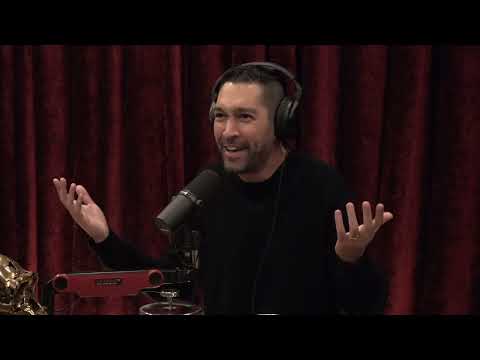
Joe Rogan Experience #1875 - Dave Smith
Narrator, Narrator, Dave Smith (guest), Joe Rogan (host), Gideon Rose (guest), Narrator, Narrator
In this episode of The Joe Rogan Experience, featuring Narrator and Narrator, Joe Rogan Experience #1875 - Dave Smith explores dave Smith Dissects War, Censorship, COVID Lies, and Failing Empires Joe Rogan and comedian-libertarian commentator Dave Smith spend hours unpacking U.S. foreign policy, the growth of the security state, and how bipartisan corruption drives war, censorship, and economic extraction. They argue that the same institutions that lied about Iraq, Russia-gate, and COVID now pressure Big Tech to suppress dissenting yet data-backed voices, eroding public trust in media and government.
Dave Smith Dissects War, Censorship, COVID Lies, and Failing Empires
Joe Rogan and comedian-libertarian commentator Dave Smith spend hours unpacking U.S. foreign policy, the growth of the security state, and how bipartisan corruption drives war, censorship, and economic extraction. They argue that the same institutions that lied about Iraq, Russia-gate, and COVID now pressure Big Tech to suppress dissenting yet data-backed voices, eroding public trust in media and government.
Smith traces U.S.–Russia tensions through NATO expansion, the 2014 Ukraine coup, and the Hunter Biden/ Burisma saga, warning that escalation in Ukraine and over Taiwan risks nuclear confrontation with Russia and China. They repeatedly return to the theme that elites weaponize culture wars and “woke” ideology to distract the public from banker bailouts, the military‑industrial complex, and pharmaceutical capture.
Domestically, they condemn pandemic mismanagement: lockdowns, vaccine mandates, censorship of correct information, ignoring metabolic health and vitamin D, and the profit insulation of pharmaceutical companies. They connect this to broader systemic rot—student debt, corporate bailouts, drug policy failure, media propaganda, and a collapsing trust in institutions.
Rogan and Smith close by arguing that some form of decentralization and libertarian-style rollback of state power is the only viable path out of the current crisis, but acknowledge how deeply entrenched interests and a massive defense budget make reform extraordinarily difficult.
Key Takeaways
Perpetual war is structurally driven by the military‑industrial complex.
Smith frames U. ...
Get the full analysis with uListen AI
Censorship is increasingly state-directed and often suppresses accurate information.
They highlight the Alex Berenson case and White House pressure on Twitter, plus FBI signaling on the Hunter Biden laptop and Zuckerberg’s admission about throttling the story, arguing this shows de facto state censorship aimed at protecting narratives rather than truth—even when the censored party is correct.
Get the full analysis with uListen AI
COVID policy prioritized pharma and control over holistic public health.
Rogan and Smith argue that authorities oversold vaccines, ignored known issues (e. ...
Get the full analysis with uListen AI
Culture wars and “woke” ideology function as a distraction from class issues.
Smith contends that post‑2010 media fixation on racism, gender, and identity was amplified by powerful institutions to redirect energy away from anti‑banker, anti‑bailout populism (Occupy, Tea Party) toward intra‑population conflicts that leave Wall Street, the Fed, and defense contractors untouched.
Get the full analysis with uListen AI
Trust in legacy media and institutions has collapsed for rational reasons.
From Iraq WMDs and Russia‑gate to COVID messaging and the suppression of the Hunter Biden story, they argue mainstream outlets have repeatedly lied or laundered state talking points, making alternative media and long‑form conversations more attractive and necessary for people seeking honest analysis.
Get the full analysis with uListen AI
The defense and security state now operate with minimal democratic control.
Examples like Pentagon officials hiding troop numbers in Syria from Trump, the Gulf of Tonkin distortion, and massive opaque defense budgets illustrate a national security apparatus that can mislead or box in presidents, making rollback of wars and spending extraordinarily difficult.
Get the full analysis with uListen AI
A sustainable solution requires decentralization and limiting federal power.
Smith argues that only a serious libertarian turn—rolling back federal authority, ending the worst abuses first (wars, corporate bailouts, victimless-crime prosecutions), and moving toward sound money and local control—can address systemic corruption, though he concedes entrenched interests make this politically daunting.
Get the full analysis with uListen AI
Notable Quotes
“War is a racket. It always has been… the profits are reckoned in dollars and the losses in lives.”
— Smedley Butler (quoted by Dave Smith and Joe Rogan)
“We’re the most powerful empire in world history, and some of the most unexceptional people are the ones who want to run it.”
— Dave Smith
“The only way you’re gonna know what’s what is if you get accurate data… What [Berenson] was getting in trouble for with the government was being correct.”
— Joe Rogan
“You don’t get to tell me what’s going on now when you sold me Saddam’s nukes and a million people died.”
— Dave Smith
“If they can just turn off your money, we’re going into a real dystopian nightmare.”
— Dave Smith
Questions Answered in This Episode
If the same institutions that lied about Iraq, Russia-gate, and aspects of COVID are steering Ukraine and China policy, what safeguards—if any—can prevent another catastrophic escalation?
Joe Rogan and comedian-libertarian commentator Dave Smith spend hours unpacking U. ...
Get the full analysis with uListen AI
How should a genuinely free-speech culture handle medical or political dissent that is factually uncertain at the time but later proves partially or fully correct?
Smith traces U. ...
Get the full analysis with uListen AI
To what extent are culture-war battles over gender, race, and schooling organically arising from society versus being amplified or engineered to distract from class and corporate power dynamics?
Domestically, they condemn pandemic mismanagement: lockdowns, vaccine mandates, censorship of correct information, ignoring metabolic health and vitamin D, and the profit insulation of pharmaceutical companies. ...
Get the full analysis with uListen AI
Is a peaceful, large-scale rollback of the military‑industrial and pharmaceutical‑industrial complexes realistically achievable, or will meaningful change only come after systemic crisis or collapse?
Rogan and Smith close by arguing that some form of decentralization and libertarian-style rollback of state power is the only viable path out of the current crisis, but acknowledge how deeply entrenched interests and a massive defense budget make reform extraordinarily difficult.
Get the full analysis with uListen AI
What would a concrete, stepwise transition toward a more libertarian, decentralized U.S. look like in practice—especially regarding defense, money, healthcare, and education?
Get the full analysis with uListen AI
Transcript Preview
(drumming music plays) Joe Rogan podcast, check it out. The Joe Rogan Experience.
Train by day, Joe Rogan podcast by night. All day. (instrumental music plays)
But that's good.
Yeah.
I think that's what makes you so good at what you do.
Yeah, the last thing you wanna do is be like, super confident and wrong. (laughs)
Yeah, right, exactly. You wanna at least be always questioning. Like, always maintaining that possibility. "I could be wrong about everything."
When you start... When you, when you go over stuff, like when you talk about like, libertarian ideas, and you, you, you look at like, the way the government is run now, do you, do you run through that thought process, like, "Maybe the only way to do it is the way that we're doing it right now"?
Yeah, I, I try my best to always do that. I mean, I'm guilty of not doing it. But I try my best to always be like, "Okay, well maybe, theoretically, uh, they know something I don't know," which kinda means like, "This is the best way to do it." Or maybe I'm just wrong, and my theoretical model couldn't work, and this is the best. But that... Try to give like, the toughest arguments against it, and then go like, "Okay, but we still didn't need to kill a million Iraqis." You know what I mean?
Oh, yeah.
Like, we still didn't need to do this, or we still at least didn't need a... But I try my best. I use... It's dangerous, 'cause the more, the further into it I get, the more convinced I am that I'm right, and then that's also dangerous. 'Cause I'm not as insecure about it as I used to be.
It feels like the only way... Like, the system is broken. Everyone sort of agrees that. The... And the only way to do it right would be to create a more ethical, moral, logical system that's actually based on Constitutional rights, and how the government is supposed to be, in terms of like, the kinda power they're supposed to have versus what they're always constantly trying to acquire. But if you did that, how much would you have to blow the system up? And how would we run things? Like, what, what period of vulnerability would we have while we're trying to reestablish a new system? And how would we know if the system could even work correctly without being influenced by money and power, and all the shit that's fucked it up-
Right.
... for, for what we've got right now?
It's, it's a daunting challenge. I think that... Like, what, what Ron Paul used to always say was basically... I mean, these are my words, not his, but there was... Basically his plan was, he goes, "End all the worst shit first."
Hmm.
Like, end all the most evil shit first. So the first thing is like, stop bombing third-world countries.
Install uListen to search the full transcript and get AI-powered insights
Get Full TranscriptGet more from every podcast
AI summaries, searchable transcripts, and fact-checking. Free forever.
Add to Chrome