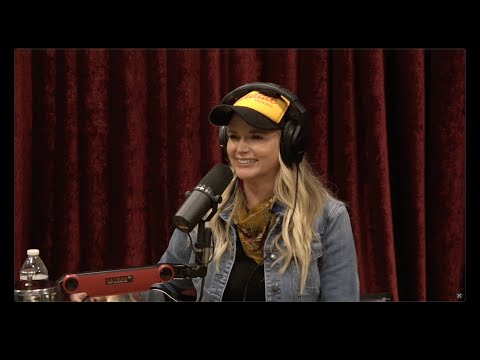
Joe Rogan Experience #2402 - Miranda Lambert
Narrator, Joe Rogan (host), Miranda Lambert (guest), Narrator
In this episode of The Joe Rogan Experience, featuring Narrator and Joe Rogan, Joe Rogan Experience #2402 - Miranda Lambert explores miranda Lambert On Creativity, Cowboys, Chaos, Dogs, And Doing Less Miranda Lambert joins Joe Rogan to talk about balancing a high-intensity music career with new passions like mounted shooting, golf, and horseback riding as a way to reset her creativity and mental health.
Miranda Lambert On Creativity, Cowboys, Chaos, Dogs, And Doing Less
Miranda Lambert joins Joe Rogan to talk about balancing a high-intensity music career with new passions like mounted shooting, golf, and horseback riding as a way to reset her creativity and mental health.
They dive into hearing loss in music and hunting, adrenaline hobbies that demand total focus, and the importance of deliberate downtime after years of nonstop touring since her teens.
Lambert shares stories from her Texas upbringing, late start with horses, and the disciplined chaos of shooting black-powder pistols off a running horse, while Rogan compares it to his own obsessions like pool, martial arts, and archery.
The conversation widens into police work and PTSD, animal rescue and pit bull stigma, kids and social media, Adderall and nicotine culture, and the strange modern desire to be “famous for nothing.”
Key Takeaways
High-focus hobbies can reset creativity and mental health.
Lambert’s mounted shooting, golf, and riding force complete concentration—there’s no room to think about industry stress—giving her a mental vacation that leaves her more refreshed and inspired to write.
Get the full analysis with uListen AI
Artists need scheduled off-seasons, not just more grind.
After starting in honky-tonks at 17 and touring non-stop, Lambert only realized during COVID how important it is to carve out real winter breaks to “recharge the battery” instead of filling every calendar gap.
Get the full analysis with uListen AI
Co-creating with others pushes you further than working alone.
Lambert prefers co-writing because being around writers she admires raises her standards, sparks better ideas, and makes the grind of writing feel like shared play rather than solitary pressure.
Get the full analysis with uListen AI
Childhood environments and mentors can unlock or shut down creative futures.
She credits a speech teacher who forced her shy teenage self into debate with helping her learn to own a room—contrasted with Rogan’s bitter art teacher who discouraged several talented students from pursuing art.
Get the full analysis with uListen AI
If you’re truly all-in, a backup plan can dilute your focus.
Both emphasize that while it’s risky advice for most, in their own lives having “no Plan B” intensified their hunger and kept them from diverting time and energy away from their primary craft.
Get the full analysis with uListen AI
Rescue work is more scalable when you support systems, not just individual animals.
Through MuttNation, Lambert doesn’t run shelters; she vets and funds them, gives grants in every U. ...
Get the full analysis with uListen AI
Digital and chemical stimulation are filling the same psychological gaps.
Their discussion of Adderall, vapes, nicotine pouches, and social media frames all of them as ways people try to “go next door” mentally—briefly escape discomfort—highlighting the need to understand root causes rather than just swap substances.
Get the full analysis with uListen AI
Notable Quotes
““I started a new hobby at 40 just to preoccupy my mind and stop thinking about the music industry every single day.””
— Miranda Lambert
““Doing something that you suck at in front of people is a very scary place to be.””
— Miranda Lambert
““If you’re really driven and goal‑oriented, you have to force yourself to take the phone off the charger and plug yourself into the wall sometimes.””
— Joe Rogan
““I didn’t have a backup plan. That helped. Everything else was hard for me except music, so I knew this had to work.””
— Miranda Lambert
““You can be dumb and famous and not be good at anything. That never used to be possible.””
— Joe Rogan
Questions Answered in This Episode
How has taking up mounted shooting and golf in her 40s changed Miranda Lambert’s songwriting and perspective on her career compared to her 20s and 30s?
Miranda Lambert joins Joe Rogan to talk about balancing a high-intensity music career with new passions like mounted shooting, golf, and horseback riding as a way to reset her creativity and mental health.
Get the full analysis with uListen AI
What structural changes could the music industry adopt to make downtime and mental recovery a norm rather than something artists have to fight for individually?
They dive into hearing loss in music and hunting, adrenaline hobbies that demand total focus, and the importance of deliberate downtime after years of nonstop touring since her teens.
Get the full analysis with uListen AI
Given Lambert’s experiences with animal rescue and pit bulls, how should shelters and the public better balance safety concerns with reducing breed stigma?
Lambert shares stories from her Texas upbringing, late start with horses, and the disciplined chaos of shooting black-powder pistols off a running horse, while Rogan compares it to his own obsessions like pool, martial arts, and archery.
Get the full analysis with uListen AI
In a world where TikTok can turn someone into a star overnight, what practical safeguards would Lambert recommend to young artists suddenly thrust into fame?
The conversation widens into police work and PTSD, animal rescue and pit bull stigma, kids and social media, Adderall and nicotine culture, and the strange modern desire to be “famous for nothing.”
Get the full analysis with uListen AI
How can people distinguish between helpful performance aids (like nootropics or structured hobbies) and harmful dependencies (like Adderall misuse or compulsive social media) in their own lives?
Get the full analysis with uListen AI
Transcript Preview
(drumming) Joe Rogan podcast, check it out. The Joe Rogan Experience.
Train by day, Joe Rogan podcast by night. All day. (rock music) That's what I hate about the desk. The desk is a mess because my mind is a mess, and I wish my mind wasn't a mess.
You're creative, that's how it works.
Is that how it works? (laughs)
Yeah, I think so. (laughs)
Is that the excuse we use?
I don't know, I'm trying to make myself feel better. (laughs)
(laughs) I think that's the excuse we use for each other.
Yeah.
You know?
I'm like, "I'm a creative."
Yeah.
It's- it's my go-to default, uh...
Is the compression on? Something sounds weird.
Yeah.
Oh, it's just really loud. Something happen? Maybe my ears got better? What happened? (laughs)
You can hear now?
(laughs)
My ears aren't very good.
Sometimes I... You know, when I'm under water for too long or I swim or something like that, and then I forget that my ears have water in them, and then they come out and like, "Oh." There's that moment where like, "Oh, this is how I hear. Oh."
I feel like... I have the in-ear monitors for my job and-
Oh, right.
I still... Like, I've been using them for, I don't know, 20 years? And I'm still not used to them. Like, I come from, like, honky-tonk world where you can hear everything.
Yeah.
Hear the room.
Well, it's so good that people have them now, because boy, so many people I know from back in the day are almost deaf.
Oh, yeah. We... I'm so glad we have them. It's not the same. I mean, it... You don't feel-
Right.
... the energy of the room, but it saved your hearing. (laughs)
(laughs)
Which is helpful. (laughs)
It's a good trade-off.
Yeah. Good trade.
I mean, you can hear enough, it's a good trade-off.
Yeah.
And so many of my friends who shoot guns too, same thing.
Yeah.
You know, they started hunting when they were kids and no ear protection back then.
Yeah.
And, you know, you- you say something to them and they're like, "What?" Like, they're all (laughs) ... They're all half-deaf.
Yeah.
(laughs)
My dad is a police officer and, um, he's... I swear that's why my parents are still married. (laughs)
(laughs)
Because he can't hear at all. (laughs) And the dog ate his hearing aid and he never replaced it, and I'm like, "Is that on purpose, Dad?" (laughs)
That's hilarious. That's hilarious. Yeah, you definitely develop an ability to shut things off-
Yeah.
... otherwise. Because men and women think and communicate differently.
Yeah.
And if you want your wife to communicate with you the way your buddies do, then, well, you married a dude.
Install uListen to search the full transcript and get AI-powered insights
Get Full TranscriptGet more from every podcast
AI summaries, searchable transcripts, and fact-checking. Free forever.
Add to Chrome