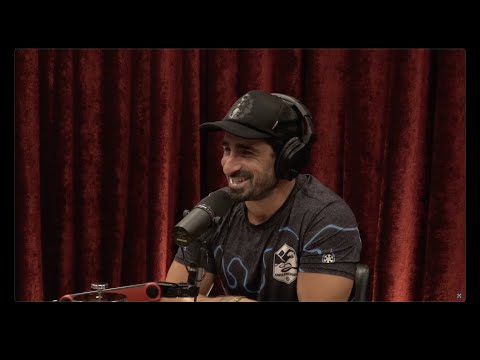
Joe Rogan Experience #2209 - Paul Rosolie
Joe Rogan (host), Narrator, Paul Rosolie (guest), Guest (guest), Narrator, Guest (guest), Narrator
In this episode of The Joe Rogan Experience, featuring Joe Rogan and Narrator, Joe Rogan Experience #2209 - Paul Rosolie explores amazon Defender Paul Rosolie Battles Loggers, Poisoned Food, Modern Madness Paul Rosolie recounts near-fatal jungle expeditions, including a dehydration crisis and discovering an untouched Amazon forest moments before logging roads arrived. That discovery immediately led to a last‑minute fundraising campaign that bought 45,000 acres, turned loggers into paid rangers, and pushed his NGO Junglekeepers past 100,000 protected acres.
Amazon Defender Paul Rosolie Battles Loggers, Poisoned Food, Modern Madness
Paul Rosolie recounts near-fatal jungle expeditions, including a dehydration crisis and discovering an untouched Amazon forest moments before logging roads arrived. That discovery immediately led to a last‑minute fundraising campaign that bought 45,000 acres, turned loggers into paid rangers, and pushed his NGO Junglekeepers past 100,000 protected acres.
He and Joe Rogan then widen the lens to global issues: industrial agriculture, glyphosate, microplastics, food additives, and how regulatory failure and marketing terms like “organic” and “sustainable” hide real harm. They also discuss uncontacted tribes being coerced out of the forest, trophy and subsistence hunting as conservation tools, and technological game‑changers like Starlink and eDNA.
Throughout, they weave in broader cultural critiques—social media outrage, censorship, Elon Musk backlash, comedy taboos, and the human need for challenge and meaning—arguing that hysteria and tribalism distract from solvable problems like ecosystem protection and food safety.
Key Takeaways
Buying land fast can literally stop deforestation in its tracks.
After stumbling onto an untouched mahogany forest already cut by a new logging road, Rosolie’s team raised $150,000 online in 48 hours, matched a donor, bought the concession, and immediately hired the loggers as rangers—turning extraction into protection almost overnight.
Get the full analysis with uListen AI
Local loggers often destroy what they love because there are no alternatives.
When Junglekeepers bought the tract, the loggers readily agreed to stop cutting and asked if they could keep working there as rangers, revealing that livelihood options—not ideology—often drive environmental destruction.
Get the full analysis with uListen AI
Our food system quietly doses most people with industrial chemicals.
Rogan cites data that ~80% of Americans (and 87% of children) have glyphosate (Roundup) in their urine and highlights issues like plastic leaching, artificial dyes banned in other countries, and coatings like Apeel—arguing that regulatory agencies are overwhelmed and the cumulative health impact is unknown.
Get the full analysis with uListen AI
“Organic” and “sustainable” labels can be marketing, not reality.
They point out that “sustainable cacao from the Amazon” may still mean a clear‑cut rainforest turned into monocrop; similarly, plant‑based coatings or enriched flours are branded as healthy while hiding extraction methods and additives that may be problematic.
Get the full analysis with uListen AI
Regulated hunting and meat donation can fund and stabilize ecosystems.
Examples from Africa and Texas show that tightly controlled trophy and meat hunts generate large revenues that finance anti‑poaching operations, protect rhinos and elephants, and supply high‑quality protein to local communities that otherwise face malnutrition.
Get the full analysis with uListen AI
Hemp could replace a massive share of tree-based paper and sequester more carbon.
They discuss how ~40–50% of industrial logging feeds paper production, while hemp grows ~4 meters in 100 days, produces stronger fiber and paper, and absorbs more carbon—yet was sidelined historically by paper and chemical interests via cannabis prohibition.
Get the full analysis with uListen AI
Online outrage and political tribalism are actively undermining real problem‑solving.
Rogan and Rosolie describe how simply sharing a positive Elon Musk mention cost Rosolie a major book deal, illustrating how ideological purity tests, media narratives, and “wrong-think” punishments distract from practical cooperation on conservation and health.
Get the full analysis with uListen AI
Notable Quotes
“These dudes are over here destroying the thing they love 'cause they have no other opportunity.”
— Paul Rosolie
“Our food system's like a hoarder’s house. How do you clean this up?”
— Joe Rogan
“Some of the most ancient forest on Earth is about to be destroyed—and now we know exactly where it is.”
— Paul Rosolie
“If there's ever a thing that you can't make fun of, that thing is bullshit.”
— Joe Rogan
“Most men live lives of silent desperation, and that's what happens when you never find a thing that's hard and meaningful.”
— Joe Rogan
Questions Answered in This Episode
How scalable is the “buy the land and hire the loggers as rangers” model across the wider Amazon, and what are its main financial and political bottlenecks?
Paul Rosolie recounts near-fatal jungle expeditions, including a dehydration crisis and discovering an untouched Amazon forest moments before logging roads arrived. ...
Get the full analysis with uListen AI
What concrete reforms would most effectively clean up the American food system without destroying small farmers or dramatically raising prices for low‑income consumers?
He and Joe Rogan then widen the lens to global issues: industrial agriculture, glyphosate, microplastics, food additives, and how regulatory failure and marketing terms like “organic” and “sustainable” hide real harm. ...
Get the full analysis with uListen AI
How should the global community ethically handle uncontacted or recently contacted tribes who are being manipulated by missionaries or resource companies to leave their territories?
Throughout, they weave in broader cultural critiques—social media outrage, censorship, Elon Musk backlash, comedy taboos, and the human need for challenge and meaning—arguing that hysteria and tribalism distract from solvable problems like ecosystem protection and food safety.
Get the full analysis with uListen AI
If hemp and regenerative agriculture are clearly superior for ecosystems, what specific policy and market barriers are preventing rapid adoption at scale?
Get the full analysis with uListen AI
In an era of social-media-driven outrage and ideological purity tests, how can environmentalists, health advocates, and technologists collaborate without being punished for association?
Get the full analysis with uListen AI
Transcript Preview
(drumming) Joe Rogan podcast, check it out.
The Joe Rogan Experience.
Train by day, Joe Rogan podcast by night. All day. (rock music) All right, we're rolling. Are you taking a selfie?
No, I'm- I'm just making sure that there's nothing completely retarded-looking about myself right now. (laughs)
(laughs) What could possibly be different than the way w- when you walked in here?
I have no idea. Dude, I'm- I'll tell you what. It's so much fun walking in here and not be, like, ready to throw up out of nerves. The first time, I walked out of here and I went, "Holy shit, I was actually nervous." I don't get nervous, but the first time I was. (laughs)
Not nervous now though?
No.
Good.
No.
Beautiful.
No.
Perfect.
No. No. No.
It's good to see you again.
Good to see you, man.
Every time I see him, like, I'm glad he's still alive.
(laughs)
(laughs) It's like, where you live is so crazy.
Let me tell you, man.
I don't understand why you continue to do it, but I guess you love it.
Uh, I have to do it.
Yeah.
There's nothing else I can do at this point.
How long do you think you're gonna stay out there for?
Until the mission's complete. Until the mission's complete. I mean, we have- I've- my whole life has been based around one goal, it's been protecting this river. So- and this year, we've just been experiencing miracles. What's happened in the last few months has been ch- life-changing on a level that- that, like, I didn't understand these things could happen. When Lex came down and everything that happened, we didn't think- y- you go out and you don't think that- that miraculous things are gonna happen, and there's been a- there's just been- there's just- we- we've actually been making strides towards notching wins in protecting this river, saving the Amazon. It's wild.
So, uh, w- is it because, of- you've become m- more high profile, you've got more support? Like, what has- what has been the change?
Well, I mean, coming on here helped a lot, I mean, the- first of all, just coming over here, like, three different people stopped me in the airport and were like, "Are you that guy from Joe Rogan?" And I was like, "Are you serious?"
(laughs)
Like, I'm over there (laughs) , like, I'm not used to this. I live in the jungle so I don't, you know, I don't know, and then I come back here, and then people are like, "Dude, I know you. You're the jungle guy," and I'm like, "Oh, shit." Um, that's new for me, um, but ... So, really, the- the thing that happened recently was that, you know, so I went on Lex's show, I don't know, a year and a half ago and he said, uh, "I'm gonna come down to the Amazon," which everybody says.
Install uListen to search the full transcript and get AI-powered insights
Get Full TranscriptGet more from every podcast
AI summaries, searchable transcripts, and fact-checking. Free forever.
Add to Chrome