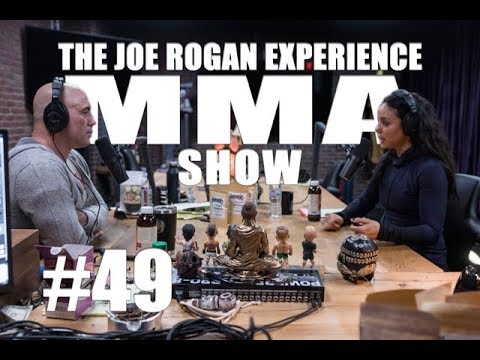
JRE MMA Show #49 with Miriam Nakamoto
Joe Rogan (host), Miriam Nakamoto (guest), Guest (unidentified third person) (guest), Narrator
In this episode of The Joe Rogan Experience, featuring Joe Rogan and Miriam Nakamoto, JRE MMA Show #49 with Miriam Nakamoto explores world Champion Miriam Nakamoto On Pain, Comebacks, And Fighting Truths Miriam Nakamoto, a multiple-time Muay Thai world champion, joins Joe Rogan to discuss the physical and psychological costs of high-level fighting, including four knee surgeries, concussions, and life after injury.
World Champion Miriam Nakamoto On Pain, Comebacks, And Fighting Truths
Miriam Nakamoto, a multiple-time Muay Thai world champion, joins Joe Rogan to discuss the physical and psychological costs of high-level fighting, including four knee surgeries, concussions, and life after injury.
They break down striking and grappling mechanics, stylistic differences between Muay Thai, kickboxing, boxing, and MMA, and how elite fighters like Petrosyan, Cyborg, Valentina, and Demetrious Johnson think and move.
Nakamoto opens up about weight gain, depression, losing her athletic identity, and how teaching Rock Steady Boxing to people with Parkinson’s helped repair her sense of self and purpose.
The conversation also tackles judging failures, rule changes (eye pokes, gloves), mental toughness, and Nakamoto’s desire to return to competition now from a more mature, balanced, and self-aware place.
Key Takeaways
Grappling often destroys joints more than striking does.
Nakamoto’s four knee surgeries came not from years of Muay Thai but from MMA grappling motions (guard work, swiveling, wrestling entries), illustrating how jiu-jitsu and wrestling can be far harsher on knees than kicking.
Get the full analysis with uListen AI
Ibuprofen and quick fixes can create hidden long-term problems.
They discuss heavy ibuprofen use causing gut disruption and systemic inflammation, where the drug both masks and perpetuates pain, underscoring the need for cautious, sparing use of anti-inflammatories.
Get the full analysis with uListen AI
Glove and rules design strongly shape fighter behavior and safety.
Rogan argues that open, flat MMA gloves plus lenient penalties encourage eye pokes and groin shots; curved gloves (like old Pride) and automatic point deductions would likely reduce fouls and eye damage.
Get the full analysis with uListen AI
Elite striking comes from systems and drilling, not just creativity.
Fighters like Rob Kaman and Giorgio Petrosyan succeed because they use structured systems—programmed counters, layered reactions, and endless drilling—rather than relying only on athleticism or “just being tough.”
Get the full analysis with uListen AI
Mental toughness is trainable and often forged through pain.
Nakamoto rejects the idea that you either have grit or you don’t, arguing that mental strength was built through injuries, losses, and hard choices—and that people can consciously cultivate it after failing under pressure.
Get the full analysis with uListen AI
Chasing titles to fill emotional wounds leads to hollow victories.
She realizes many of her world titles were attempts to disprove childhood messages of not being “good enough,” leaving her depressed even after wins because she fought safely instead of expressing herself fully.
Get the full analysis with uListen AI
Teaching and service can restore identity when sport is taken away.
Working with Parkinson’s patients in Rock Steady Boxing, she watched people fight for basic movement and dignity; their effort “healed her heart” and gave her a new sense of worth beyond being a champion.
Get the full analysis with uListen AI
Notable Quotes
“Muay Thai has never loved me back.”
— Miriam Nakamoto
“I don’t fight for participation awards. ‘I’m a UFC fighter’ is like a participation medal.”
— Miriam Nakamoto
“Fighting was my therapy. Training was my steps.”
— Miriam Nakamoto
“There’s a right way to fight and a wrong way to fight. Don’t fight the way that pleases the crowd—fight the way your skills demand.”
— Joe Rogan
“Most fighters don’t look at what they do with the gravity it deserves. You could kill somebody.”
— Miriam Nakamoto
Questions Answered in This Episode
How much of a fighter’s style is shaped by early coaching versus their own personality and life experiences?
Miriam Nakamoto, a multiple-time Muay Thai world champion, joins Joe Rogan to discuss the physical and psychological costs of high-level fighting, including four knee surgeries, concussions, and life after injury.
Get the full analysis with uListen AI
What practical reforms (glove design, judging criteria, automatic point deductions) would most realistically improve fighter safety without ruining MMA’s appeal?
They break down striking and grappling mechanics, stylistic differences between Muay Thai, kickboxing, boxing, and MMA, and how elite fighters like Petrosyan, Cyborg, Valentina, and Demetrious Johnson think and move.
Get the full analysis with uListen AI
How should fighters know when it’s time to stop chasing comebacks and protect their long-term health and identity?
Nakamoto opens up about weight gain, depression, losing her athletic identity, and how teaching Rock Steady Boxing to people with Parkinson’s helped repair her sense of self and purpose.
Get the full analysis with uListen AI
In what ways can combat sports systems better support athletes through injuries, depression, and post-career transition?
The conversation also tackles judging failures, rule changes (eye pokes, gloves), mental toughness, and Nakamoto’s desire to return to competition now from a more mature, balanced, and self-aware place.
Get the full analysis with uListen AI
How can non-fighters apply the “never satisfied but not self-destructive” mindset Nakamoto describes to their own careers or personal growth?
Get the full analysis with uListen AI
Transcript Preview
Okay, here we go. Four, three, two, boom. And we're live. Hello, Miriam.
Hi, Joe.
Good to see you.
(laughs)
Grab this, uh, mic and keep it like a fist from your face. That's a good reference point.
Is this good?
Perfect.
It's k- okay.
Perfect.
Do I just set it up like that?
Yeah. Good to see you.
(laughs) So good to see you.
Goo- I'm sad that you can't sell these snacks everywhere because I know you're, you're working on making these mass-produced, but they're fucking fantastic.
Uh-huh. Yeah.
They're very good.
Yeah.
When did you first give me some of these? Like five years ago or some shit?
2014?
Something like that?
Yeah. Yeah, yeah, yeah.
Yeah.
Yeah. Yeah, my knee, uh, blew out. I just had surgery, and I needed something to do, so I-
That was knee number one?
The second one.
That was the second one?
Yeah.
Yeah.
And that was ... And I've had two more since.
(coughs) Mmm.
So I've had four total.
The life of a world champion Muay Thai kickboxer-
(sighs) No, it-
... is not an easy one.
No, it actually started when I started at, started at grappling.
That's when you started blowing your knee out?
Yeah. Yeah. No, it was, I was, um ... Muay Thai was fine. I got cracked ribs. I got cut. I got maybe concussions.
Maybe concussions?
Really bad. Like broke my elbow on somebody's head. Um-
Oh.
Yeah, but not ... no, um, knee stuff. It was the MMA. Jujitsu.
Yeah, wrestling and jujitsu are rough on the knees.
I think this motion, not awesome on the cartilage.
Mmm.
It's like a weird motion.
You mean, um, like hip stuff? Like, like, when you're-
Knees. When, when you do like that with your-
Mm-hmm.
Yeah.
So like, uh, on your back, like working a guard-
(coughs)
... that kind of thing?
(laughs)
That's what you think did it?
Yeah, yeah. Well, I just ... Yeah, and 20 years of use on this body.
Hmm.
Yeah.
Well, it does put ... It put w- it puts weight in weird ways-
Uh-huh.
... on your knees too.
Uh-huh.
If someone's trying to pass your guard, and they're moving your ankles around-
You have to swivel.
... stuff. Yeah.
You have to swivel with their weight-
Yeah.
... and their violence-
Yeah.
... uh, directed at you, so yeah.
I saw you getting a bunch of fluid on Instagram shot into there. What is that all about?
I think it was like Orthovisc.
What is that?
Install uListen to search the full transcript and get AI-powered insights
Get Full TranscriptGet more from every podcast
AI summaries, searchable transcripts, and fact-checking. Free forever.
Add to Chrome