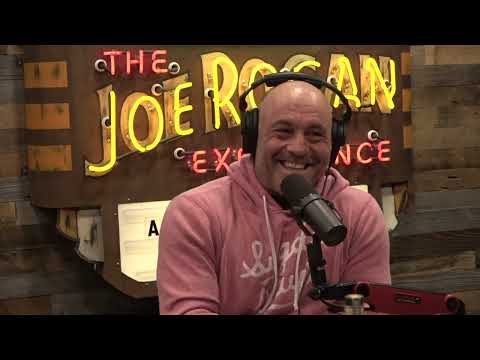
Joe Rogan Experience #1868 - Sam Morrill
Narrator, Sam Morril (guest), Joe Rogan (host)
In this episode of The Joe Rogan Experience, featuring Narrator and Sam Morril, Joe Rogan Experience #1868 - Sam Morrill explores sam Morril and Joe Rogan Dive Deep Into Comedy, Grit, and Vices Joe Rogan and Sam Morril spend a long-form conversation unpacking the craft and business of standup, from bombing in brutal rooms and hustling on the road to building hours for specials and navigating modern platforms like Netflix and YouTube.
Sam Morril and Joe Rogan Dive Deep Into Comedy, Grit, and Vices
Joe Rogan and Sam Morril spend a long-form conversation unpacking the craft and business of standup, from bombing in brutal rooms and hustling on the road to building hours for specials and navigating modern platforms like Netflix and YouTube.
They trade war stories about dysfunctional clubs, degenerate gamblers, and old-school owners, while contrasting that with today’s social-media-driven rise of comics and the freedom (and pressure) of self-producing specials.
The discussion branches into film and cultural criticism—Tarantino, Woody Allen, Polanski, Bourdain, Hicks, and Dangerfield—as examples of brilliant but problematic or tragic figures, and what that means for separating art from artist.
Throughout, they circle back to addiction, drugs, narcissism, and mental health, examining how these forces shape artists’ lives and legacies, and emphasizing community, discipline, and resilience as keys to surviving a comedy career.
Key Takeaways
Bombing is a necessary and often formative part of becoming a great comic.
Both describe brutal early gigs—papered rooms, hostile bar sets, weird private parties—as experiences that sharpened their instincts, forced them to toughen up, and ultimately became their best stories and material.
Get the full analysis with uListen AI
The road is both a romantic ideal and a creative laboratory.
Morril sees constant touring as essential to writing and tightening material, using full hours on the road to fall into jokes and refine bits in ways short city sets can’t, even though it’s exhausting and often low-glamour.
Get the full analysis with uListen AI
Modern comics must be their own media company.
They emphasize filming every set, posting crowd work and topical clips, and sometimes self-releasing full specials on YouTube as a primary way to build audiences, often more effectively than traditional TV or late-night.
Get the full analysis with uListen AI
Artistic freedom now often lives outside traditional gatekeepers.
Rogan notes that platforms and studios are risk-averse and culturally constrained, while podcasts, YouTube, and independent projects let comics push boundaries without worrying about executives, standards departments, or staff activism.
Get the full analysis with uListen AI
Separating art from the artist is messy but often necessary.
They wrestle with enjoying work by Woody Allen, Polanski, Kevin Spacey, and Cosby while acknowledging serious moral failures, concluding that many great works were created by deeply flawed or even predatory people.
Get the full analysis with uListen AI
Addiction and legal drugs can derail lives as much as illegal ones.
Rogan details Florida’s ‘OxyContin express’ and friends ruined by painkillers, while both talk about being careful with alcohol, stimulants, and prescription meds, framing drugs as tools that can either build or destroy a life depending on use and self-awareness.
Get the full analysis with uListen AI
Community and honest peers are critical to keeping comics grounded.
They highlight green room venting, late-night hangs, and ball-busting from comics like Attell, Quinn, and Keith Robinson as vital ‘therapy’ that keeps egos in check, prevents isolation, and reminds them why they love the craft.
Get the full analysis with uListen AI
Notable Quotes
“Nothing is inherently hack. If you nail it in a unique way that hasn’t been nailed, it works.”
— Sam Morril
“You don’t realize you’re having the best time of your life when you’re eating shit in those early road gigs.”
— Sam Morril
“All drugs are tools. You can build a house with a hammer, or you can hit yourself in the dick with it.”
— Joe Rogan
“Some of my best moments have been on the road. The thing we always wanted as open micers was to be a professional on the road.”
— Joe Rogan
“Whenever something bad happens to me, I’m like, ‘It’s gonna be a bit.’ That provides comfort.”
— Sam Morril
Questions Answered in This Episode
How has the shift from TV and late-night to YouTube and podcasts changed what ‘success’ looks like for standup comics?
Joe Rogan and Sam Morril spend a long-form conversation unpacking the craft and business of standup, from bombing in brutal rooms and hustling on the road to building hours for specials and navigating modern platforms like Netflix and YouTube.
Get the full analysis with uListen AI
Where should the line be drawn—if at all—between an artist’s personal behavior and whether we support or consume their work?
They trade war stories about dysfunctional clubs, degenerate gamblers, and old-school owners, while contrasting that with today’s social-media-driven rise of comics and the freedom (and pressure) of self-producing specials.
Get the full analysis with uListen AI
What’s the healthiest way for comics (or any creatives) to balance ambition with mental health when the job rewards obsession and self-critique?
The discussion branches into film and cultural criticism—Tarantino, Woody Allen, Polanski, Bourdain, Hicks, and Dangerfield—as examples of brilliant but problematic or tragic figures, and what that means for separating art from artist.
Get the full analysis with uListen AI
Given the fentanyl and opioid crisis, how should comedians and entertainers talk about drug use responsibly without losing their edge or honesty?
Throughout, they circle back to addiction, drugs, narcissism, and mental health, examining how these forces shape artists’ lives and legacies, and emphasizing community, discipline, and resilience as keys to surviving a comedy career.
Get the full analysis with uListen AI
Could we see a true return of big, edgy studio comedies, or will that kind of humor be confined to standup and independent projects from now on?
Get the full analysis with uListen AI
Transcript Preview
(drum roll) Joe Rogan podcast, check it out.
The Joe Rogan Experience.
Train by day, Joe Rogan podcast by night, all day. (instrumental music) What's happening, brother? We're up and rolling.
Thanks for having me.
Pleasure to meet you finally.
I know. This is, uh, I'm excited to be here.
You're one of my favorite guys.
Really? Thank you.
Yeah. You're, there's this group of guys that are coming up that are so good right now. I feel like this is a great time for, like, fresh, up-and-coming comedy talent. It's like there's so many guys who've been doing comedy, like, 15-plus years who are just fucking starting to crack, you know?
Yeah. Our group is, like, really, you know, my closest friends are ... They work their ass off, so that makes me work my ass off.
Yeah, yeah, yeah.
I love it.
I love it too. That's, that's so important. We were talking about Shane Gillis. Shane Gillis has this fucking bit last night about George Washington that's so good.
(laughs)
It's so good. Like, I was watching, I was going, "Goddamn, this is great," 'cause it's like a perfect bit that combines his love of history-
Right.
... with just, like, Shane, you know? Like, his-
(laughs)
The way he acts things out-
Yeah.
... and he's just like, "I don't want to give up, any of it up. It's so fucking funny." (laughs)
There's nothing worse than trying to paraphrase another comic's bit that they're working on, and then they're like, "Why did you do that? You made my bit unfunny?"
I would ruin it-
Yeah.
... and I'd give it away. And on top of that, it's like, it's very physical. You, you have to see it if you see ... It's-
He's, he's a rare combination of a great joke writer, but also a great performer.
Yeah.
I mean, when he did Trump speed dating in that sketch?
(laughs)
That was like ... I was like, I'm, I don't like Trump impressions. I think they're kind of an easy impression.
Yeah.
And I was like, "That's a great Trump impression."
It's amazing, but with great lines.
That's what I mean.
Yeah.
Impressions, I don't like when people write off impressions, 'cause impressions crack me up, if they have good writing.
Right, right. That's the thing. It's like, it's like crowd work. Like, you get, like, an extra bump off the fact that it's all happening live.
Of course, yeah.
Like, whoa, this is crazy. But if someone's good with it, and they've got good lines, it's fun to watch.
Yeah, nothing is in ... And that's a mistake a lot of comics make, was like, "This is hack," or th- It's like, nothing is inherently hack.
Install uListen to search the full transcript and get AI-powered insights
Get Full TranscriptGet more from every podcast
AI summaries, searchable transcripts, and fact-checking. Free forever.
Add to Chrome