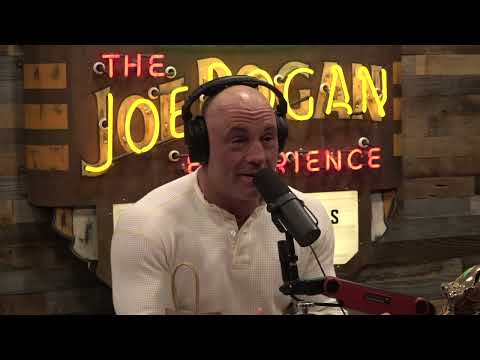
Joe Rogan Experience #1893 - Will Harris
Will Harris (guest), Joe Rogan (host)
In this episode of The Joe Rogan Experience, featuring Will Harris and Joe Rogan, Joe Rogan Experience #1893 - Will Harris explores regenerative rancher challenges factory farming, technocrats, and greenwashing myths Fourth-generation Georgia cattleman Will Harris explains his 25‑year transition from industrial, chemical‑intensive ranching to regenerative, multi‑species, zero‑waste agriculture at White Oak Pastures. He details how industrial farming’s fertilizers, pesticides, monocrops, and confinement livestock break natural cycles, degrade soil, pollute water, impoverish rural communities, and externalize huge environmental and health costs. Harris argues that properly managed ruminants on pasture can *sequester* carbon and restore land, directly countering mainstream claims that cattle are inherently bad for the climate. He critiques technocratic solutions (like carbon capture machines), corporate greenwashing (e.g., Whole Foods’ meat “step” ratings), and consolidation of farmland by figures like Bill Gates, insisting that lasting change will only come from informed consumer demand and decentralized, locally rooted farms.
Regenerative rancher challenges factory farming, technocrats, and greenwashing myths
Fourth-generation Georgia cattleman Will Harris explains his 25‑year transition from industrial, chemical‑intensive ranching to regenerative, multi‑species, zero‑waste agriculture at White Oak Pastures. He details how industrial farming’s fertilizers, pesticides, monocrops, and confinement livestock break natural cycles, degrade soil, pollute water, impoverish rural communities, and externalize huge environmental and health costs. Harris argues that properly managed ruminants on pasture can *sequester* carbon and restore land, directly countering mainstream claims that cattle are inherently bad for the climate. He critiques technocratic solutions (like carbon capture machines), corporate greenwashing (e.g., Whole Foods’ meat “step” ratings), and consolidation of farmland by figures like Bill Gates, insisting that lasting change will only come from informed consumer demand and decentralized, locally rooted farms.
Key Takeaways
Regenerative livestock can improve climate outcomes instead of harming them.
Harris’s life‑cycle assessment shows his grass‑fed beef sequesters about 3. ...
Get the full analysis with uListen AI
Industrial inputs like synthetic fertilizer, pesticides, and routine antibiotics carry hidden long‑term costs.
Post‑WWII ammonium nitrate fertilizer and broad‑spectrum ‘‑cides’ boosted short‑term yields but oxidized soil carbon, killed microbes, and drove erosion and water pollution—costs not borne by agribusiness but by the public via dead zones, lost fisheries, fires, storms, and health impacts.
Get the full analysis with uListen AI
Soil biology and organic matter are central to resilient agriculture.
By increasing soil organic matter, Harris’s land absorbs multi‑inch rain events instead of shedding muddy, chemical‑laden runoff like his neighbor’s field, demonstrating how healthy soils buffer droughts, floods, and downstream ecosystem damage.
Get the full analysis with uListen AI
Real animal welfare means enabling instinctive behaviors, not just food and shelter.
Harris redefined good husbandry as giving animals environments where they can express natural behaviors—chickens scratching, hogs rooting, cows roaming—rather than existing in CAFOs that meet minimum standards but suppress instincts and create suffering.
Get the full analysis with uListen AI
Regenerative systems are less ‘efficient’ on paper but more resilient overall.
Harris estimates his grass-fed beef costs ~30% more to produce and his chicken vastly more than commodity equivalents, but argues those higher direct costs are offset by lower externalized damage and greater resilience to shocks like plant shutdowns or supply disruptions.
Get the full analysis with uListen AI
Regenerative agriculture revitalizes rural economies instead of hollowing them out.
White Oak Pastures grew from three minimum‑wage employees to ~180 staff with ~$100,000 weekly payroll, bringing housing, businesses, and infrastructure (like fiber internet) back to a nearly dead town—contrasting sharply with centralized commodity systems that strip value from rural areas.
Get the full analysis with uListen AI
Consumer choices, not governments or corporations, are most likely to drive change.
Harris is skeptical that big ag, big food, universities, or government will reform themselves due to entrenched incentives, lobbying, and career pipelines; he believes broader adoption of regenerative models depends on enough consumers choosing to pay for food grown this way.
Get the full analysis with uListen AI
Notable Quotes
“A feedlot cow is an unnaturally obese creature that would never occur in nature.”
— Will Harris
“Industrial farming breaks the cycles of nature. We’re the first species to really get good at technology and then use it to break those cycles.”
— Will Harris
“If we’re sequestering 3.5 pounds of CO₂ for every pound of beef, and Impossible is emitting 3.5 pounds for every pound of burger, then to have a zero footprint you’d have to eat a pound of mine for every pound of theirs.”
— Will Harris
“I’m not trying to save the world. I’m trying to save White Oak Pastures—and I’m probably going to be able to do it.”
— Will Harris
“We’re hopelessly addicted to obscenely cheap food.”
— Will Harris
Questions Answered in This Episode
If regenerative ranching is more resilient and climate-positive, what specific policy or market changes would most quickly accelerate its adoption without simply subsidizing it like industrial agriculture?
Fourth-generation Georgia cattleman Will Harris explains his 25‑year transition from industrial, chemical‑intensive ranching to regenerative, multi‑species, zero‑waste agriculture at White Oak Pastures. ...
Get the full analysis with uListen AI
How might urban consumers realistically support and scale up decentralized, local regenerative farms while still living in dense cities that rely on long supply chains?
Get the full analysis with uListen AI
What are the most credible scientific criticisms of Harris’s claims about carbon sequestration and methane, and how do his life-cycle assessments address them?
Get the full analysis with uListen AI
Could large landowners and technocrats like Bill Gates ever be effective allies in regenerative agriculture, or does their scale and mindset inevitably push them toward technocratic, reductionist solutions?
Get the full analysis with uListen AI
How can consumers distinguish genuine high-welfare, regenerative products from corporate ‘greenwashed’ labels like the meat step ratings Harris criticizes?
Get the full analysis with uListen AI
Transcript Preview
(drumbeats) Joe Rogan podcast, check it out. The Joe Rogan Experience.
Train by day, Joe Rogan podcast by night, all day. (instrumental music plays) All right, we're up and running. So you are actually the second Will Harris I've had on the show. I should just tell you. My friend Will Harris is a documentary filmmaker. He does, uh, MMA films, does films about UFC fighters.
Hmm.
And, uh, he's been on recently. So people see the name Will Harris, so like, we have to make a distinction.
Yeah.
There are more than one, and you're the different one. You're the farmer.
Well, may- maybe next time I'll be your friend too.
(laughs) Well, uh, I first saw you on television doing one of those very quick interviews where there was, um ... you know, it was a, they were, they were t- talking about all these issues that you like to discuss, but they only gave you a couple of minutes.
Right.
And it was really hard, 'cause you, you have a relaxed way of talking, but you were very interesting. And I was watching, so I was like, "This is a stupid format." Like, "What ... I wanna hear what this guy has to say. He's obviously has a lot more to say." So, that's why we're having this conversation.
Well, thank you for that. That, that ...
Thank you.
That's, that, uh, event you're talking about was Fox, uh, N- News.
Yeah.
A guy named Stuart Varney invited me to be on, and he kicked my ass pretty good.
(laughs)
And I, I, I, I accept culpability in it. You know, I, I don't watch TV much, and I, I've never watched Fox News.
Never?
No. And I should've ... I mean, I should've prepared myself, but I didn't. You know, I, I, I took it at his word. I got an email from this Stuart Varney saying he wanted me to be on a segment, five minutes, explaining why I didn't think it was good for, uh, Bill Gates to own so much farmland. So, I said, "Well, that's good." You know, I mean, I, I have definite opinions, folded opinions on that, and I wanna share 'em. So, uh, I, I sat down and wrote up a, a four-minute explanation of, of, of facts of why I thought that's not good. And I thought I was gonna get to go through my stuff. And, uh, he asked the question, and I started explaining it. And I'm profoundly Southern. You know, I, I, I speak slowly. And I was doing what I thought he wanted me to do and said, "But why, why?" You know?
(laughs) Everything on those shows is just, "You gotta get to the point. Get to the point. Get to the point." Th- it fevers people.
If we, if we-
Okay.
Install uListen to search the full transcript and get AI-powered insights
Get Full TranscriptGet more from every podcast
AI summaries, searchable transcripts, and fact-checking. Free forever.
Add to Chrome