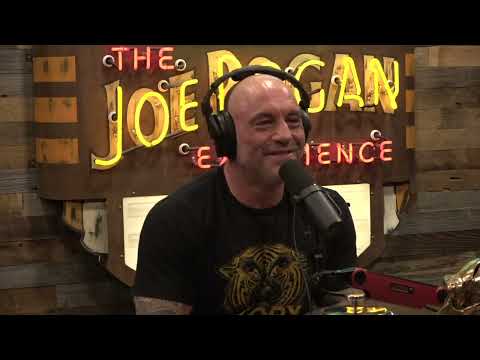
Joe Rogan Experience #1968 - Jason Everman
Joe Rogan (host), Narrator, Jason Everman (guest)
In this episode of The Joe Rogan Experience, featuring Joe Rogan and Narrator, Joe Rogan Experience #1968 - Jason Everman explores from Grunge Guitarist To Special Forces Soldier To Ocean Sailor Jason Everman recounts his unlikely path from playing in early Nirvana and Soundgarden through a deep personal crash that led him into the U.S. Army Rangers and Special Forces. He describes leaving music over creative frustration, heartbreak after being fired from Soundgarden, and using radical change—New York, the military, war zones—to force personal growth.
From Grunge Guitarist To Special Forces Soldier To Ocean Sailor
Jason Everman recounts his unlikely path from playing in early Nirvana and Soundgarden through a deep personal crash that led him into the U.S. Army Rangers and Special Forces. He describes leaving music over creative frustration, heartbreak after being fired from Soundgarden, and using radical change—New York, the military, war zones—to force personal growth.
Everman details the culture and intensity of Ranger Regiment and Special Forces, his experiences in Iraq and Afghanistan, and how combat became the most profound—and in some ways deeply satisfying—experience of his life. He also reflects on Afghanistan’s history, corruption, and the futility of trying to remake it in a Western image.
Later, he shifts into academia, earning a philosophy degree from Columbia, and then into sailing, buying a boat and planning a human‑ or wind‑powered race from Washington State to Alaska. Throughout, he returns to themes of trauma-driven growth, internal versus external validation, and curating a meaningful, self-authored life.
Key Takeaways
Radical change can interrupt self-destructive spirals.
After being fired from Soundgarden and spiraling emotionally, Everman deliberately made extreme moves—relocating to New York, later enlisting in the military—to break patterns and force growth, illustrating how intentional disruption can reset a life trajectory.
Get the full analysis with uListen AI
Creative success without agency often feels hollow.
Playing in Nirvana and Soundgarden was prestigious, but Everman had little creative input and poor communication with bandmates; lacking authorship over the work and his role contributed heavily to his dissatisfaction and eventual departures.
Get the full analysis with uListen AI
Trauma and pressure often drive meaningful growth.
Everman repeatedly returns to the idea of “punctuated equilibrium”: like evolution under stress, individuals often grow most after cataclysmic events—heartbreak, war, career loss—if they choose to respond constructively rather than stagnate.
Get the full analysis with uListen AI
Combat can feel profoundly purposeful despite its brutality.
He describes war as the most profound experience of his life, combining “pure selfless love and brutality without quarter. ...
Get the full analysis with uListen AI
You can’t engineer another culture to match your ideals.
Discussing Afghanistan, he highlights entrenched tribal structures, corruption, opium economics, and very different values, arguing that U. ...
Get the full analysis with uListen AI
Internal validation matters more than external status.
Having been the “cool guy” rock musician, Everman later realized how fragile and hollow that identity was; he now prioritizes what he thinks of himself—his relationships, integrity, and growth—over money, fame, or others’ admiration.
Get the full analysis with uListen AI
Fundamentals and adaptability transfer across disciplines.
From Ranger training to music to sailing, he emphasizes mastering basics, being adaptable, and embracing hardship; that mindset let him move between elite music scenes, special operations units, Ivy League classrooms, and open-ocean sailing.
Get the full analysis with uListen AI
Notable Quotes
“I'm happier now at 55 than I've ever been in my entire life, and each year it gets better.”
— Jason Everman
“Growth is the result of trauma. You kind of cruise through life, and then something fucked up happens, and hopefully you step up and grow from it.”
— Jason Everman
“Going on target, closing with and destroying the enemy, and then getting you and all your dudes back to base alive—best feeling in the world.”
— Jason Everman
“I kind of endeavored to actively author my own life, pursuing the ends of making a life that kept me engaged, kept me interested, and was meaningful to me.”
— Jason Everman
“Money's freedom. It opens options. But money for the sake of money—forget it.”
— Jason Everman
Questions Answered in This Episode
How did your experience of combat change the way you see meaning and purpose in everyday civilian life?
Jason Everman recounts his unlikely path from playing in early Nirvana and Soundgarden through a deep personal crash that led him into the U. ...
Get the full analysis with uListen AI
If Soundgarden had never fired you and the band had stayed small, do you think you still would have eventually left music for the military?
Everman details the culture and intensity of Ranger Regiment and Special Forces, his experiences in Iraq and Afghanistan, and how combat became the most profound—and in some ways deeply satisfying—experience of his life. ...
Get the full analysis with uListen AI
What concrete practices or habits helped you process your war experiences and transition successfully into academia and civilian life?
Later, he shifts into academia, earning a philosophy degree from Columbia, and then into sailing, buying a boat and planning a human‑ or wind‑powered race from Washington State to Alaska. ...
Get the full analysis with uListen AI
How do you decide when it’s time to radically change direction in life versus pushing through a difficult period on your current path?
Get the full analysis with uListen AI
What specific moments on the water—good or bad—taught you the most about yourself as you shifted from soldier to sailor?
Get the full analysis with uListen AI
Transcript Preview
(drum music) Joe Rogan podcast. Check it out.
The Joe Rogan Experience.
Train by day, Joe Rogan podcast by night, all day. (rock music) Well, thanks for coming, man. Appreciate it.
Yeah, thanks for asking.
You've had a wild life, dude. How the fuck does one go from playing in Nirvana and Soundgarden to being a soldier?
Um, it's, it's, (laughs) it's a longer story.
Yeah.
I don't, I don't know how-
I wanna hear it. (laughs)
... how long an answer you want.
We got, uh, plenty of time.
Okay, um ... Mm. So, I guess w- being a professional rock musician was something I kind of fell into. It wasn't something that I, like, uh, had a dream of, you know? It's like, "Oh, I'm gonna be..." You know, I love playing in bands, I love playing music, but it was, like, at this punk rock level where y- you were never gonna make a living at it, you know?
Mm-hmm.
It was just something fun to do. And then, uh, started playing with Nirvana, and even at that level s- you know, still not making money from it, but, you know, touring.
Was it the early days of Nirvana?
Yeah, yeah.
So, Nirvana wasn't worldwide-
No.
... at that point?
No. Um, i- uh, there were c- um, even on the Seattle level, like, one of the, the, the smaller bands, you know? Like, there was bands like Mudhoney and Soundgarden that were better known than Nirvana was at the time, for sure.
And you played for Soundgarden too.
Yeah.
Which is also hilarious. (laughs)
(laughs) Yeah.
And when, when did you ... Like, so, you're, in, in the beginning, so did you just have, did you have friction with the band? Like, why did you wind up leaving?
So, w- uh, with Nirvana, it was just, uh, I guess initially, like, when I came on board, like, Kurt wanted a second guitar player for the live show basically, like, uh, have a heavier sound live, take some of the guitar-playing responsibility off him so he could concentrate on vocals, like that kind of thing. And initially, like, I thought I was gonna be able to contribute to the band creatively, and then it got to the point where I realized that wasn't gonna happen. And then the same thing happened with Chad, the drummer, I think. And it was, like, everyone in the band, including myself, was, like, very p- po- poor communicators, like, a lot of passive aggression.
Mm.
And, you know, I mean, w- we were kids, you know?
How old were you at the time?
20, I think.
Mm.
And, yeah, I d- I just, I wasn't equipped for it, and eh- became more and more unhappy with the situation and then ended up leaving.
Install uListen to search the full transcript and get AI-powered insights
Get Full TranscriptGet more from every podcast
AI summaries, searchable transcripts, and fact-checking. Free forever.
Add to Chrome