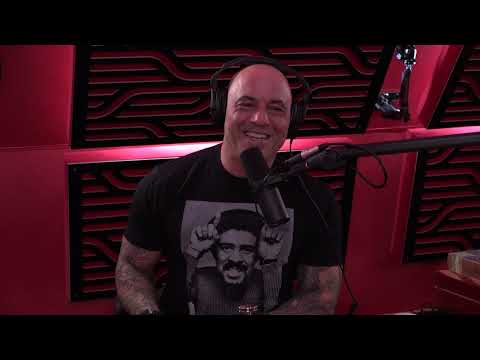
Joe Rogan Experience #1603 - Brendan Schaub
Narrator, Narrator, Joe Rogan (host), Brendan Schaub (guest), Narrator, Narrator, Narrator, Narrator, Narrator, Narrator, Narrator
In this episode of The Joe Rogan Experience, featuring Narrator and Narrator, Joe Rogan Experience #1603 - Brendan Schaub explores joe Rogan and Brendan Schaub Tackle Comedy, COVID, Fights, Money, Mayhem Joe Rogan and Brendan Schaub have a long, free‑wheeling conversation that ranges from luxury watches and whiskey to COVID, political hypocrisy, and the evolution of stand‑up comedy. They dive deep into health, supplements, and obesity in the pandemic, then pivot into the GameStop/WallStreetBets saga and how it exposes double standards in financial regulation.
Joe Rogan and Brendan Schaub Tackle Comedy, COVID, Fights, Money, Mayhem
Joe Rogan and Brendan Schaub have a long, free‑wheeling conversation that ranges from luxury watches and whiskey to COVID, political hypocrisy, and the evolution of stand‑up comedy. They dive deep into health, supplements, and obesity in the pandemic, then pivot into the GameStop/WallStreetBets saga and how it exposes double standards in financial regulation.
The episode spends substantial time on the current and future state of comedy, podcasting, and Los Angeles vs. Texas as creative hubs, including how social media and YouTube have reshaped careers. They also break down high‑profile combat sports storylines: UFC matchmaking (Conor McGregor, Poirier, Chandler, Oliveira), heavyweight MMA and boxing (Ngannou, Stipe, Jones, Fury, Joshua, Wilder), and the spectacle of YouTuber boxing.
Throughout, they criticize political leaders like Gavin Newsom and Eric Garcetti over lockdown policies, highlight small‑business devastation, and discuss possible new leadership in California. They close by reflecting on fighter health, CTE, and the harsh realities and ceilings of late‑starting combat athletes.
The tone alternates between technical analysis, dark humor, and inside‑comedy shop talk, offering a snapshot of how COVID, the internet, and politics are reshaping both entertainment and combat sports.
Key Takeaways
COVID outcomes are strongly tied to underlying health and consistent habits.
They emphasize obesity and poor diet as major comorbidities, and discuss supplements like quercetin and zinc, plus sauna use and vitamins, as part of their personal defense strategies—while acknowledging that nearly everyone may eventually get COVID.
Get the full analysis with uListen AI
Lockdowns have devastated small businesses while leaving large corporations comparatively untouched.
Rogan and Schaub argue that restaurant and comedy‑club closures in California were more about optics and politics than data, contrasting them with open big‑box stores and pointing to mass permanent closures in LA’s restaurant scene.
Get the full analysis with uListen AI
The GameStop/WallStreetBets saga exposed a double standard in how ‘market manipulation’ is policed.
They play and dissect Saagar Enjeti’s analysis, noting how regulators and financial media suddenly demanded more regulation once hedge funds were hurt by retail traders—despite years of tolerance for institutional manipulation and bailouts.
Get the full analysis with uListen AI
Comedians increasingly don’t need Hollywood; the internet is now the primary ‘network.’
They highlight Andrew Schulz, Mark Normand, Tim Dillon and others as models for direct‑to‑fan careers via YouTube, podcasts and social media, arguing that location matters far less than output, work ethic, and digital savvy.
Get the full analysis with uListen AI
Matchmaking and timing can make or break elite fighters’ careers and narratives.
They critique decisions like Conor McGregor fighting Dustin Poirier after long inactivity, propose lightweight title paths (Poirier, Oliveira, Chandler, Gaethje), and outline how tune‑up fights in boxing often smartly rebuild stars before big title runs.
Get the full analysis with uListen AI
Late starters and crossover athletes face hard ceilings in combat sports.
Using examples like Deontay Wilder, Greg Hardy, and the Paul brothers, they argue that starting boxing, MMA, or jiu‑jitsu in your mid‑20s or later makes catching up to lifelong specialists almost impossible, no matter athleticism or coaching.
Get the full analysis with uListen AI
Fighter health issues like eye damage and CTE are emerging more clearly and need new solutions.
They mention fighters like Michael Bisping, Nick Lentz, and Spencer Fisher as cautionary tales, and discuss experimental approaches such as psilocybin and nicotine’s possible neuroprotective effects, while stressing that careers are finite and brutal.
Get the full analysis with uListen AI
Notable Quotes
“If you don’t make things, there are no things.”
— Joe Rogan (paraphrasing Elon Musk on the economy and lockdowns)
“They shut those restaurants down to make it look like they were doing something. It’s all optics.”
— Joe Rogan
“In hindsight, COVID’s kind of good because you’re gonna find out who can hack it and who can’t… who can deal with it and adapt and be a real comedian.”
— Brendan Schaub (quoting Mark Normand’s sentiment)
“You’re talking about an Olympian… a bona fide Hall of Famer mixed martial artist. That mentality is still there.”
— Brendan Schaub, defending Ben Askren as an opponent for Jake Paul
“In fighting, your sport is about destroying bodies. There’s only so much the body can take.”
— Joe Rogan
Questions Answered in This Episode
How fair is it to criticize politicians like Gavin Newsom and Andrew Cuomo for COVID decisions that may have intertwined with partisan goals, and what would a better balance between health and economy have looked like?
Joe Rogan and Brendan Schaub have a long, free‑wheeling conversation that ranges from luxury watches and whiskey to COVID, political hypocrisy, and the evolution of stand‑up comedy. ...
Get the full analysis with uListen AI
Does the GameStop/WallStreetBets episode warrant new regulation of retail investing and social‑media‑driven trading, or does it instead argue for reining in institutional players and media conflicts of interest?
The episode spends substantial time on the current and future state of comedy, podcasting, and Los Angeles vs. ...
Get the full analysis with uListen AI
Given the success of comedians who bypass traditional media, what structural advantages (if any) does Hollywood still offer to stand‑ups, and will LA ever regain its pre‑COVID centrality for comedy?
Throughout, they criticize political leaders like Gavin Newsom and Eric Garcetti over lockdown policies, highlight small‑business devastation, and discuss possible new leadership in California. ...
Get the full analysis with uListen AI
Where should athletic commissions and promotions realistically draw the line on performance enhancement—TRT, HGH, psilocybin therapy, etc.—in a sport that already accepts extreme weight cuts, saunas, and other body‑hacking?
The tone alternates between technical analysis, dark humor, and inside‑comedy shop talk, offering a snapshot of how COVID, the internet, and politics are reshaping both entertainment and combat sports.
Get the full analysis with uListen AI
At what point do crossover and spectacle fights (YouTubers vs. MMA veterans, legends’ exhibitions) stop being fun curiosities and start distorting the public’s understanding of combat sports and fighter safety?
Get the full analysis with uListen AI
Transcript Preview
(drumbeats) Joe Rogan Podcast, check it out.
The Joe Rogan Experience.
Train by day, Joe Rogan Podcast by night. All day. (rock music) Woo!
That's nice.
Are we up? Oh. So tell me about that watch. What is that?
(clears throat) This is a Heuer from 1950.
1950.
So before ... Yeah. So before TAG bought Heuer-
Is it TAG or is it Tog?
It depends. My dad always told me TAG.
Oh, okay.
Might be TAG, though.
Well, it's spelled T-A-G. It could be Tog.
Yeah.
TAG, Tog.
But before they collabed with them or went into business with them, there was just Heuer. So this is a 1950 Heuer.
Wow.
That's pretty cool.
That's an old fucking watch.
Super old, man.
That's kind of cool.
Definitely haunted.
Yeah, right?
Yeah.
There's something cool about that, right?
Yeah.
Having something that's that old.
Oh, that... And no one else ... you know, you're not gonna see a lot of it. That's why I like shit no one else has.
Yeah.
Kind of like cars. You and I are the-
Yeah.
... same with cars.
Do you have to wind it every morning?
Yes.
Is it one of those? Yeah.
It's annoying, but it's worth it.
(laughs)
What do you got there? Is that Omega?
That's ... No, it's a Grand Seiko.
The Seik-
This is a winder, too. You have to wind this thing, too. It's got a spring drive. It shows you on here, like, when it's winding up.
Yeah, I appreciate it.
Uh, yeah, you know, uh, Matt Farah from The Smoking Tire?
Yeah.
He turned me on to Grand Seikos.
Th- they're great.
Yeah. Dude, it's such a beautiful design. Their, their, their whole company, like the way they design watches, it's all ... They call it Zaratsu. This is, like, hand polished finish-
Yeah.
... they do. They take it to, like, the ultimate detail level.
If you get too into watches, it's gonna get expensive.
Yeah. Well-
Didn't you give your boy Lex Fridman a watch?
Yes, I did. I gave him my favorite watch.
I would give you this one, but my wife gave me this-
No, no, no, no, no.
... from 1950. I just can't do that, dude.
Don't, don't, don't, don't, don't.
Yeah.
Don't give me that watch.
Just buy the company.
(laughs)
Just buy the company. (laughs) Just buy the company. (laughs)
Well, Lex had this bullshit watch that he bought from amazon.com-
Oh.
... for, like, $20.
Dude. What is he doing?
It's giant, like a frisbee. It looked goofy. And his b- nice suit and everything, you know, he dresses so nice. And I was like, "You need a real watch." And then I was ... And I was a little drunk. I was like, "I'm gonna give him my watch."
Install uListen to search the full transcript and get AI-powered insights
Get Full TranscriptGet more from every podcast
AI summaries, searchable transcripts, and fact-checking. Free forever.
Add to Chrome