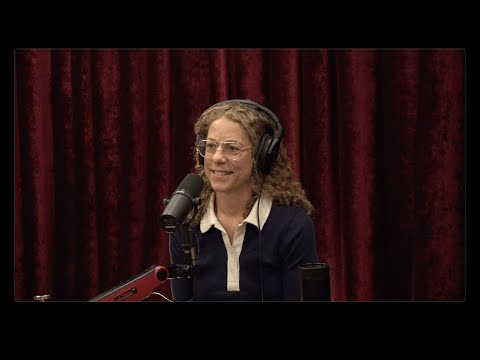
Joe Rogan Experience #2322 - Rebecca Lemov
Rebecca Lemov (guest), Narrator, Joe Rogan (host), Narrator, Narrator
In this episode of The Joe Rogan Experience, featuring Rebecca Lemov and Narrator, Joe Rogan Experience #2322 - Rebecca Lemov explores mind Control, Cults, and AI: How Easily Human Freedom Is Shaped Joe Rogan and historian Rebecca Lemov explore the history of mind control, from Cold War brainwashing research and MKUltra to modern social media and AI-driven persuasion.
Mind Control, Cults, and AI: How Easily Human Freedom Is Shaped
Joe Rogan and historian Rebecca Lemov explore the history of mind control, from Cold War brainwashing research and MKUltra to modern social media and AI-driven persuasion.
They discuss cult psychology, including groups like the Children of God, Osho’s commune, and the Manson Family, highlighting how belonging, ecstasy, and authority enable abuse.
Lemov details the CIA’s search for behavioral weapons, Jolly West’s controversial experiments, psychosurgery, and how state power, science, and secrecy combine to override autonomy.
The conversation ends by connecting old-school brainwashing to today’s algorithmic manipulation, emotional engineering, AI chatbots, and Neuralink, asking how anyone can stay mentally free.
Key Takeaways
We are far more shaped—and programmable—than we like to admit.
Lemov emphasizes that much of what we consider our own opinions and identities are absorbed from environments, institutions, and subtle conditioning, making everyone vulnerable to influence and, in extreme cases, brainwashing.
Get the full analysis with uListen AI
Cold War mind control research blurred science, security, and ethics.
Programs like MKUltra tried to reverse-engineer communist ‘brainwashing’ and weaponize techniques such as LSD dosing, sensory manipulation, and extreme stress, often on unwitting subjects, under a national-security justification.
Get the full analysis with uListen AI
Cults exploit deep human needs for meaning, ecstasy, and belonging.
Groups like Osho’s commune, Children of God, and the Holy Hell cult show a common pattern: alluring community and spiritual highs at first, then control, sexual coercion, and sometimes violence once members are fully embedded.
Get the full analysis with uListen AI
Early psychosurgery and brain implants were real attempts at remote behavior control.
Cases like Leonard Keil’s amygdala surgery and Jose Delgado’s ‘stimoceiver’ illustrate how surgeons and psychiatrists tried to locate and modulate violence circuits in the brain—often disabling patients and raising huge consent concerns.
Get the full analysis with uListen AI
Modern platforms practice ‘emotional engineering’ at massive scale.
Experiments like Facebook’s emotional contagion study and targeted political curation show that algorithms can systematically shift users’ moods and attitudes, not just by changing what they think but how they feel about what they think.
Get the full analysis with uListen AI
AI companions and chatbots open a new frontier in intimate manipulation.
Lemov notes cases where bots sexually harassed users or even appeared to encourage self-harm, demonstrating how flattery, pseudo‑intimacy, and always‑on availability can hook vulnerable people into powerful influence loops.
Get the full analysis with uListen AI
Defenses against mind control require self-observation and humility.
Practices like Vipassana meditation can create ‘built‑in reflection’ to audit one’s thoughts, and recognizing that anyone—including oneself—can be manipulated is a more realistic safeguard than believing “that could never happen to me.”
Get the full analysis with uListen AI
Notable Quotes
“We’re told that freedom and autonomy are natural, but in reality we’re much more malleable than we think.”
— Rebecca Lemov
“Sometimes we’re just a series of adopted opinions that we then adhere to.”
— Rebecca Lemov
“Whenever people have power, unchecked power and an insane influence over people’s minds, and they’re doing it in complete secrecy, you can get away with so much.”
— Joe Rogan
“I think mind control is more of a window into the fact that we’re all susceptible to it.”
— Rebecca Lemov
“It’s a very strange time to be a person—maybe one of the strangest ever.”
— Joe Rogan
Questions Answered in This Episode
If everyone is deeply conditioned by environment and culture, how can an individual realistically distinguish their ‘own’ beliefs from implanted ones?
Joe Rogan and historian Rebecca Lemov explore the history of mind control, from Cold War brainwashing research and MKUltra to modern social media and AI-driven persuasion.
Get the full analysis with uListen AI
To what extent did Cold War mind control research actually succeed, and how much of that knowledge is now embedded—quietly—in modern interrogation, advertising, and tech design?
They discuss cult psychology, including groups like the Children of God, Osho’s commune, and the Manson Family, highlighting how belonging, ecstasy, and authority enable abuse.
Get the full analysis with uListen AI
What ethical lines, if any, should never be crossed in brain‑computer interfaces like Neuralink, and who gets to set and enforce those boundaries?
Lemov details the CIA’s search for behavioral weapons, Jolly West’s controversial experiments, psychosurgery, and how state power, science, and secrecy combine to override autonomy.
Get the full analysis with uListen AI
How can societies preserve the benefits of open information and AI tools while defending citizens—especially children—from scalable emotional and psychological manipulation?
The conversation ends by connecting old-school brainwashing to today’s algorithmic manipulation, emotional engineering, AI chatbots, and Neuralink, asking how anyone can stay mentally free.
Get the full analysis with uListen AI
Are cults and extremist movements a symptom of something fundamentally broken in modern life—like isolation and meaningless work—and if so, what healthier ‘tribes’ could fill that void?
Get the full analysis with uListen AI
Transcript Preview
(drumming music plays) Joe Rogan podcast, check it out!
The Joe Rogan Experience.
Train by day, Joe Rogan podcast by night, all day. (rock music plays) All right. Hello, Rebecca. Very nice to meet you.
Hi, Joe. Very nice to meet you too.
So, um, first of all, what got you interested in mind control?
Well, so this is a question I've been asking myself, just because I find myself, after two and a half decades of having this topic... (laughs)
(laughs)
... that initially seemed pretty niche and unusual, and not many people were interested, or many people were skeptical about it. But I thought it seemed like it em- embodied some of the more extreme... If you could look at the way people are shaped by their environments and by their, you know... what parts of your life are determined by you and what parts are determined by outside forces, that mind control would be a perfect area to investigate that, because it's so extreme, especially if you looked at particular cases. So, I... because I'd done my dissertation, uh, at UC Berkeley on the history of behavioral engineering and how, you know, these kind of models for creating a society of control and, uh, encouragement in various ways, like a behaviorist kind of dream. And it seemed like the next step was to i- to look at something like brainwashing or mind control.
When you first started studying it, was it a, a less, um, public sort of a curiosity? Because now, a lot of people are very much interested, and I blame the internet mostly.
(laughs) Yeah.
I probably had a lot to do with it too.
(laughs)
But just-
You and the internet. (laughs)
A lot of people on the internet are, you know... because over time, you know, people have gotten to know about MKUltra and a bu- a bunch of different, different programs that the, uh, that our own United States government was involved in, where they were working on mind control. But what, l- like, initially, what drew you to it?
Well, I guess I always have been drawn to topics that seemed, uh, unusual maybe for a professor to be looking into. And people... I mean, at the time, if you look at a Google engram for the word "mind control" or "brainwashing", they were very low, you know, around the turn of the century, or the 1990s. After there kind of... there was a peak of interest in the '70s, and it just really fallen off. But I guess I was interested 'cause it just seemed so unusual, and like maybe there was something there that people hadn't really thought about. And at the time, these documents weren't readily available, and like you say, people weren't really looking into it. So, I just thought it seemed like a rich area for research. And I'm also interested in connecting my per-... I've always been interested in connecting my personal, uh, I guess my goals for life with what I research. So, I thought, it's almost like a philosophical and existential question of how much we're controlled or how much we might ke- be controlled. And it seemed important to look at some of the more extreme cases, if you could.
Install uListen to search the full transcript and get AI-powered insights
Get Full TranscriptGet more from every podcast
AI summaries, searchable transcripts, and fact-checking. Free forever.
Add to Chrome