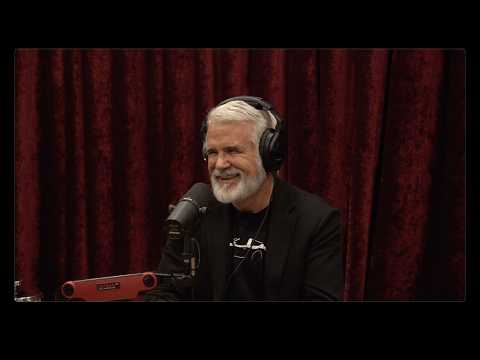
Joe Rogan Experience #2454 - Robert Malone, MD
Joe Rogan (host), Joe Rogan (host), Dr. Robert Malone (guest), Joe Rogan (host), Joe Rogan (host), Joe Rogan (host), Joe Rogan (host)
In this episode of The Joe Rogan Experience, featuring Joe Rogan and Joe Rogan, Joe Rogan Experience #2454 - Robert Malone, MD explores malone and Rogan revisit COVID, censorship, vaccines, and biotech risks Joe Rogan welcomes Robert Malone back after ~5 years and frames the conversation as vindication of Malone’s earlier COVID-era warnings, especially around vaccine safety debates and suppression of alternative treatments.
Malone and Rogan revisit COVID, censorship, vaccines, and biotech risks
Joe Rogan welcomes Robert Malone back after ~5 years and frames the conversation as vindication of Malone’s earlier COVID-era warnings, especially around vaccine safety debates and suppression of alternative treatments.
Malone recounts his mRNA/lipid delivery background, why he took the Moderna vaccine (travel pressure and hope it might relieve long COVID), and describes adverse reactions while criticizing claims that mRNA stays localized at the injection site.
A major thread is “psywar”: Malone contends governments and allied institutions used behavioral “nudge” programs, propaganda, ad-pressure networks, and platform moderation to enforce a single COVID narrative, citing examples like sponsor/advertiser leverage and documented government–platform coordination.
They broaden into institutional incentives (EUA, indemnification, vaccine schedule economics), current policy fights (ACIP changes and lawsuits), and emerging “low-probability, high-impact” threats such as gain-of-function lab leaks, AI-enabled bioweapons monitoring, and speculative biotech futures (artificial wombs, gene drives), concluding that transparency and actual science are needed to rebuild trust.
Key Takeaways
mRNA delivery safety debates hinge on biodistribution and inflammation.
Malone claims early animal work showed strong inflammatory responses and broad distribution, contrasting with public messaging that shots remain local; he says he relied on assurances from lipid-formulation experts that newer PEGylated systems mitigated this.
Get the full analysis with uListen AI
Policy and social pressure shaped medical choices as much as evidence.
Malone describes taking the vaccine partly due to travel restrictions and a promoted belief that vaccination could improve long COVID—an expectation he says later data contradicted.
Get the full analysis with uListen AI
Repurposed drug controversies are presented as regulatory and narrative conflicts, not just scientific disputes.
Malone alleges DOD-backed trials faced repeated FDA hurdles (especially around ivermectin), and Rogan emphasizes that media fixation on ivermectin—over other therapies—suggested coordinated stigma.
Get the full analysis with uListen AI
“Nudge” and information-control mechanisms are framed as normalized governance tools.
They argue behavioral-insights programs and platform labeling/banners functioned as persuasion infrastructure; Malone points to documented coordination (e. ...
Get the full analysis with uListen AI
Economic incentives may have aligned against early outpatient treatments.
Both suggest that if effective treatments existed, EUA justification and the broader pandemic-response profit structure (vaccines, lockdown-era wealth transfer) would be threatened; they describe EUA/PREP/indemnification as creating powerful motives.
Get the full analysis with uListen AI
Vaccine-schedule placement is portrayed as a “perpetual cash cow” mechanism.
Malone argues that once a vaccine is recommended and embedded in programs like Vaccines for Children, it gains guaranteed purchasing, strong marketing, and reduced liability—making reversal rare and politically difficult.
Get the full analysis with uListen AI
Biosecurity risk is shifting toward ‘low-probability, high-impact’ failures.
He characterizes COVID as likely an unintentional lab-linked event and warns that proliferating high-containment pathogen work worldwide increases tail-risk events, advocating stronger risk governance and monitoring.
Get the full analysis with uListen AI
Agricultural disease responses may be locked into outdated playbooks.
On bird flu, Malone argues mass culling cannot eradicate a virus with a wild reservoir and may be inferior to breeding resistance and applying non-vaccine mitigations (water/feed interventions, sanitation approaches).
Get the full analysis with uListen AI
Institutional trust erosion is treated as a durable aftereffect of COVID messaging.
Rogan and Malone contend mainstream outlets’ perceived alignment with pharma and lack of corrections drove lasting distrust, enabling a new alternative-media ecosystem and scrutiny of official claims.
Get the full analysis with uListen AI
Notable Quotes
““This is a victory dance. Like, it turned out that all your warnings… turned out to be true.””
— Joe Rogan
““In my hands, it was inflammation… really aggressive white cell infiltrates… in both mice and monkeys.””
— Dr. Robert Malone
““That banner is pushed out by the nudge units… That is nudge technology.””
— Dr. Robert Malone
““The only thing that makes sense… is emergency use authorization.””
— Joe Rogan
““The greatest upward transfer of wealth in modern history occurred during COVID.””
— Dr. Robert Malone
Questions Answered in This Episode
On the technical side, what published pharmacokinetic/biodistribution studies most strongly support (or refute) Malone’s claim that mRNA/LNPs ‘go all over’ rather than staying local?
Joe Rogan welcomes Robert Malone back after ~5 years and frames the conversation as vindication of Malone’s earlier COVID-era warnings, especially around vaccine safety debates and suppression of alternative treatments.
Get the full analysis with uListen AI
Malone cites PEG and ‘stealth liposome’ design—what specific formulation changes between early experimental systems and Pfizer/Moderna LNPs materially reduce inflammatory signaling, and what evidence shows that?
Malone recounts his mRNA/lipid delivery background, why he took the Moderna vaccine (travel pressure and hope it might relieve long COVID), and describes adverse reactions while criticizing claims that mRNA stays localized at the injection site.
Get the full analysis with uListen AI
What is the strongest clinical evidence today that vaccination worsens (or improves) long COVID symptoms, and in which patient subgroups?
A major thread is “psywar”: Malone contends governments and allied institutions used behavioral “nudge” programs, propaganda, ad-pressure networks, and platform moderation to enforce a single COVID narrative, citing examples like sponsor/advertiser leverage and documented government–platform coordination.
Get the full analysis with uListen AI
In the DOD trial story: which FDA requirements specifically blocked ivermectin inclusion, and were those requirements applied consistently to other repurposed-drug proposals?
They broaden into institutional incentives (EUA, indemnification, vaccine schedule economics), current policy fights (ACIP changes and lawsuits), and emerging “low-probability, high-impact” threats such as gain-of-function lab leaks, AI-enabled bioweapons monitoring, and speculative biotech futures (artificial wombs, gene drives), concluding that transparency and actual science are needed to rebuild trust.
Get the full analysis with uListen AI
Rogan and Malone suggest EUA incentives discouraged treatments—what documentary timeline best links treatment suppression to EUA strategy rather than to concerns about evidence quality or misuse?
Get the full analysis with uListen AI
Transcript Preview
[upbeat music] Joe Rogan Podcast, check it out!
The Joe Rogan Experience.
Train by day, Joe Rogan Podcast by night, all day. [upbeat music] Yep, we're up. Okay. We were trying to figure out how long it's been since, uh, you came in. It's been somewhere in the neighborhood, close to five years.
Yeah. A lot of water under the bridge. [laughing]
[laughing] Your appearance on this show, boy, did that create a lot of problems.
[laughing] Yeah. Um, yeah, I, I didn't expect you to ever have me on again. I thought maybe Spotify was just gonna say, "Hell no."
No, you were right! Like, this is a victory dance. Like, it turned out that all your warnings and all the things that you were saying about the problems turned out to be true.
Well, thanks. And I, I know you've said that on a few shows. Every time you do, somebody sends me a clip and says, "Hey, Rogan said you're- did the right thing."
What was it like for you? First of all, uh, you know, they were trying to label you a quack and a kook-
Try
... and someone who didn't know-
Try! [laughing]
... what they were talking about. It didn't-- I don't think it worked with everybody.
Yeah.
I mean, it, it worked with people that weren't paying attention, but it, anybody that really paid attention to your background said, "No, this guy's very credible." I mean, don't you have, like, nine patents on mRNA vaccine technology?
Yeah, on the mRNA. Yeah-
Yeah
... a total of about 15, I think.
Yeah. And you also took the vaccine and had a horrible adverse event.
A series of them, yeah.
Yeah.
That, that at the time, it was so early. That was when the National Guard was still doing it, and that was Moderna. And, um, the-- I was embarrassed, uh, by, to have these experiences, um, and I was embarrassed when I got COVID in early 2020. Um, you know, looking back, uh, there was so much, so much fear, um, so much, uh, oh, anger and a- anxiety and everything wrapped around all of this.
Mm-hmm.
A- and in retrospect, it was, you know, it was promoted, but it was also very organic. Uh, you know, it was, it was... You know, looking back, being honest about it, it was a frightening time, what was happening. And, um, and yeah, I, I, you know, I had those experiences. Uh, my, uh, doc, who is a cardiologist, was like: "Why were you so stupid to take this?" Uh-
Your doctor said that, too?
Yeah. Yeah.
In 2021?
Yeah. Um, she was a-
Or 2020 or '20 what?
'20. It was 2021. 2021. Yeah. Um, I was going to a kind of a, a cardiologist that had left, um, traditional medical practice at, uh, UVA and the associated, um, hospitals, and I was going to her for, uh, hormone replacement therapy and, uh, bioidentical hormone replacement therapy. And, um, she was monitoring a lot of things, and, and, um, yeah, that was her response: "Why did you do this?" Of course, I've had that question a thousand times since. You know, "Why were you so stupid? You were the one that should have known." Um, and so I have to answer that still, uh, it's kind of gets a little tiresome.
Install uListen to search the full transcript and get AI-powered insights
Get Full TranscriptGet more from every podcast
AI summaries, searchable transcripts, and fact-checking. Free forever.
Add to Chrome