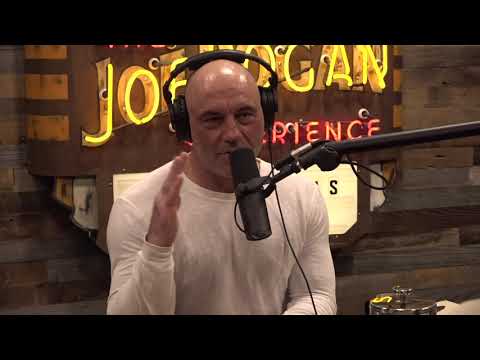
Joe Rogan Experience #1676 - Jesse Griffiths
Joe Rogan (host), Jesse Griffiths (guest), Narrator
In this episode of The Joe Rogan Experience, featuring Joe Rogan and Jesse Griffiths, Joe Rogan Experience #1676 - Jesse Griffiths explores chef-Hunter Redefines Wild Hog: From Invasive Menace To Gourmet Resource Joe Rogan talks with Austin chef and hunter Jesse Griffiths about his restaurant Dai Due, his new self-published ‘Hog Book,’ and a philosophy of cooking that centers on local, wild, and fully utilized ingredients.
Chef-Hunter Redefines Wild Hog: From Invasive Menace To Gourmet Resource
Joe Rogan talks with Austin chef and hunter Jesse Griffiths about his restaurant Dai Due, his new self-published ‘Hog Book,’ and a philosophy of cooking that centers on local, wild, and fully utilized ingredients.
They explore how Griffiths blends old-world craftsmanship with hunting and fishing, teaching people to kill, butcher, and cook wild pigs ethically while challenging myths that feral hogs are inedible or unsafe.
Much of the discussion covers feral hog biology, overpopulation and damage in Texas, proper game handling and butchery, and how diet, stress, and processing radically change meat quality.
They also branch into related topics like wild game culture, catfish and other fish species, fire-based cooking, food sourcing, and why connecting to the origins of food changes how people value all resources.
Key Takeaways
Feral hogs are both a severe ecological problem and a major untapped food resource.
Texas alone may have around 3 million feral hogs causing billions in damage; Griffiths argues we should be killing more of them but also eating far more of the ones we kill, rather than leaving carcasses to rot.
Get the full analysis with uListen AI
Diet and stress shape flavor more than age or size in wild pigs.
Pigs gorging on acorns and pecans can taste as good or better than domestic pork, while stressed animals (e. ...
Get the full analysis with uListen AI
Proper cooling and dryness are critical for good game meat.
Griffiths strongly advises never putting skinned meat directly on ice; instead, bag carcasses, ice around them, and keep drain plugs open so meat gets cold and stays dry, avoiding waterlogged, mushy, off-flavored flesh.
Get the full analysis with uListen AI
Treat different hogs differently instead of using a one-size-fits-all approach.
He categorizes pigs (large boar, large sow, medium, small) and uses different butchery and cooking strategies for each—e. ...
Get the full analysis with uListen AI
Hands-on hunting and butchery classes create lasting respect for food and resources.
Participants learn to sight in rifles, hunt, gut, skin, break down, and cook their own game; even if they never hunt again, many report a permanent shift in how they value meat, vegetables, water, and material goods.
Get the full analysis with uListen AI
Simplicity and sourcing can be more powerful than culinary “artistry.”
Griffiths sees himself as a craftsman, not an artist: the real skill is building relationships with farmers, ranchers, and fishers to get impeccable ingredients, then often doing as little as possible—like a perfectly cooked fish with lemon, greens, and olive oil.
Get the full analysis with uListen AI
Wild-food laws and inspection systems both enable and limit how invasives become food.
To sell feral hog meat legally, pigs must be trapped alive, inspected pre- and post-slaughter, and processed in approved facilities, which ensures safety but makes it impossible to simply commercialize helicopter-shot hogs.
Get the full analysis with uListen AI
Notable Quotes
“I like to tell our staff that we’re plumbers—we’re more craftsmen than artists.”
— Jesse Griffiths
“A feral hog is just a pig without an address.”
— Jesse Griffiths
“I’ve eaten 300‑pound boars that had testicles the size of cantaloupes and they were absolutely delicious.”
— Jesse Griffiths
“If you can feel sad about taking the life of a deer or a pig or a squirrel, then you can also understand what a case of carrots rotting at a grocery store means.”
— Jesse Griffiths
“You wouldn’t go to the store, buy a ribeye, and to keep it cold on a hot day take it out of the package and stick it on some ice.”
— Jesse Griffiths
Questions Answered in This Episode
How could states redesign regulations so more helicopter‑shot or trapped feral hogs end up as safe, inspected food instead of waste?
Joe Rogan talks with Austin chef and hunter Jesse Griffiths about his restaurant Dai Due, his new self-published ‘Hog Book,’ and a philosophy of cooking that centers on local, wild, and fully utilized ingredients.
Get the full analysis with uListen AI
What specific sensory or texture cues does Griffiths look for when deciding how to cook a particular hog or game animal?
They explore how Griffiths blends old-world craftsmanship with hunting and fishing, teaching people to kill, butcher, and cook wild pigs ethically while challenging myths that feral hogs are inedible or unsafe.
Get the full analysis with uListen AI
How might widespread wild-game education—like Griffiths’ classes—change public attitudes toward hunting in more urban or anti-hunting regions?
Much of the discussion covers feral hog biology, overpopulation and damage in Texas, proper game handling and butchery, and how diet, stress, and processing radically change meat quality.
Get the full analysis with uListen AI
If diet alters meat quality so dramatically, what does that imply about the health and flavor differences between feedlot meat and truly wild or pastured animals?
They also branch into related topics like wild game culture, catfish and other fish species, fire-based cooking, food sourcing, and why connecting to the origins of food changes how people value all resources.
Get the full analysis with uListen AI
What would it take for more restaurants to adopt Dai Due’s level of transparency and locality in sourcing, while still staying financially viable?
Get the full analysis with uListen AI
Transcript Preview
(drumming) Joe Rogan podcast, check it out.
The Joe Rogan Experience.
Train by day, Joe Rogan podcast by night. All day. (rock music plays) What's up, Jesse? How are you, man?
Doing really well. I'm good.
You are one of the many people that are cool as fuck that I've met because of Steve Rinella.
Oh. Oh.
I need that, give that guy like a, uh, w- like a gift just for introducing me to cool people. Like I met, like at least a dozen really cool people because of Steve Rinella.
Yeah. Uh, I, I can believe that. Um, he is a, he's a powerful person. And, uh, I'm, I'm honored to be included in that group. I really am. Um, he's, he's done a lot for us. Um, he's, his, his ability to like get out there and, and support people and his, his knowledge of his reach, um, and, and, and just wanting to get out there and be, uh, like promote people-
Yeah.
... it's, it's very, very kind.
He is.
He's a very generous person.
He is. And it's, uh, he's, he's so smart and he's so important to that, to that world, the world of wild foods, you know? And, um, I heard you on the podcast, on his podcast, a few years back when, uh, you were talking, uh, you guys were talking about, uh, cooking and, and Dai Due, your restaurant here in Austin, and you could tell right away that what you're doing is very much a, like a passion project. Like you're, you're a guy like when you talk about food and you talk about cooking, when you talk about like the ingredients that you use, and it's like I fucking love when someone's really into what they do.
Right.
When I hear you talk about Dai Due, when I hear you talk about cooking in general, and of course you got a new book out. It's out right now, the hog book. Go get it. Uh, Chef's Guide to Hunting, Butchering, and Cooking Wild Pigs. Uh, but it's, it's very inspiring.
Thank you. Thank you. I, yeah, I, I've, I, I love food and, uh, most of my life revolves around gathering it in some way or another. Um, whether, I mean, I, I like to go pick blackberries a lot. Um, and that translates to a lot of other things. I mean, I, I obviously like to kill pigs. Um, I also like to buy carrots, things like that. I like to serve food. Um, and it's, it's, uh, it's honest work and, um, I'm glad that you appreciate that.
Yeah. It's, uh, it's, you know, I learned from Anthony Bourdain that what food really is, it's like it's an art form that's temporary.
Right.
You know, I used to think of food as just being delicious.
Yeah.
Install uListen to search the full transcript and get AI-powered insights
Get Full TranscriptGet more from every podcast
AI summaries, searchable transcripts, and fact-checking. Free forever.
Add to Chrome