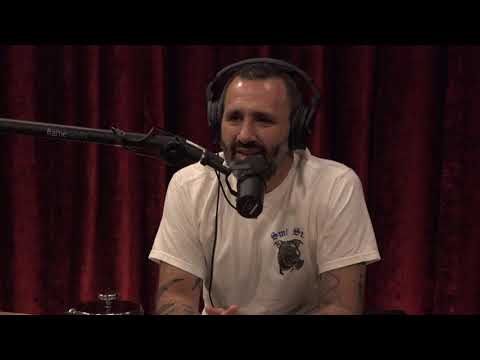
Joe Rogan Experience #1664 - Josh Dubin
Narrator, Joe Rogan (host), Narrator, Narrator, Josh Dubin (guest), Narrator, Narrator, Narrator, Narrator
In this episode of The Joe Rogan Experience, featuring Narrator and Joe Rogan, Joe Rogan Experience #1664 - Josh Dubin explores from Knockouts to Justice: Boxing, Bias, and Broken Courtrooms Exposed Joe Rogan and Josh Dubin open with light talk about golf and quickly dive deep into combat sports, breaking down legendary boxers and MMA fighters, power, technique, and how media and fans treat fighters. They draw a sharp contrast between criticizing athletes in games like golf versus fighters who literally risk their health, arguing fighters deserve a fundamentally different level of respect.
From Knockouts to Justice: Boxing, Bias, and Broken Courtrooms Exposed
Joe Rogan and Josh Dubin open with light talk about golf and quickly dive deep into combat sports, breaking down legendary boxers and MMA fighters, power, technique, and how media and fans treat fighters. They draw a sharp contrast between criticizing athletes in games like golf versus fighters who literally risk their health, arguing fighters deserve a fundamentally different level of respect.
The conversation then pivots into the economics and spectacle of modern boxing, including celebrity exhibitions (Logan/Jake Paul, Mayweather, Tyson, Klitschko), and how promotion, showmanship, and public emotion drive pay-per-view success more than pure skill. They examine the ethics of matchups, risk, and the culture of shit-talking versus martial arts values.
In the second half, Dubin shifts to his real life’s work: wrongful convictions, prosecutorial misconduct, junk forensic science, police lying in interrogations, and the disproportionate impact on people of color. He details specific exoneration cases, how he leverages relationships (including with Trump-connected billionaire Ike Perlmutter) to obtain clemency, and how bias and the win–lose mentality warp the justice system.
They close by arguing that changing minds requires human stories, cross‑tribal conversations, and persistent public pressure, and agree to use the podcast regularly to spotlight cases and reforms, emphasizing that anyone could be wrongly accused and that silence makes the public complicit.
Key Takeaways
Fighting isn’t just another sport; public criticism should reflect the risk.
Rogan and Dubin argue that calling a fighter a “bum” the way fans talk about golfers or baseball players is morally off, because fighters are literally risking their long‑term health each time they compete and deserve a different baseline of respect.
Get the full analysis with uListen AI
Showmanship and narrative often outweigh pure skill in combat sports economics.
Exhibitions like Mayweather vs. ...
Get the full analysis with uListen AI
Natural power plus efficiency is what makes elite punchers terrifying.
They break down fighters like Deontay Wilder, Canelo Álvarez, Golovkin, and Foreman, emphasizing that true knockout artists combine innate power with technical efficiency, ring IQ, and the ability to deliver that power late into fights.
Get the full analysis with uListen AI
Police and forensic ‘gold standards’ are far less reliable than people think.
Dubin describes fingerprint examiners fabricating matches, cops planting or steering evidence, and the heavy use of deceptive interrogation tactics, arguing that eyewitness IDs and prints—treated as near‑infallible in court and on TV—are actually deeply error‑prone.
Get the full analysis with uListen AI
The justice system’s win–lose culture feeds wrongful convictions.
Prosecutors and some forensic experts often treat cases like a scoreboard, seeking convictions and perfect records instead of truth; this mindset incentivizes cutting corners, ignoring exculpatory evidence, and resisting correction even when mistakes emerge.
Get the full analysis with uListen AI
Systemic racism and history shape who gets targeted and forgotten.
Dubin links high rates of wrongful convictions among Black defendants, aggressive drug sentencing, and selective policing of undocumented immigrants to the legacy of slavery and segregation, arguing it’s naïve to tell marginalized communities to just ‘pull themselves up.’
Get the full analysis with uListen AI
Cross-ideological alliances can unlock real criminal justice wins.
By building trust with conservative billionaire Ike Perlmutter and even lobbying the Trump White House, Dubin helped secure clemency for Jawad Musa, illustrating that working with people you politically disagree with can free lives and seed lasting reform projects.
Get the full analysis with uListen AI
Notable Quotes
“I will never, ever, ever—even in private conversation—be like, ‘He sucks.’ They’re the… they’re fucking great.”
— Josh Dubin (on fighters)
“In the world of combat sports and professional prizefighting, it’s all about how many eyes are gonna watch you.”
— Joe Rogan
“Our justice system said, ‘Let’s accelerate the forgetting-about-you process.’”
— Josh Dubin (on harsh drug sentencing)
“We are the aftershock generations of slavery. That should not be controversial to me.”
— Josh Dubin
“We’re complicit by our silence and our inactivity.”
— Josh Dubin
Questions Answered in This Episode
How should fans, commentators, and media ethically critique fighters’ performances without dehumanizing people who are risking their lives?
Joe Rogan and Josh Dubin open with light talk about golf and quickly dive deep into combat sports, breaking down legendary boxers and MMA fighters, power, technique, and how media and fans treat fighters. ...
Get the full analysis with uListen AI
Where should athletic commissions and promoters draw the line between entertaining ‘freak show’ exhibitions and dangerous mismatches driven only by money?
The conversation then pivots into the economics and spectacle of modern boxing, including celebrity exhibitions (Logan/Jake Paul, Mayweather, Tyson, Klitschko), and how promotion, showmanship, and public emotion drive pay-per-view success more than pure skill. ...
Get the full analysis with uListen AI
What specific reforms—on interrogations, forensic standards, and prosecutorial incentives—would most immediately reduce wrongful convictions?
In the second half, Dubin shifts to his real life’s work: wrongful convictions, prosecutorial misconduct, junk forensic science, police lying in interrogations, and the disproportionate impact on people of color. ...
Get the full analysis with uListen AI
How can everyday people practically contribute to criminal justice reform or individual exoneration cases beyond just sharing stories online?
They close by arguing that changing minds requires human stories, cross‑tribal conversations, and persistent public pressure, and agree to use the podcast regularly to spotlight cases and reforms, emphasizing that anyone could be wrongly accused and that silence makes the public complicit.
Get the full analysis with uListen AI
What would a truly fair jury selection process look like if we took bias and life experience seriously instead of pretending everyone can just ‘set it aside’?
Get the full analysis with uListen AI
Transcript Preview
(drumming) Joe Rogan podcast, check it out. The Joe Rogan Experience.
Train by day, Joe Rogan podcast by night, all day. (rock music) Joshua, good to see you.
Good to see you, my bro.
(laughs) What's happenin'?
I'm, uh, I'm just in awe. I love the, the new digs, man. I'm-
Thank you.
... super happy for you, congratulation-
It's come together when, if you were here six months ago, it looked pretty shitty.
Yeah.
But, uh, Matt Alvarez has kicked some ass. So let's, let's continue this conversation-
Oh, okay.
... 'cause you, you are, you guys were just talking about golf.
Mm-hmm.
And you were talking about how you don't want to hate golf, but you enjoy it.
Yeah, 'cause everybody, it's like an inevitability, which happens, it's happened the one or two times I've played this year, if I hole 12 out of 18, you're like, "I wanna get the fuck outta here. I suck."
(laughs) Oh.
"I'm tired of sucking."
That's what it is.
Let's end this suck.
Have you hired someone to coach you?
No, no, no, no, I don't wanna get that far yet. That's like, I feel like you're too, you're, you can't come back.
But wouldn't that-
Yeah.
I would imagine that it's like anything else, like if you don't get a coach, then you learn bad habits, and those are hard to break.
Yes, but I am breaking bad habits I had started with from, like, my whole life of everyone trying to say, like in the four or five times you play, "You're doing this wrong. Keep your head down. We'll watch the ball for you." All that kinda shit.
Oh.
I just started swinging the, swinging the club however I wanted to, and the ball was going straight and far. And I was like, "That's the goal of golf, right?" Straight, far. Or at least you know where-
Do you-
... at least you know it's going.
They were all talking shit about you the other day at barbecue.
I'm sure.
They were like, "Jamie just whacks the ball as far as he can." (laughs)
That's what To- that's what Tony says.
That's exactly what Tony was saying.
Of course, 'cause Tony saw me play golf once, and he can't hit it as far as me.
Oh, so it's envy.
A little.
And you were saying that you don't like it, Josh. You don't...
I don't know if it's driven by me sucking-
(laughs)
... or if it's that the culture and what, what, what's in my mind about what the culture of golf is, is like-
Right.
... you know, people all tucked up in whites.
Yeah.
Right? And, and then, or the few times where I've played and felt pressure from people that were behind me to move it the fuck along. I don't know what it is. I have a-
Install uListen to search the full transcript and get AI-powered insights
Get Full TranscriptGet more from every podcast
AI summaries, searchable transcripts, and fact-checking. Free forever.
Add to Chrome