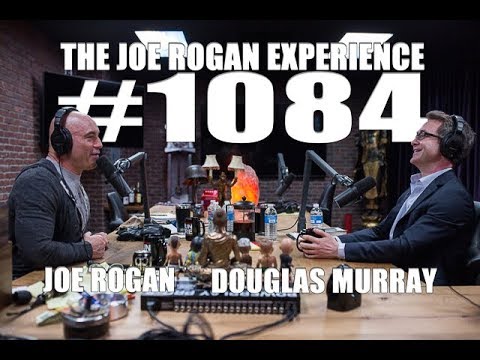
Joe Rogan Experience #1084 - Douglas Murray
Joe Rogan (host), Douglas Murray (guest)
In this episode of The Joe Rogan Experience, featuring Joe Rogan and Douglas Murray, Joe Rogan Experience #1084 - Douglas Murray explores douglas Murray and Joe Rogan Dissect Censorship, Religion, and Outrage Culture Joe Rogan and Douglas Murray explore how tech platforms and cultural gatekeepers are narrowing permissible speech by labeling heterodox ideas as 'hate speech' or 'troublemaking.'
Douglas Murray and Joe Rogan Dissect Censorship, Religion, and Outrage Culture
Joe Rogan and Douglas Murray explore how tech platforms and cultural gatekeepers are narrowing permissible speech by labeling heterodox ideas as 'hate speech' or 'troublemaking.'
They argue this overuse of moral labels erodes trust, empowers genuine extremists, and creates a climate of fear where people self-censor rather than discuss hard topics—especially around Islam, gender, and identity.
The conversation ranges through historic free speech battles, religious taboos, online mobbing, and social media addiction, drawing parallels between past censorship and current progressive orthodoxy.
Both suggest that mockery, honesty, and a renewed commitment to truth over tribal victory are essential if society is to navigate outrage culture, terrorism, and deep political polarization.
Key Takeaways
Overusing ‘hate speech’ dilutes the term and weakens defenses against real extremism.
Labeling nuanced discussions by people like Sam Harris, Douglas Murray, or Jordan Peterson as hate speech makes the public cynical; when genuine incitement appears, many will ignore warnings because they’ve heard the accusation misused too often.
Get the full analysis with uListen AI
Cultural and corporate echo chambers are shrinking the space for honest disagreement.
Rogan and Murray describe tech and media environments where progressive assumptions dominate; dissent is quickly pathologized as racist, sexist, or phobic, which discourages ordinary people from speaking up and distorts public debate.
Get the full analysis with uListen AI
History shows censorship doesn’t deliver utopia and often backfires.
They reference past struggles over the printing press, John Stuart Mill, Milton, the Rushdie fatwa, and Charlie Hebdo to argue that attempts to police speech for ‘the greater good’ typically empower fanatics and produce worse long‑term outcomes.
Get the full analysis with uListen AI
Self-censorship around Islam and blasphemy has ‘internalized the fatwa’ in Western culture.
Journalists and broadcasters routinely avoid hard truths or even basic facts about Islamic texts and militant movements because they fear violent retaliation or professional ruin, creating an uneven standard compared to criticism of other religions.
Get the full analysis with uListen AI
Online mob dynamics reward moral grandstanding and destroy nuance.
They describe people living for pile‑ons, retweets, and ‘flaming’ opponents, often ruining reputations over old jokes or misread headlines, while never taking time to understand full contexts or allow for growth, forgiveness, or complexity.
Get the full analysis with uListen AI
A new quasi‑religious moral system is emerging around identity and purity.
Murray suggests that, as traditional religion recedes and economic prospects dim for younger generations, some adopt rigid progressive rules on race, gender, and sexuality as substitute commandments—enforced with the zeal of true belief.
Get the full analysis with uListen AI
Complex problems like terrorism and school shootings require multi‑factor honesty, not tribal talking points.
They argue that guns, mental health, psych meds, media coverage, and ideological motives all matter; insisting on a single cause (like only guns or only ideology) is intellectually dishonest and prevents effective solutions.
Get the full analysis with uListen AI
Notable Quotes
“If Sam Harris and Douglas Murray having a conversation is hate speech, then words don’t matter anymore.”
— Douglas Murray
“You don’t want actual racists and Nazis to have legitimate grievance claims.”
— Joe Rogan
“It’s a sort of dystopian nightmare that you’d always be stuck with your worst joke.”
— Douglas Murray
“We don’t have anyone that we might mutually agree on as some kind of umpire.”
— Douglas Murray
“History was always progressed by jolly fellows heaving dead cats into sanctuaries.”
— Douglas Murray (quoting H.L. Mencken)
Questions Answered in This Episode
How can platforms like YouTube and Twitter distinguish between genuinely harmful speech and merely controversial ideas without political bias?
Joe Rogan and Douglas Murray explore how tech platforms and cultural gatekeepers are narrowing permissible speech by labeling heterodox ideas as 'hate speech' or 'troublemaking.'
Get the full analysis with uListen AI
What practical mechanisms could societies adopt to reintroduce forgiveness and proportionality into online culture?
They argue this overuse of moral labels erodes trust, empowers genuine extremists, and creates a climate of fear where people self-censor rather than discuss hard topics—especially around Islam, gender, and identity.
Get the full analysis with uListen AI
Where should Western media draw the line between responsible reporting on sensitive topics (like Islam or immigration) and the risk of inciting backlash or copycat violence?
The conversation ranges through historic free speech battles, religious taboos, online mobbing, and social media addiction, drawing parallels between past censorship and current progressive orthodoxy.
Get the full analysis with uListen AI
Are current social-justice norms filling a psychological gap left by declining traditional religion, and if so, how might we prevent them from becoming dogmatic?
Both suggest that mockery, honesty, and a renewed commitment to truth over tribal victory are essential if society is to navigate outrage culture, terrorism, and deep political polarization.
Get the full analysis with uListen AI
What would a serious, non-ideological approach to preventing mass shootings and terrorist attacks look like, across guns, mental health, ideology, and media behavior?
Get the full analysis with uListen AI
Transcript Preview
Keep this about a fist away.
Okay.
(clears throat) And we're live. Douglas, first of all, thanks for joining me. Appreciate it.
Great pleasure to be with you.
Looking forward to talking to you.
Likewise.
You've become, uh, an example to me ... or your conversation with Sam Harris has become an example to me of how squirrelly things have gotten lately with the way people interpret conversations about ideas.
Right.
Because of this. Jamie, pull that thing up. This is, uh, a tweet that someone sent out, and he got a strike, a community guideline strike-
(laughs)
... just for listening, just for putting you on his playlist, a conversation between Sam Harris and you, and, uh-
Yeah.
... he, this man, um ... or I don't know if it's a man. I'm b- I'm, uh ... I just assumed. I'm, I'm a problem. I'm part of the problem, part of the patriarchy. P-T-R-K-C-C-X on Twitter. Uh, that is his screen name, his, or her, or zir screen name on Twitter. And got a community guideline strike-
Right.
... for just putting this. Now I brought this up to ... uh, I was having dinner with some friends, one of them who used to work at Google, and someone who was there was a, uh, you know, highly ranked person at YouTube. I brought this up. And the exact quote was, uh, "That was because it's hate speech."
Right.
And I said, "You said that so flippantly." I go, "Please tell me the contents of the conversation." Do you know what they talked about?" I go, "How did you say that?" She goes, "Well, I'm sure if someone m- marked it as a community guideline ..."
Right.
"That ... Or, or as a c- strike, a community strike ..." What is it called? A community guideline strike? Yeah. "That they must be hate speech."
Right.
I'm like, "Do you, do you understand this is Douglas Murray and Sam Harris?"
Right.
"I, I, I bet, I bet that's not what the conversation was about."
(laughs) I, I, I bet it wasn't too.
S-
I'm try- I'm trying to think what we did talk about now. It's making me nervous. I mean, but I know that ... I know it definitely wasn't hate speech, by any sane definition of those words. Um, but th- the, you ... this is, this sorta thing is very disturbing to me-
Very disturbing.
... because, um, you ... and you noticed it happening with other people, of course.
Yes.
And that's disturbing enough. It's more disturbing, of course, when it happens to you, but slightly surreal. Uh, uh, I mean, I know Sam Harris a bit. Um, not a hateful person, uh, uh, my most sorta yogic, calm, blissed-out, West Coast of America friend. And I'm, um, pretty amazed that anyone at Google or anyone else would think that anything that could come out of his mouth was hate streetch- uh, hate speech, unless you decided that hate speech is just anything you personally don't like or that words don't matter anymore.
Install uListen to search the full transcript and get AI-powered insights
Get Full TranscriptGet more from every podcast
AI summaries, searchable transcripts, and fact-checking. Free forever.
Add to Chrome