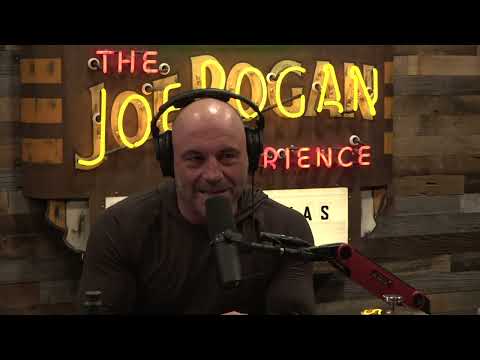
Joe Rogan Experience #1831 - Colion Noir
Narrator, Narrator, Joe Rogan (host), Colion Noir (guest), Narrator, Guest (guest), Narrator, Narrator, Guest (guest), Narrator
In this episode of The Joe Rogan Experience, featuring Narrator and Narrator, Joe Rogan Experience #1831 - Colion Noir explores joe Rogan, Colion Noir dissect mass shootings, guns, and control Joe Rogan and Colion Noir use the Uvalde school shooting as a starting point to examine U.S. gun violence, police response failures, and the limits of gun control laws. Noir, as a gun‑rights advocate and lawyer, argues that most proposed restrictions ignore underlying issues like mental health, inner‑city poverty, and the reality of delayed or insufficient law‑enforcement response. They break down data on gun deaths, the role of suicides and gang violence, and how statistics and definitions (e.g., 'mass shooting') are framed in media and politics. The conversation also critiques political leaders’ attitudes toward civilian gun ownership, contrasts U.S. rights with countries like Canada and Australia, and emphasizes individual responsibility and hardening targets like schools over broad bans.
Joe Rogan, Colion Noir dissect mass shootings, guns, and control
Joe Rogan and Colion Noir use the Uvalde school shooting as a starting point to examine U.S. gun violence, police response failures, and the limits of gun control laws. Noir, as a gun‑rights advocate and lawyer, argues that most proposed restrictions ignore underlying issues like mental health, inner‑city poverty, and the reality of delayed or insufficient law‑enforcement response. They break down data on gun deaths, the role of suicides and gang violence, and how statistics and definitions (e.g., 'mass shooting') are framed in media and politics. The conversation also critiques political leaders’ attitudes toward civilian gun ownership, contrasts U.S. rights with countries like Canada and Australia, and emphasizes individual responsibility and hardening targets like schools over broad bans.
Key Takeaways
Background checks exist but don’t catch first‑time offenders with clean records.
Most mass shooters pass existing background checks because they lack disqualifying criminal or mental‑health records; adding more checks without addressing how records are created or shared does little to stop them.
Get the full analysis with uListen AI
Gun death statistics are often presented in ways that obscure causes and contexts.
Noir notes roughly two‑thirds of U. ...
Get the full analysis with uListen AI
Relying solely on police for protection is unrealistic in critical moments.
Using Uvalde and earlier cases, they argue officers can be late, constrained, or even unwilling to act; in the seconds that matter, only people on scene—armed civilians or staff—are positioned to intervene.
Get the full analysis with uListen AI
Hardening schools and improving security protocols offer immediate, concrete risk reduction.
Simple measures like consistently locked classroom doors, controlled entry points, reinforced doors, and trained, willing defenders on campus can significantly raise the bar for would‑be attackers regardless of weapon type.
Get the full analysis with uListen AI
Media saturation and shooter glorification likely increase copycat attacks.
They cite research suggesting that focusing less on the killer’s identity and backstory and more on victims and facts could reduce mass shootings, as many attackers seek notoriety and study prior shooters.
Get the full analysis with uListen AI
Poverty and the illegal drug economy drive much of America’s “gun violence.”
Inner‑city shootings are largely tied to entrenched poverty, gangs, and illicit markets; treating them purely as a “gun” issue sidesteps the harder work of economic, social, and criminal‑justice reform.
Get the full analysis with uListen AI
Broad bans and national registries create civil‑liberty risks without clear benefits.
Noir warns that universal registries and progressive bans (starting with AR‑15s, then handguns) empower governments that already show hostility to civilian arms, and historically such registries have been used to facilitate confiscation, not crime reduction.
Get the full analysis with uListen AI
Notable Quotes
“When seconds count, help is only a minute away.”
— Colion Noir
“We have over 400 million guns in this country, man. You’re not getting away from the guns.”
— Colion Noir
“The Second Amendment wasn’t written for hunting or sport shooting. It was written so the people had a means to check a potential tyrannical government.”
— Colion Noir
“How are you sending $40 billion to Ukraine and you’re not spending any money protecting schools?”
— Joe Rogan
“The only person responsible for your safety is you. The cops, the government—that’s supplemental.”
— Colion Noir
Questions Answered in This Episode
If additional background checks can’t reliably stop first‑time mass shooters, what specific reforms—if any—could meaningfully reduce their access to weapons without creating broad registries?
Joe Rogan and Colion Noir use the Uvalde school shooting as a starting point to examine U. ...
Get the full analysis with uListen AI
How should media ethically cover mass shootings to inform the public without incentivizing copycats or glorifying perpetrators?
Get the full analysis with uListen AI
What would a serious, long‑term national strategy to reduce inner‑city gun violence and poverty actually look like in practice?
Get the full analysis with uListen AI
How far should school security measures go before they begin to negatively impact the learning environment or students’ sense of normalcy?
Get the full analysis with uListen AI
Where should the line be drawn between mental‑health interventions and civil‑rights protections when considering whether someone should lose access to firearms?
Get the full analysis with uListen AI
Transcript Preview
(drumming music plays) Joe Rogan podcast. Check it out.
The Joe Rogan Experience.
Train by day, Joe Rogan podcast by night. All day. (rock music plays) Oh, salute, my friend. Good to see you.
Good.
Always good to see you. Mm. I wish I didn't see you so often after mass shootings, though.
Yeah.
'Cause it seems like so many times when there's a, uh, gun control ... Well, you're the first guy I always call.
Mm-hmm.
Because, uh, I think you're the very best at, um, explaining gun issues from, first of all, from a Second Amendment perspective, from an enthusiast perspective, and also you're a lawyer.
Yeah.
So you, (sighs) you understand, like, the law aspect of it better than, uh, anybody that I know. So I always wanna talk to you when some shit is going down. But the, um, the current mass shooting, the, the most recent one-
Mm-hmm. Uvalde.
... was... Y- it's like, it, there's so many of 'em that it, it gets to a point where you, you go, (sighs) like, y- people almost just go numb. Like, they don't know what to do.
Yeah.
And then there's a lot of s- scrambling and, and crying out for legislation.
Legislation, yeah. Yeah.
Yeah.
I think it's, it's ... You know, one, no one can deny, our media does a beautiful job memorializing everything about every mass shooting in terms of the killer, what we know about him. You know, we ... Th- for the most part, almost sensationalizing it. And so, there is something to be said that, you know, (laughs) someone walking into a school, somebody walking into a building where you don't expect it and shooting a bunch of people deserves that type of attention. I'm not, I'm not gonna be so naive as to say that, you know, I don't get why anybody ever ... why they cover it so much. But there is a admitted l- sense of helplessness when these things happen-
Yeah.
... where it's like, "Okay, so what do we do? What can we do?" Um, I think the, the scapegoat route is gun control, because I think what it does is it tells ... It, it gives us that, the immediate gratification of, "All right, we did something. We passed this. All right, uh, now let, let's move on and hope it never happens again." The problem is, though, it never touches the underlying issues about why people would do this. Like, this is weird. It's fucking odd. It's not normal for people who wanna go out and just kill as many people as possible.
And not just that, just kill children.
Y- that's even ... That, and that takes it to a whole new level, right?
Yeah. And this, this guy, uh, I mean, obviously there was something really wrong with him. You're, uh, figured out-
Install uListen to search the full transcript and get AI-powered insights
Get Full TranscriptGet more from every podcast
AI summaries, searchable transcripts, and fact-checking. Free forever.
Add to Chrome