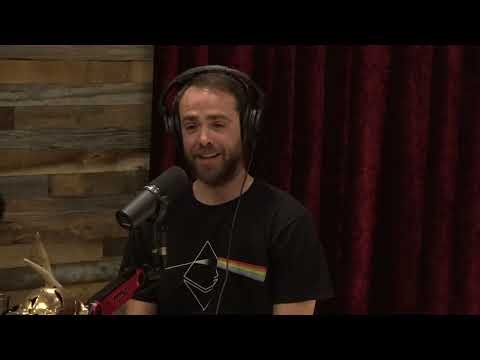
Joe Rogan Experience #1792 - Daryl Davis & Bill Ottman
Narrator, Joe Rogan (host), Daryl Davis (guest), Bill Ottman (guest), Guest (brief interjection) (guest)
In this episode of The Joe Rogan Experience, featuring Narrator and Joe Rogan, Joe Rogan Experience #1792 - Daryl Davis & Bill Ottman explores can Open Social Media and Dialogue Really De-Radicalize Extremists Online? Joe Rogan speaks with Daryl Davis and Minds.com CEO Bill Ottman about free speech, online censorship, and how to reduce extremism without banning people.
Can Open Social Media and Dialogue Really De-Radicalize Extremists Online?
Joe Rogan speaks with Daryl Davis and Minds.com CEO Bill Ottman about free speech, online censorship, and how to reduce extremism without banning people.
Ottman argues that open-source, privacy-focused, and decentralized platforms like Minds can be healthier alternatives to big tech’s opaque algorithms and aggressive moderation.
Daryl Davis explains his method of patiently engaging with Ku Klux Klan members and other extremists, showing how respectful dialogue and alternative perspectives can lead hundreds to abandon hate groups.
They also explore the unintended radicalizing effects of deplatforming, the role of big tech ideology, digital privacy concerns, and how future tools could crowdsource moderation and credibility.
Key Takeaways
Deplatforming often hardens beliefs and can increase radicalization.
Ottman and Davis reference empirical research, including their paper “The Censorship Effect,” showing that banning users tends to increase their certainty in extreme beliefs and drive them into more insular, radical echo chambers.
Get the full analysis with uListen AI
Open-source code and transparent algorithms are essential for trustworthy platforms.
Ottman argues that any ‘alternative’ social network that doesn’t publish its source code and algorithms can’t be trusted on free speech claims because users can’t verify whether shadow banning, spyware, or hidden manipulation is occurring.
Get the full analysis with uListen AI
Free speech plus more *good* information works better than suppression.
Daryl Davis maintains that bad ideas should be countered with better ideas and accurate information, not silence; suppressing people only sends them to more extreme spaces where they’re never challenged productively.
Get the full analysis with uListen AI
Respectful, long-term dialogue can genuinely de-radicalize extremists.
Davis explains that he’s helped over 200 KKK members and neo-Nazis leave extremism by listening first, not attacking their ‘reality,’ and then offering better alternative perceptions that allow them to change their own minds.
Get the full analysis with uListen AI
Big tech’s moderation is shaped by internal ideology and virtue signaling.
They discuss how top executives feel pressure to appear ‘responsible’ and ‘woke,’ leading to overbroad definitions of harm that can include dissenting views on politics, pharma, or COVID, while ignoring data showing censorship backfires.
Get the full analysis with uListen AI
Users need tools to control what they see, not blanket paternalism.
Minds lets users filter content (e. ...
Get the full analysis with uListen AI
Digital rights require both speech freedom and tech privacy reform.
Beyond speech, they highlight how mainstream apps aggressively harvest contacts, location, and behavior; open-source phones, de-Googled Android, and decentralized messengers (e. ...
Get the full analysis with uListen AI
Notable Quotes
“A missed opportunity for dialogue is a missed opportunity for conflict resolution.”
— Daryl Davis
“You cannot change someone’s mind if you do not platform them.”
— Joe Rogan
“Any app, if they’re claiming to be an alternative and they’re not open source, they should not be taken seriously.”
— Bill Ottman
“What can be learned can be unlearned.”
— Daryl Davis
“They think their lawyers are better at drafting healthy conversation than the First Amendment, and that’s just not true.”
— Bill Ottman
Questions Answered in This Episode
If deplatforming tends to increase radicalization, what would an evidence-based, large-scale alternative moderation model actually look like on Twitter or Facebook?
Joe Rogan speaks with Daryl Davis and Minds. ...
Get the full analysis with uListen AI
How can platforms practically distinguish between harmful disinformation campaigns and merely unpopular or dissenting opinions without sliding into ideological censorship?
Ottman argues that open-source, privacy-focused, and decentralized platforms like Minds can be healthier alternatives to big tech’s opaque algorithms and aggressive moderation.
Get the full analysis with uListen AI
What are the real-world limits of Daryl Davis’s dialogue approach—are there groups or individuals for whom it simply doesn’t work, and why?
Daryl Davis explains his method of patiently engaging with Ku Klux Klan members and other extremists, showing how respectful dialogue and alternative perspectives can lead hundreds to abandon hate groups.
Get the full analysis with uListen AI
How much personal convenience are we collectively willing to sacrifice for genuine digital privacy and open, non-manipulative platforms?
They also explore the unintended radicalizing effects of deplatforming, the role of big tech ideology, digital privacy concerns, and how future tools could crowdsource moderation and credibility.
Get the full analysis with uListen AI
Could a decentralized, reputation-based identity system truly help reduce trolling and bad-faith behavior without creating new risks of surveillance and social credit scoring?
Get the full analysis with uListen AI
Transcript Preview
(drumbeats) Joe Rogan podcast, check it out. The Joe Rogan Experience. Train by day, Joe Rogan podcast by night! All day. (instrumental music plays) And we're up.
Gentlemen, what's happening? Good to see you.
Hey, you're happening, man. Good to see you again.
Good to see you.
Thank you for having me back.
You have a beautiful purple shirt, I love it.
Uh, thanks for having us.
And, um, thank you. And Bill, tell... So, first of all, tell me what's going on with Minds. Minds is one of the first, that I was aware of, like alternative social media networks that was committed to free speech.
Yep.
What, how- how's it going?
It's going. I mean, there's sort of a whole landscape of alternative networks emerging. And so you've got this spectrum of apps where you've s-... Like, I think of... I put everything through a litmus test when I'm thinking of an alternative network. Basically, is it transparent? Does it publish their source code? Most of these alternative apps, I don't need to name names, but I could, they're, they don't publish their source code, so you can't look at the algorithms to see what's happening. You can't see if there's spyware in there, if they have Google Analytics little nasty-
Right.
... stuff that's, that-
So you're talking about Gettr.
Gettr.
Yeah.
Um...
Uh, 'cause I found out that, like-
Parler, Rumble and now, and now, I'm not-
All of them?
I'm not trying to trash these people. I think that the free speech stuff is good, like the more... But some of their terms aren't even free speech. So, you know, free speech policy is essential. So I absolutely respect any network that is putting forward a free speech policy. But if, you can't have free speech policy with sketchy algorithms-
Mm-hmm.
... and closed source code, because then we don't know if you're soft, uh, censoring, shadow banning. We don't know what's happening in the news feed behind the scenes.
Right. Which we definitely know Facebook does, Instagram does, Twitter does, that's all real.
Right. So then you've got, are they privacy focused? End-to-end encrypted? Do they have access to the content of your messages?
Mm.
Um, like, so we use a end-to-end encrypted messenger protocol called Matrix, so that we don't even have access to people's conversations. Like, I don't want access.
Right.
And then you've also got, um, you know, do they pay creators fairly? So you've got these check marks that you go through with e-... But open source is key. The future, there is nothing without open source. Any app, if they're claiming to be an alternative and they're not open source, they're not in the same conversation. It's a completely different animal, and they should not be taken seriously, because they're not being transparent with the world. So, and then you get into decentralization and actually building an app that... So, Google says, "Don't be evil." But it's really, "Can't be evil." Make it, we wanna make it impossible for us to even take down our network at all, and that's why the, like immutable distributed systems, like blockchains and, uh, you know, Tor and all of the... IPFS, all of these different decentralized systems are emerging, and we're inter- we're interacting with them. We're not fully decentralized yet, so... But that's, there- there's like a progression that a lot of apps in the Web3/decentralized web space are moving towards. So... (laughs)
Install uListen to search the full transcript and get AI-powered insights
Get Full TranscriptGet more from every podcast
AI summaries, searchable transcripts, and fact-checking. Free forever.
Add to Chrome