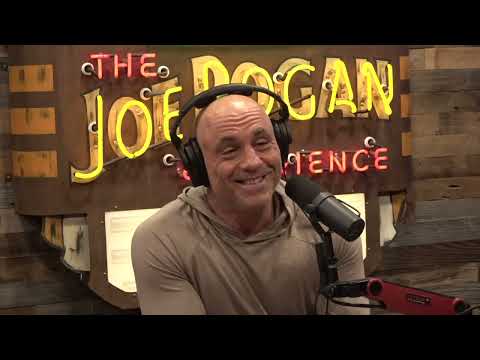
Joe Rogan Experience #2110 - Fahim Anwar
Narrator, Joe Rogan (host), Fahim Anwar (guest), Guest (guest), Guest (guest), Guest (guest), Narrator, Narrator
In this episode of The Joe Rogan Experience, featuring Narrator and Joe Rogan, Joe Rogan Experience #2110 - Fahim Anwar explores from Mothership Magic to Toxoplasmosis: Comedy, Tech, and Control Joe Rogan and comedian Fahim Anwar spend a long, free‑wheeling conversation bouncing between stand‑up comedy, the design and culture of Rogan’s Austin club The Comedy Mothership, and how social media and technology are reshaping careers and attention.
From Mothership Magic to Toxoplasmosis: Comedy, Tech, and Control
Joe Rogan and comedian Fahim Anwar spend a long, free‑wheeling conversation bouncing between stand‑up comedy, the design and culture of Rogan’s Austin club The Comedy Mothership, and how social media and technology are reshaping careers and attention.
They dig into platform power and censorship—like Fahim’s Instagram shadow ban over a Hamas joke—alongside discussions of parasitic brain infections (toxoplasmosis), gain‑of‑function research, and the strange incentives of modern media ecosystems.
A big throughline is process and evolution: how comics write, build rooms, self‑release specials, and adapt to clips and podcasts instead of chasing legacy TV, while trying to stay sane amid phones, algorithms, and fame‑chasing.
The episode ends grounded in mortality and responsibility, with a reflection on Oppenheimer’s “I am become Death” quote, contrasting human technological power with the personal duty to use it wisely.
Key Takeaways
Modern comedy clubs are being purpose‑built by comics for comics—and it changes everything.
Rogan describes The Comedy Mothership’s layout, AV, lighting, and even ceiling height as products of direct comedian input (Tony Hinchcliffe, Louis C. ...
Get the full analysis with uListen AI
Clips and platforms have replaced TV as the primary discovery engine for stand‑ups.
Fahim explains that most people find him via 30–60 second reels, not full hours; he structures his process (show formats, editing, captions) around feeding algorithms rather than chasing Comedy Central half‑hours or late‑night sets, which used to be the coveted benchmarks.
Get the full analysis with uListen AI
Platform moderation is blunt and can quietly throttle careers.
Anwar’s account was shadow‑banned on Instagram because a joke clip included the word “Hamas” in the caption/thumbnail; machines flagged it without context, limiting his reach to non‑followers until his agency and personal contacts at Meta intervened—something most comics don’t have.
Get the full analysis with uListen AI
Parasites and biology can subtly alter behavior on a massive scale.
Rogan outlines toxoplasmosis—spread by cats—as a parasite that rewires rats to be sexually attracted to cat urine, likely making humans more reckless too; studies link toxo positivity with higher motorcycle accident rates and even significant percentages of national populations.
Get the full analysis with uListen AI
The “old blueprint” for making it in comedy is largely gone.
Things like JFL, SNL, network half‑hours, and sitcoms once defined success; now younger comics see “go viral,” “strong podcast,” or “self‑released YouTube special” as the main paths, with audiences caring less about platform brand and more about whether something is simply good.
Get the full analysis with uListen AI
You can—and sometimes must—engineer your own career closure moments.
Prompted by a prior Rogan episode, Fahim deliberately created a “healing” milestone by getting booked on The Tonight Show, flying his Afghan parents out, and giving them a triumphant experience to overwrite the trauma of seeing him booed at the Apollo at 18.
Get the full analysis with uListen AI
Tech promises power and convenience, but also loss of control.
They discuss Apple Vision Pro, DMT‑like Neuralink futures, and always‑on phones as double‑edged: tools that can enhance creativity, mobility, and even restore movement to paralyzed people, but also devices that hijack attention, enable censorship, or open doors to hacking and unintended consequences—akin to gain‑of‑function or nuclear innovation.
Get the full analysis with uListen AI
Notable Quotes
“Make less money, have a good time. Make more money, have a bad time, not fun.”
— Joe Rogan
“The hour-long special is kind of for jazz heads.”
— Fahim Anwar
“I love when people love things. It doesn't even have to be something that I love.”
— Joe Rogan
“Access is the new mystery in entertainment.”
— Fahim Anwar
“Now I am become Death, the destroyer of worlds. I suppose we all thought that one way or another.”
— J. Robert Oppenheimer (clip played by Joe Rogan)
Questions Answered in This Episode
How much creative control should comedians and other creators realistically expect from platforms that serve billions of users and algorithmically moderate content?
Joe Rogan and comedian Fahim Anwar spend a long, free‑wheeling conversation bouncing between stand‑up comedy, the design and culture of Rogan’s Austin club The Comedy Mothership, and how social media and technology are reshaping careers and attention.
Get the full analysis with uListen AI
In a world where short clips drive discovery, how can long-form crafts like stand-up or deep interviews preserve depth without getting flattened by the scroll?
They dig into platform power and censorship—like Fahim’s Instagram shadow ban over a Hamas joke—alongside discussions of parasitic brain infections (toxoplasmosis), gain‑of‑function research, and the strange incentives of modern media ecosystems.
Get the full analysis with uListen AI
To what extent should we be comfortable adopting implants or immersive tech (Neuralink, Apple Vision Pro) when the long-term psychological and security implications are unknown?
A big throughline is process and evolution: how comics write, build rooms, self‑release specials, and adapt to clips and podcasts instead of chasing legacy TV, while trying to stay sane amid phones, algorithms, and fame‑chasing.
Get the full analysis with uListen AI
If parasites like toxoplasmosis can subtly influence human behavior at scale, how should that change our assumptions about free will, risk-taking, and public health?
The episode ends grounded in mortality and responsibility, with a reflection on Oppenheimer’s “I am become Death” quote, contrasting human technological power with the personal duty to use it wisely.
Get the full analysis with uListen AI
Is it ultimately better for an art form when corporate gatekeepers lose power to messy, decentralized systems of podcasts, YouTube, and social media—or does that just create a different kind of vulnerability?
Get the full analysis with uListen AI
Transcript Preview
(drum roll) Joe Rogan podcast. Check it out. The Joe Rogan Experience.
Train by day, Joe Rogan podcast by night. All day. (instrumental music) My man.
How are you?
Good to see you, brother. What's cracking?
Good to be back. Thank you for having me.
I miss you.
I miss you too.
I used to get to see you every week.
I thought about that the other day, like, yeah.
Yeah, it's like that's-
You forget that, that, that's like a period of time, and it's not gonna be forever sometimes, you know?
Yeah. Well, y- it almost was. You were the f- one of the first people to take the trip out here.
I was. It was clear as day when I first came out. I'm like, "Why wouldn't you be out here?"
Yeah.
'Cause I remember I had this writing job, right? And so I was just like on Zoom every day, and life kinda sucked 'cause you couldn't go out. So I was just trapped in my house.
Right.
And then in between a lunch break, I'm on Instagram, and I see Tony, you know, Tony Hinchcliffe's post. He's ... This is like in the infancy of him, him coming out here, you know?
Mm-hmm.
He's like, "Sold out Anton's." You know what I mean? (laughs)
Yeah.
It seemed like this Bizarro universe-
Right.
... where like life is still happening. And I love standup so much.
Mm-hmm.
And I was just kind of miserable. And I'm like, "If this is happening out there, I can do standup?" So then I started asking questions. I hit up the EPs. I'm like, "Yo, 'cause we're on Zoom, could I, could I just write from Austin? Just Zoom by day, and then do standup out here with like all you guys at night?" And they were like, "We don't see why not." So it was awesome. I got an apartment out here. I would Zoom by day. I would just be doing awesome shows at Vulcan and stuff at night.
Damn.
It was a ... It felt like a life hack.
It was a life hack.
Yeah. It was, it was great.
Yeah.
I'm so glad I did that. Um-
Have you been to the Mothership yet?
Of course, dude. (laughs)
Oh, okay.
Yeah, it's amazing.
Nice.
I got to do, um ... I think you were on vacation. Then Adam had me do where you normally do in the middle of the week.
Oh, yeah.
The Tuesday, Wednesday, Thursday.
Mm.
So I got to do like six shows-
Nice.
... in that beautiful big room.
Nice.
Both rooms are great, you know? I like that small one for, uh, working on stuff. It's kinda like the belly.
Install uListen to search the full transcript and get AI-powered insights
Get Full TranscriptGet more from every podcast
AI summaries, searchable transcripts, and fact-checking. Free forever.
Add to Chrome