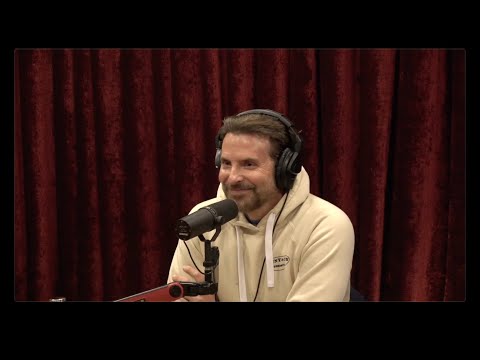
Joe Rogan Experience #2435 - Bradley Cooper
Joe Rogan (host), Joe Rogan (host), Bradley Cooper (guest), Joe Rogan (host)
In this episode of The Joe Rogan Experience, featuring Joe Rogan and Joe Rogan, Joe Rogan Experience #2435 - Bradley Cooper explores bradley Cooper and Joe Rogan on craft, connection, and technology Rogan and Cooper open on how long-form conversation counters short-form, dopamine-driven media, and how social feeds can distort memory, anxiety levels, and perceptions of humanity.
Bradley Cooper and Joe Rogan on craft, connection, and technology
Rogan and Cooper open on how long-form conversation counters short-form, dopamine-driven media, and how social feeds can distort memory, anxiety levels, and perceptions of humanity.
They dive deep into Cooper’s filmmaking around stand-up (his film “Is This Thing On?” with Will Arnett), focusing on authenticity: real club staff, real audiences, minimal takes, and no sweetened laughs.
Cooper describes the responsibility and preparation required to portray real people (Chris Kyle in American Sniper, Leonard Bernstein in Maestro), including intense physical training, voice work, and immersion, and contrasts it with the freedom of invented characters.
The back half expands into purpose, community, parenting, and the implications of AI—from creative tools to sex-robot companions—arguing that the enduring human need is real connection and shared meaning.
Key Takeaways
Long-form content persists because human needs didn’t change—platform incentives did.
They argue that short clips “hijack the reward system,” but people still crave immersion (documentaries, three-hour films like Oppenheimer) and real engagement over endless scrolling.
Get the full analysis with uListen AI
Algorithmic media can rewire both memory and worldview.
Cooper describes not knowing if he visited Niagara Falls or only saw it virtually; Rogan adds that viral “worst-of-humanity” content can make people think the world is more dangerous and cruel than it is.
Get the full analysis with uListen AI
Authenticity in a stand-up film requires real environments, real reactions, and restraint in production.
Cooper says they used actual Comedy Cellar staff, recruited patrons who regularly attend comedy, gave them no direction, avoided added laughs, and kept takes minimal to preserve genuine audience responses.
Get the full analysis with uListen AI
To depict a beginner convincingly, the actor has to do the real work in the real world.
Will Arnett performed under a pseudonym (Alex Novak), first trying material at Rogan’s club with help from Shane Gillis, then grinding multiple nights a week in NYC to internalize the experience of bombing, pacing, and mic time.
Get the full analysis with uListen AI
Comedy culture became more collaborative when the internet replaced ‘one golden ticket’ gatekeeping.
Rogan explains how the 1990s sitcom/Tonight Show bottleneck drove backstabbing; podcasts, clips, YouTube, and many-specials distribution turned peers into “assets,” encouraging mutual support (with Ari Shaffir cited as a key cultural bridge).
Get the full analysis with uListen AI
Great acting (and great comedy) functions like hypnosis—belief is contagious.
They describe “locking in” as the moment the audience stops seeing performance and starts experiencing reality; Cooper connects it to willingness to fail, while Rogan points to live comedy’s unique grip versus edited specials.
Get the full analysis with uListen AI
Playing real people adds a distinct moral and psychological weight that can intensify preparation.
Cooper says portraying Chris Kyle meant serving Kyle’s family and legacy; he gained 53 pounds (185→238) with 6,000 calories/day, strength training, weapons practice, and extensive voice work and personal materials from Kyle’s widow.
Get the full analysis with uListen AI
LA can amplify isolation because geography and industry incentives reduce everyday human contact.
Both recall early LA depression: car-to-set-to-home compartmentalization and status anxiety; they contrast it with New York’s forced “intermingling” that creates presence, grounding, and social variety.
Get the full analysis with uListen AI
AI will be transformative, but the core human metric is still whether we feel less alone.
They see AI as powerful (research companion, music/film generation), but warn about “god mode” relationships—especially AI sex robots—that bypass mutual growth and risk deepening social disconnection.
Get the full analysis with uListen AI
Parenting expands empathy and reframes how we judge others.
Rogan cites that having kids increased his “capacity for love,” making him see adults as former children shaped by environment; Cooper echoes that it’s harder to hate people as he ages and that kids provide daily, unscheduled “jolts” of meaning.
Get the full analysis with uListen AI
Notable Quotes
“Humans didn’t change. It’s just you can hijack the reward system by giving them some short attention span nonsense.”
— Joe Rogan
“It’s the illusion that I’m getting what I want, as opposed to what I actually need… a reminder that I exist.”
— Bradley Cooper
“When do you have an opportunity as an actor to actually do the thing you’re preparing to do?”
— Bradley Cooper
“Careful is death.”
— Bradley Cooper
“With built-in sensors in my thighs, breast, butt, and vagina… This is dark.”
— Joe Rogan
Questions Answered in This Episode
What specific directing choices did you use in “Is This Thing On?” to make the Comedy Cellar scenes feel like real open mics (camera placement, sound mix, take count)?
Rogan and Cooper open on how long-form conversation counters short-form, dopamine-driven media, and how social feeds can distort memory, anxiety levels, and perceptions of humanity.
Get the full analysis with uListen AI
You said you never told the audience what would happen—what did you do when a key joke didn’t land the way the scene needed? Did you rewrite, re-stage, or accept the miss?
They dive deep into Cooper’s filmmaking around stand-up (his film “Is This Thing On? ...
Get the full analysis with uListen AI
What were the biggest differences between Will Arnett’s first set at the Mothership and his later NYC grind—what changed in his timing, posture, or risk-taking?
Cooper describes the responsibility and preparation required to portray real people (Chris Kyle in American Sniper, Leonard Bernstein in Maestro), including intense physical training, voice work, and immersion, and contrasts it with the freedom of invented characters.
Get the full analysis with uListen AI
Rogan claims Ari Shaffir helped shift NYC comedy culture toward LA-style support—what concrete behaviors changed backstage (booking, feedback, social dynamics)?
The back half expands into purpose, community, parenting, and the implications of AI—from creative tools to sex-robot companions—arguing that the enduring human need is real connection and shared meaning.
Get the full analysis with uListen AI
You describe acting and comedy as “hypnosis.” What’s the clearest sign—on set or on stage—that the performer is truly locked in versus merely executing?
Get the full analysis with uListen AI
Transcript Preview
[upbeat music] Joe Rogan Podcast, check it out!
The Joe Rogan Experience.
[upbeat music] Train by day, Joe Rogan Podcast by night, all day. [upbeat music] Hey, Bradley Cooper. [laughing]
What's happening, baby? You know what it's like when, uh... Like a Twilight Zone episode or something-
Mm-hmm.
... where, like, you're watching the T- this is an episode where, like, I'm watching the TV, and-
And then all of a sudden you're inside of the show.
And all of a sudden, and you're looking at me.
Oh.
And I got the m- y- yeah.
Yeah.
And all of a sudden I'm inside the show. It's crazy.
It's weird for me, too. It's we- it's weird for me that it gets weird for other people, too. Like, when I see people-
Of course
... being weird about it-
Yeah
... I'm like, "It's okay." [laughing]
I feel comfortable, just so you know.
Oh, good. [laughing]
You look comfortable.
Yeah, no, no, no.
But it-
It's excitement. It's weird for me. Like, I was trying to explain this to someone. They're l- they're like, "Do people have a hard time being comfortable on the show?" I go, "I kind of do, too. It's fucking weird."
Yeah.
It's weird that that many people are watching.
Yes.
And then you start thinking like, "Oh, don't fuck it up. Don't say that." [laughing]
Right. [clears throat] But if you think about it, the fact that you did this long-form setup and that we live in a culture where people ta- at least say that every- it's all about short-term-
Yeah
... it, it goes against it. The people are interested.
Yeah. Well, [sighs] the short-term stuff does work, you know? Like, short attention span stuff is very popular, e- even with me. Like, but I have been resisting it more and more lately. I'm like, like a fucking heroin addict, like, slowly weaning myself off the drug, and the more I wean myself, the better I feel. Like, physically better. My brain works better.
Mm-hmm.
I feel more relaxed. I don't feel like this c- like, Sugar Sean O'Malley, the UFC fighter, he said, "Even when I'm just scrolling, even if it..." He goes, "Even if it's not anything about me," he goes, "there's just, like, a low-level anxiety that I get." I'm like, "Yeah, yeah," because, like, you know you're wasting your time chasing a fix that you're never gonna get, and you're just, like, getting these-
[clears throat]
... these short drips of like, "Oh, look at that. Oh, look at that."
Yeah.
"Oh, scroll, scroll, scroll, scroll." But that's not what people really want.
Right.
What people really want is something engaging-
Yes
... something you go, "Wow, that's ama-" Like, a great documentary, like, which are still super popular. Like, a great documentary, they're still, you know, like, huge on Netflix and huge on YouTube. So there's always-
And Oppenheimer was, like, three hours long-
Right! Exactly
... and, you know, made a billion dollars.
Install uListen to search the full transcript and get AI-powered insights
Get Full TranscriptGet more from every podcast
AI summaries, searchable transcripts, and fact-checking. Free forever.
Add to Chrome