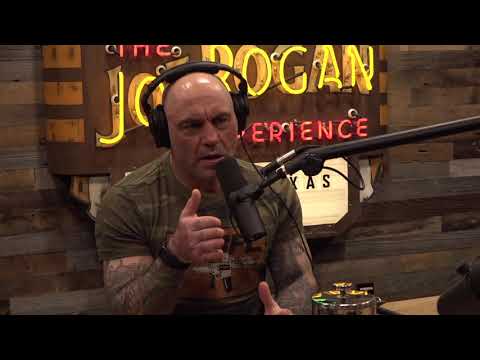
JRE MMA Show #109 with Gordon Ryan
Narrator, Joe Rogan (host), Gordon Ryan (guest), Guest (secondary, reading article) (guest), Narrator, Narrator, Narrator, Narrator
In this episode of The Joe Rogan Experience, featuring Narrator and Joe Rogan, JRE MMA Show #109 with Gordon Ryan explores gordon Ryan Reveals Relentless System Behind Modern Jiu-Jitsu Dominance Gordon Ryan discusses how obsessive training, systemized coaching from John Danaher, and constant technical innovation propelled him to be widely regarded as the best no‑gi grappler ever by age 25.
Gordon Ryan Reveals Relentless System Behind Modern Jiu-Jitsu Dominance
Gordon Ryan discusses how obsessive training, systemized coaching from John Danaher, and constant technical innovation propelled him to be widely regarded as the best no‑gi grappler ever by age 25.
He explains Danaher’s unique role as an all‑consuming martial arts strategist, detailing their seven‑days‑a‑week training model, positionally focused drilling, and emphasis on always hunting submissions rather than stalling for points.
Ryan also opens up about severe ongoing health issues (gastroparesis) that limit his eating and weight gain, his calculated “King Ryan” persona and social media warfare, and why he hasn’t yet switched fully to MMA.
Throughout, he contrasts his team’s approach and culture with the broader jiu‑jitsu world, criticizing stalling tactics, lack of innovation, steroid culture, and behind‑the‑scenes gamesmanship in top competition.
Key Takeaways
Systemized, position‑first training creates disproportionate results.
Ryan’s team spends huge amounts of time in specific ‘money’ positions (e. ...
Get the full analysis with uListen AI
Obsessive consistency beats traditional ‘camp’ models.
They train 7 days a week, all year, adjusting intensity rather than taking full days off, believing that continuous technical focus and goal‑oriented innovation prevent boredom and plateaus more effectively than traditional rest cycles.
Get the full analysis with uListen AI
Chasing submissions, not points, makes athletes both better and more marketable.
Ryan criticizes high‑level competitors who play for minimal advantages and referee decisions; his squad is trained to take the ‘hardest route’—controlling to the finish—which improves skills and creates must‑watch matches.
Get the full analysis with uListen AI
A genius coach plus fully committed students is a force multiplier.
Danaher’s encyclopedic knowledge, tape‑study habit, and ability to solve technical problems overnight only matter because his athletes show up relentlessly and execute; Ryan frames this as having “cheat codes” that you’d be foolish not to use.
Get the full analysis with uListen AI
Persona and promotion can be engineered—if performance backs it up.
Ryan consciously built the ‘King Ryan’ character after realizing people will hate regardless; by accurately calling submissions in advance and then delivering, his trash talk becomes a marketing tool rather than empty noise.
Get the full analysis with uListen AI
Severe personal constraints don’t excuse poor results—but they matter.
Despite debilitating daily nausea from gastroparesis and a highly restricted diet, Ryan still competes and wins at the highest level, though he’s frustrated that the condition may prevent him from reaching his full physical potential.
Get the full analysis with uListen AI
Loyalty and shared systems can outproduce ‘super teams’ of recruits.
He contrasts Danaher’s homegrown squad—sharing one coherent game—with big-name teams that mostly recruit already‑successful black belts with disparate styles, arguing that the former produces deeper, more transferable excellence.
Get the full analysis with uListen AI
Notable Quotes
“Without Jon, I might have been the best at some point, but I wouldn’t be this good this fast.”
— Gordon Ryan
“Most people in jiu-jitsu do the least amount of work possible to win a match. We try to take the hardest route and submit the guy.”
— Gordon Ryan
“You have basically a series of cheat codes in front of you, and they’re there all year round. You kind of feel like a shitbag if you don’t show up to train.”
— Gordon Ryan
“One guy can only do so much. It needs more of me—more people willing to be exciting on or off the mat.”
— Gordon Ryan
“If you just try to copy everyone else, you get the same results as everybody else. You have to go further than what the best guys are doing.”
— Gordon Ryan
Questions Answered in This Episode
How sustainable is a seven‑days‑a‑week, no‑off‑days model for long‑term health and career longevity, even with ‘light’ sessions?
Gordon Ryan discusses how obsessive training, systemized coaching from John Danaher, and constant technical innovation propelled him to be widely regarded as the best no‑gi grappler ever by age 25.
Get the full analysis with uListen AI
Could Danaher’s highly systemized, detail‑driven approach be successfully transplanted into other sports, or is it uniquely suited to grappling?
He explains Danaher’s unique role as an all‑consuming martial arts strategist, detailing their seven‑days‑a‑week training model, positionally focused drilling, and emphasis on always hunting submissions rather than stalling for points.
Get the full analysis with uListen AI
What specific structural or rules changes would most quickly reduce stalling and fake matches at the highest levels of jiu‑jitsu?
Ryan also opens up about severe ongoing health issues (gastroparesis) that limit his eating and weight gain, his calculated “King Ryan” persona and social media warfare, and why he hasn’t yet switched fully to MMA.
Get the full analysis with uListen AI
If Ryan’s gastroparesis were fully resolved and he could bulk to his ideal weight, how much would it actually change his game and dominance?
Throughout, he contrasts his team’s approach and culture with the broader jiu‑jitsu world, criticizing stalling tactics, lack of innovation, steroid culture, and behind‑the‑scenes gamesmanship in top competition.
Get the full analysis with uListen AI
Will the commercialization of grappling (belts in ONE, big ADCCs, personalities like Ryan) fundamentally change its culture, for better or worse?
Get the full analysis with uListen AI
Transcript Preview
(drum music plays) Joe Rogan podcast, check it out. The Joe Rogan Experience.
Train by day, Joe Rogan podcast by night, all day. (rock music plays) Well, uh, welcome, man. Thanks for doing this. I appreciate it.
Of course. Thanks for having me.
Long time coming. How the fuck did you rise so far ahead of everyone else in the jujitsu world? Let me just tell everybody before things get started. Um, Gordon is undeniably the best pound-for-pound jujitsu player on earth. Not just the best, but pretty, pretty ... I- i- it's a pretty good statement to say that you're the best ever, and you're only 25.
Yeah. (laughs)
That's crazy.
Yeah. Yeah. Yeah.
How the fuck does that happen?
Uh, so, uh, I'm gonna go ahead and give, give credit to Jon. I mean, uh, I, I think that without him, I maybe would've been successful or would've been ... I, I would've been, you know, maybe the best in the world at some point in my career, but I don't think that without Jon, uh, I would be where I am right now, and I don't think that I would've gotten this good, uh, in, in this amount of time. You know, I've only ... I've been training 10 years. I've been competing com- uh, professionally for five years, and, uh, I think that, you know, a big part of the reason why I am where I am is 'cause, 'cause of Jon's coaching.
Yeah. And we're, we're talking about Jon Danaher, for people who don't know, who is a, a literal genius and a mastermind in jujitsu, and a true mad scientist. And watching him coach you guys is very fascinating because he's so serious and stoic, and, "Gordon Ryan, pass over the left leg. Gordon Ryan, post."
Yeah. Yeah.
Like, the way he talks, like, it's really int- ... he says your full name too. It's, it's real-
Yeah.
It's very interesting.
Gordon Ryan, Garry Tonon, Craig Jones.
Yeah.
It's always, it's always the full, the full name.
Yeah. Why? What is ... He's a, such an odd duck.
He does it to address us, um, because a lot of times, like, if a guy like Nicky, for example, like, there's a lot of guys named Nicky.
Right.
So he makes sure, he makes sure that you know he's talking to you when he says, "Nicky Ryan, Nicky Rod, Craig Jones, Gordon Ryan."
Yeah.
So you know that, you know that when you hear your name being called, your first and last name, you know that, okay, this person is addressing you in a room of, you know, five, 10,000 people.
He's such an unusual human being. There is not a single person on the planet Earth like Jon Danaher, one of the most brilliant guys I've ever met, obsessed with jujitsu, mostly. Like, that's ... If you cr- ... You got a pie chart of his brain, it would be like, it's like 20% room for other shit, 80% of his brain is jujitsu.
Install uListen to search the full transcript and get AI-powered insights
Get Full TranscriptGet more from every podcast
AI summaries, searchable transcripts, and fact-checking. Free forever.
Add to Chrome