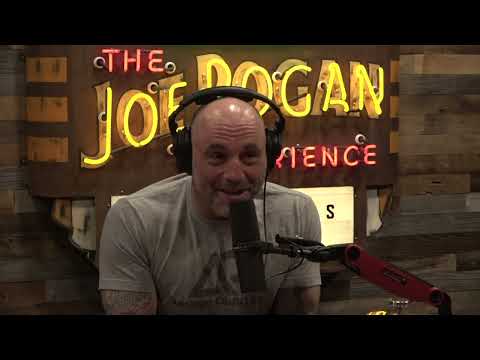
Joe Rogan Experience #1810 - Remi Warren
Joe Rogan (host), Narrator, Remi Warren (guest), Narrator
In this episode of The Joe Rogan Experience, featuring Joe Rogan and Narrator, Joe Rogan Experience #1810 - Remi Warren explores remi Warren on survival, predators, injury, and living truly wild Joe Rogan and hunter–guide Remi Warren talk through Remi’s recent wrist surgery, adaptive archery, and the physical realities of hunting with injuries. The conversation moves into wildlife management, invasive species, predator–prey dynamics, and how modern conservation is funded and often misunderstood. Remi shares intense survival and near-death stories, including lightning strikes, cliff mishaps, aggressive bears, and the dramatic search-and-rescue of the woman who later became his wife. They close by reflecting on parenting, why difficult hunts feel so meaningful, and how Remi’s “Live Wild” philosophy shapes his life, podcast, and solo-filmed hunts.
Remi Warren on survival, predators, injury, and living truly wild
Joe Rogan and hunter–guide Remi Warren talk through Remi’s recent wrist surgery, adaptive archery, and the physical realities of hunting with injuries. The conversation moves into wildlife management, invasive species, predator–prey dynamics, and how modern conservation is funded and often misunderstood. Remi shares intense survival and near-death stories, including lightning strikes, cliff mishaps, aggressive bears, and the dramatic search-and-rescue of the woman who later became his wife. They close by reflecting on parenting, why difficult hunts feel so meaningful, and how Remi’s “Live Wild” philosophy shapes his life, podcast, and solo-filmed hunts.
Key Takeaways
Train around injuries instead of stopping completely.
Remi kept shooting by using a mouth tab and modified gear after major wrist surgery, showing that creative adaptations (hooks, straps, mouth tabs) can maintain skills and fitness while healing.
Get the full analysis with uListen AI
Wildlife management decisions should be science-based, not emotion-driven.
Examples like California’s mountain lion policy, over-abundant predators, and wild horse protection show how feel-good bans can worsen deer declines, predation, and habitat damage when biology is ignored.
Get the full analysis with uListen AI
Habitat quality and availability are the foundation of conservation.
From CRP programs and prairie reserves to Nevada’s booming sheep numbers, they emphasize that preserving and restoring habitat does more for wildlife than any single hunting rule or predator cull.
Get the full analysis with uListen AI
Invasive species can permanently reshape ecosystems and are nearly impossible to reverse.
Axis deer in Hawaii, pythons in Florida, iguanas, feral hogs, and cats in Australia all demonstrate how a few introductions or escaped pets can erase native wildlife and create unfixable management problems.
Get the full analysis with uListen AI
Real risk in wild places often comes from terrain and weather, not just animals.
Remi’s scariest experiences involve cliffs, fast rivers, and a childhood lightning strike; he considers falls and exposure more dangerous than even aggressive bears in many backcountry situations.
Get the full analysis with uListen AI
Staying put and conserving energy can be lifesaving when lost.
His future wife survived nearly three days in high desert by not wandering aimlessly; Remi found her by trusting tiny clues, calling out systematically, and applying hunter-style tracking and terrain reading.
Get the full analysis with uListen AI
Suffering and difficulty are central to why some hunters value the experience.
Both men describe arduous, cold, and physically demanding hunts as emotionally transformative; the hardship makes the meat, the memory, and the personal growth feel profoundly different than easy “harvests.”
Get the full analysis with uListen AI
Notable Quotes
“I like that wild feeling of being out there and doing something in the wild that maybe other people aren’t doing.”
— Remi Warren
“Predators are super efficient at managing populations. When you don’t have those predators, then humans have to be that predator.”
— Joe Rogan
“You could have all the animals in the world, but if you don’t have that habitat, you have nothing.”
— Remi Warren
“If you only have your legs to use, it’s incredible the kind of dexterity that people can develop.”
— Joe Rogan
“It was like a lifetime of spending my entire life looking for things that are hard to find and then using it in a way that was more beneficial than anything else I’d ever done.”
— Remi Warren (on finding his missing future wife)
Questions Answered in This Episode
How should wildlife agencies balance public emotion with biological science when setting hunting and predator-management policies?
Joe Rogan and hunter–guide Remi Warren talk through Remi’s recent wrist surgery, adaptive archery, and the physical realities of hunting with injuries. ...
Get the full analysis with uListen AI
What practical skills from hunting (tracking, reading terrain, staying calm under stress) transfer best to real-world survival and search-and-rescue situations?
Get the full analysis with uListen AI
Where is the ethical line between sustainable hunting for food and status-driven trophy hunting, especially in high-dollar sheep and exotic hunts?
Get the full analysis with uListen AI
Given the scale of invasive species problems like pythons and feral hogs, what realistic strategies could actually reduce their impact without causing new ecological issues?
Get the full analysis with uListen AI
Why do physically punishing, risk-heavy hunts feel so psychologically rewarding, and how does that compare to other forms of voluntary hardship like extreme sports or combat sports?
Get the full analysis with uListen AI
Transcript Preview
(drumming music) Joe Rogan podcast, check it out.
The Joe Rogan Experience.
Train by day, Joe Rogan podcast by night, all day. (rock music) And we're up, Remy Warren. How are you, brother?
Yeah, pretty good, man. How are you?
What's going on? So we were talking, uh, last night when we were hanging out about your hand. So, t- tell me what's going on with that.
Yeah, I just actually had a, a wrist surgery. And, um, just doing something stupid ... (laughs) I don't even know if I wanna tell the story of how I did it. It's so dumb. But, uh, I tore the like, d- I guess, tendons in, in there, stuff that kind of controls all that. So they went in, took some out of my forearm-
You're gonna have to tell everybody now.
Yeah, I know. (laughs) I was like-
(laughs) Like, "What did you do?"
Well okay, this is, this is, this is the tru- well, I don't even actually 100% know. Um, but it was like, uh, you know when you just, I don't know, you get an injury?
Mm-hmm.
And you think like, you don't even think about it, you just keep doing your shit-
Right.
And, um, it was like last September. I was, uh, I shot a pretty good bull elk in New Mexico and I'm like skinning it out and I couldn't use my hand very well, so I like taped the knife in my hand and do the whole thing. And the guys that are with me are looking at me like, "That's not right, man. You should probably get that checked out." (laughs)
(laughs)
And I was thinking about it, I was like, "Yeah, I probably should." So I went to the doctor and I was just thinking like, they're gonna say, "Ah, it's, you know, nothing." And they're like, "This is a major injury." Like, "How, how long has it been like this?" I was like, "I don't know, three months or so." And they're like, "Oh yeah, this is ... How'd you do it?" I was like, "I don't know." They said it was consistent with like a fall from maybe 10 feet straight onto your wrist. And I couldn't think of ... I was like, "I, I would remember that." They were like, "You would remember it." And I started thinking back (laughs) and like the following January I was duck hunting and these, these mallards are coming in and like pretty high up, so I shoot one and it was like, probably like, I don't know, 30 feet up, flying 30 miles an hour, and it's coming right at me. And I think, "Oh, I'll j- reach up and try (laughs) to catch it out of the air so it doesn't hit me in the face," and bent my f- hand back and I think that that's what tore it. And then just never, I just taped the fingers up and never like healed right. And then a combination of that, when I was in ... And then I was in BC th- this last year, like hiking across a mountain, had the trekking pole and my wrist just gave out, slammed into the hill, and that was kind of, I think the last straw. It finally probably tore everything.
Install uListen to search the full transcript and get AI-powered insights
Get Full TranscriptGet more from every podcast
AI summaries, searchable transcripts, and fact-checking. Free forever.
Add to Chrome